

Plastic to oil machine utilizes advanced catalytic pyrolysis technology to convert plastic waste into ISCC-certified oil. It supports continuous 30-day non-stop operation without clogging shutdown, annually handling 6000 tons of plastic. If you are seeking effective solutions for plastic management, please consider this approach.
Plastic to Oil – Solves Plastic Industry Pain Points
Addressing Massive Plastic Waste
Annually, the world produces approximately 400 million metric tons of plastic waste. On average, only 9% of plastic waste is recycled. A mass of plastic waste still exists in the environment. Plastic into oil machine can conscientiously reduce plastic waste.
Extend the Lifespan of Plastic
A significant portion of plastic is used to make disposable items or other short-lived products. Converting waste plastic into pyrolysis oil with wide uses will extend the lifespan of plastic resources, achieving sustainable utilization.
Reduce Incineration Pollution and Wastages
Instead of incineration, plastic to oil solution avoids air pollution, reduces the consumption of petroleum to make plastic, and achieves more complete recycling of plastic resources. It is a sustainable and clean recycling method.
Reduce Landfill and Ocean Pollution
Plastic to oil solution can process a large quantity of plastic in an eco-friendly way. It protects land and ocean from the white pollution from plastic. This solution also does not need to wait for slow natural degradation, saving land resources.
Catalytic Pyrolysis: Advanced Plastic to Oil Technology
Plastic to oil machine (also called plastic pyrolysis plant) of Beston uses catalytic pyrolysis patent technology. Compared with common pyrolysis, this technology brings great benefits. Here, we would like to share details of the catalytic technology.

100% Solve Wax Oil Clogging
Catalytic pyrolysis ensures complete 100% liquefaction of wax oil, bringing such benefits:
- prevent wax buildup in oil-gas pipelines
- reduce pressure build-up risk
- eliminate potential safety hazards
200% Improve Production Efficiency
Catalytic dewaxing pyrolysis technology also brings value:
- shorter downtime and minimized economic losses
- lower maintenance operation costs
- higher annual processing capacity
Support ISCC Certified Oil Production
Final plastic pyrolysis oil quality meets international sustainability standards:
- higher oil purity and stable oil quality
- compliance with ISCC (International Sustainability and Carbon Certification)
- greater acceptance in renewable fuel markets
Plastic to Oil Machine for Sale: Choose What You Need


Continuous Type: BLL-30
- Process 6,000 tons waste plastic annually
- 30 day continuous pyrolysis operation
- High automation: two operators required
- Policy support and incentives
- Easy to get environmental compliance and approval
Batch Type: BLJ-20
- Process 4,000 tons waste plastic annually
- Get naphtha & non-standard diesel in one step
- 1 batch/day
Batch Type: BLJ-16
- Process 3,000 tons waste plastic annually
- 1 batch/day
- 4 Configuration options
| Model | BLL-30 | BLJ-20 | BLJ-16 WAX | BLJ-16 CAT | BLJ-16 Standard | BLJ-16 ULTRA |
|---|---|---|---|---|---|---|
| Manufacturer | BESTON | BESTON | BESTON | BESTON | BESTON | BESTON |
| Time to Market | 2025 | 2025 | 2022 | 2022 | 2013 | 2022 |
| Motor Brand | Chinese brand | Chinese brand | Chinese brand | Chinese brand | Chinese brand | ABB Explosion-proof |
| Suitable Raw Materials | Waste plastics; Tires; Oil sludge | Waste plastics; Tires; Oil sludge | Waste plastic bales (Max.0.9*0.9*1.6m) | Waste plastic bales (Max.0.9*0.9*1.6m) | Whole tire<120cm; Tire blocks<15cm; Oil soil with liquid content<30% | Waste plastics; Tires; Oil sludge |
| Input Capacity (Max.) | Waste plastic pellets: 0.8-1.05t/h Rubber powder: 1.25-1.5t/h Oil sludge:1.8-2.3t/h | Waste plastic pellets: 12-13t/d Tire: 18-20t/d Oil sludge:20-25t/d | 8-10t/batch | 8-10t/batch | Whole tire <120cm or Tire blocks<15cm: 10-12t/batch Sidewall removed tire: 15-16t/batch Oil soil: 16-18t/batch | Waste plastic bales: 8-10t/batch Whole tire <120cm or Tire blocks<15cm: 10-12t/batch Sidewall removed tire: 15-16t/batch Oil sludge: 16-18t/batch |
| Working Method | Fully Continuous | Batch | Batch | Batch | Batch | Batch |
| Final Oil Quality | Pyrolysis oil Pyrolysis oil with wax or naphtha | Pyrolysis oil, Non-standard diesel and naphtha | Pyrolysis oil with wax | Pyrolysis oil with naphtha | Pyrolysis oil | Pyrolysis oil Pyrolysis oil with wax or naphtha |
| Reactor Material | 304/310S Stainless steel | Q345R Boiler steel and 304/316L/310S Stainless steel | 304 Stainless steel | 304 Stainless steel | Q345R Boiler steel | 304 Stainless steel |
| Reactor Life Span (Years) | 5-8 | Q345R Boiler steel 2-3 304/316L Stainless steel 5-8 310S Stainless steel 8-10 | 5-8 | 5-8 | 2-3 | 5-8 |
| Guarantee (Months) | 12 | 12 | 12 | 12 | 12 | 12 |
| Delivery Time (Calendar Days) | 60-90 | 60 | 60 | 60 | 45 | 90 |
| Land Space Required (L*W*H*m) | 70*20*10 | 40*13*8 | 33*13*8 | 33*13*8 | 33*13*8 | 33*26*8 |
| Packing | 20*6*3m in bulk+13*40HQ | 1*40FR+4*40HQ | 1*40FR+3*40HQ | 1*40FR+3*40HQ+1*20GP | 1*40FR+3*40HQ | 1*40FR+8*40HQ |
| Installation Period (Calendar Days) | 60-90 | 45 | 45 | 45 | 45 | 60 |
BLJ-20 & BLL-30 Plastic to Oil Machine: Latest Technical Breakthrough
BLJ-20 Model
BLL-30 Model

Fraction Distillation Technology
Get Naphtha & Non-Standard Diesel in One Process
This technology separates oil fractions (naphtha & non-standard diesel) at a 200°C cut point during pyrolysis. Bring long value to:
- Increase the added value of oil products.
- Eliminate the investment in distillation equipment.
- Reduce various operating costs (including labor, land costs, and energy consumption).
Large-capacity Pyrolysis Reactor (ø2800*10000)
50% ↑ in Processing Capacity
This design enables the BLJ-20 plastic to oil machine to process 12-13 tons of plastic waste daily. Benefit:
- Improve production efficiency and reduce unit processing costs.
- Increase oil output and expand profit potential.
- Support larger-scale waste processing to meet market demand.
Thermal Dynamic Sealing & Flexible High-temperature Insulation Technology
High Safety Factor
This technology offers clear advantages in reactor sealing, thermal hazard risk prevention, and more. Specifically:
- Flame safety: no open flames
- Sealing safety: no oil-gas leakage, no smoke
- Thermal insulation safety: The machine casing temperature always remains within a safe range

Oil Gas Anti-polymerization Condensation Technology
30 days continuous running
This technology rapidly cools oil-gas temperature to prevent machine clogging. Bring long value to:
- minimal downtime loss
- stable oil yield
- maximized annual processing capacity of 6000 tons
Hot Flue Gas Recirculation + Air Preheating Technology
↓ 55% fuel consumption & ↓ 50% emission
This technology increases the daily capacity from 8-10 ton/day to 12-13 ton/day. Bring long value to:
- reduced overall operational costs
- improved chances of eco-compliance and project approval
- supports Sustainable Development Goals (SDGs)
Reactor Automatic Temperature Control Technology
±10℃ Precise Temperature Control
This technology adjusts fuel mixing ratios in real time to maintain optimal pyrolysis conditions. Bring long value to:
- 80% less labour cost (2 workers are enough)
- reduced risk of human error
- urtra-simple operation, one-click start
- consistent oil yield and quality
Plastic Types & Pyrolysis Oil Yield Overview
The type of plastic affects the oil yield. Indeed, not all waste plastics are suitable for pyrolysis plant. Here are some suggestions for your reference. You can send us plastic samples for testing to assess the suitability of the raw materials.
Pyrolysis Applicability Analysis
| Types of Plastic | Coming from | Applicability | |
|---|---|---|---|
 |
Polyethylene Terephthalate | Transparent bottles & packaging, etc. | × |
 |
High-Density Polyethylene | Plastic pallets, trash cans, etc. | √ |
 |
Polyvinyl Chloride | Building materials, cable sheaths, circuit boards | × |
 |
Low-Density Polyethylene | Cling films, freshness protection bags, etc. | √ |
 |
Polypropylene | Microwave lunch box, fresh-keeping box, etc. | √ |
 |
Polystyrene | Fast food box, bowl of instant noodles box, etc. | √ |
 |
Other Plastics without chlorine and oxygen | Various sources | √ |
|
Other plastics with chlorine and oxygen | Various sources | × |
Oil Yield Analysis

Note:
Plastics containing oxygen(PET) and halogen elements(PVC) are not suitable for pyrolysis.
- PET pyrolysis produces oxygen, which results in the combustion of plastics, consequently leading to low oil yield. The production of oxygen poses a potential safety hazard.
- PVC pyrolysis produces highly corrosive HCI (hydrogen chloride), harmful to the waste plastic to oil machine. The resulting pyrolysis oil contains chlorine elements, and its combustion can release dioxins (carcinogenic substances).
Application Prospect of Different Plastic Oil
Pyrolysis Oil
Naphtha & Non-standard Diesel

Pyrolysis Oil
- Direct as fuel: Typically, the plastic pyrolysis oil is sold to energy-intensive industries such as glass factories, steel mills, power plants,etc.
- Refined for Higher-grade Fuel: The plastic pyrolysis oil is sold to refineries for the production of commercial diesel.
- Distilled for Power Generation: After distillation processing, the heavy oil components are utilized in heavy oil generator sets for power generation.
- Form Closed-loop Recycling in Plastic Manufacturing: Research has shown that pyrolysis oil can indeed serve as a raw material for manufacturing ethylene and propylene ( core raw material of plastic production). This offers hope for realizing a circular economy for plastics, attracting in-depth studies from relevant companies.

Naphtha / Naphtha from Non-condensable Gas
- Chemical Feedstock: Used to produce propylene, butadiene, and ethylene for plastics, rubber, and other synthetic materials.
- Fuel Production: Be catalytically reformed into gasoline or used to produce kerosene, jet fuel, and other fuel oils.
- Solvent Applications: Serve as an industrial solvent (e.g., in adhesives, coatings, and inks) and as a laboratory extraction and cleaning solvent.
Non-Standard Diesel
- Industrial Fuel: Suitable for boilers, furnaces, kilns, and other industrial equipment, replacing heavy oil or conventional fuel oil.
- Power Generation: Can be used as fuel for diesel generators.
- Marine and Construction Machinery Fuel: Can be used directly in ships, construction machinery, or agricultural equipment in environments with less stringent emission requirements.
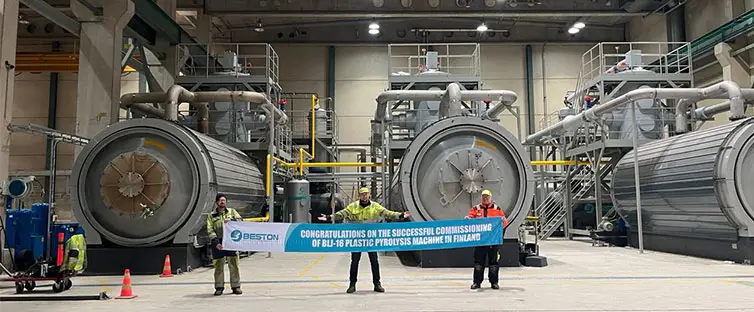
Benchmark Case: Plastic to Oil Pyrolysis Project in Europe
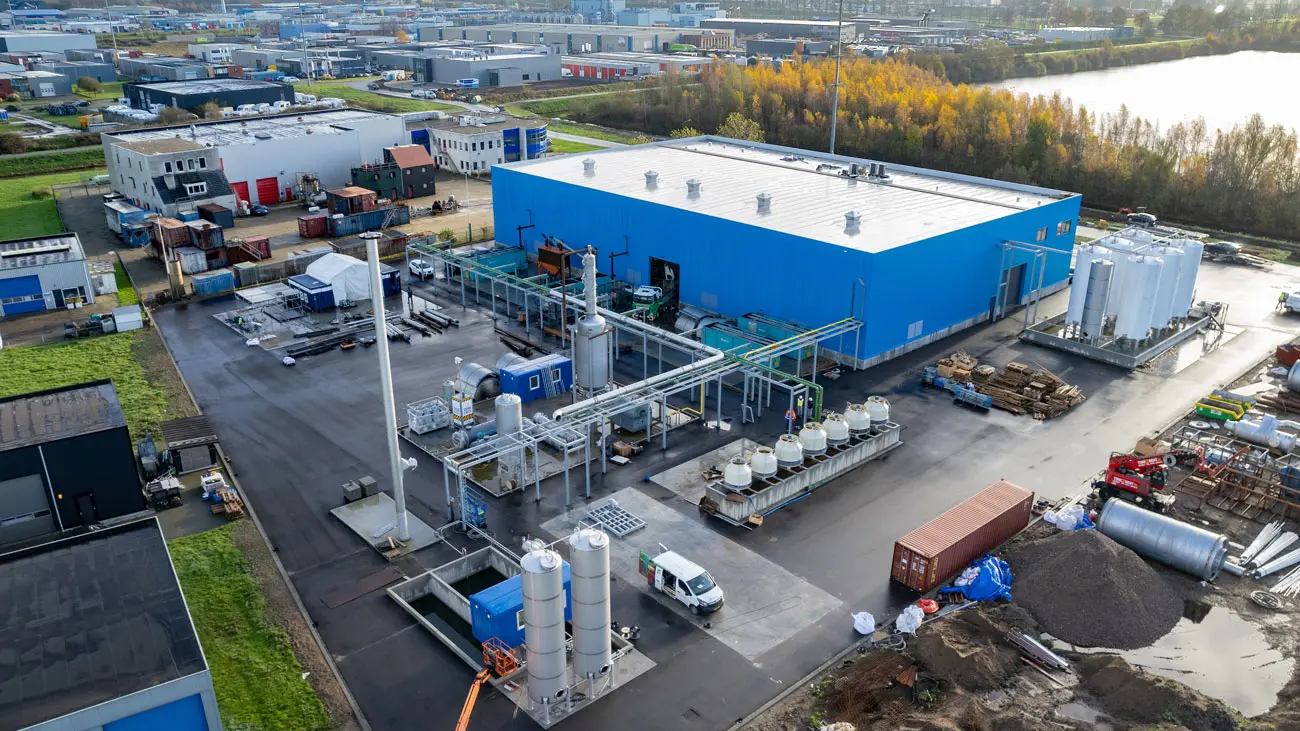
Beston and Corsair form a strategic partnership for developing plastic waste chemical recycling facilities together. The collaboration aims to leverage their combined expertise and technologies to tackle the growing problem of plastic waste.
Project Information
- Project Start Date: 8 May 2024
- Successful Operation Date: 29 October 2025
- Project Configuration: 3 × BLJ-16 model
- Annual Processing Capacity: 4,000 tons of waste plastic per unit
- Plastic Pyrolysis Oil Use: Sold as fuel
Project Status and Future Plan
- Phase I Completed: 3 BLJ-16 pyrolysis units have been fully installed, commissioned, and will put into operation.
- Phase II Planned: 7 additional BLJ-16 units are scheduled for future installation in Finland under the joint cooperation framework.


Global Plastic to Oil Projects in Action
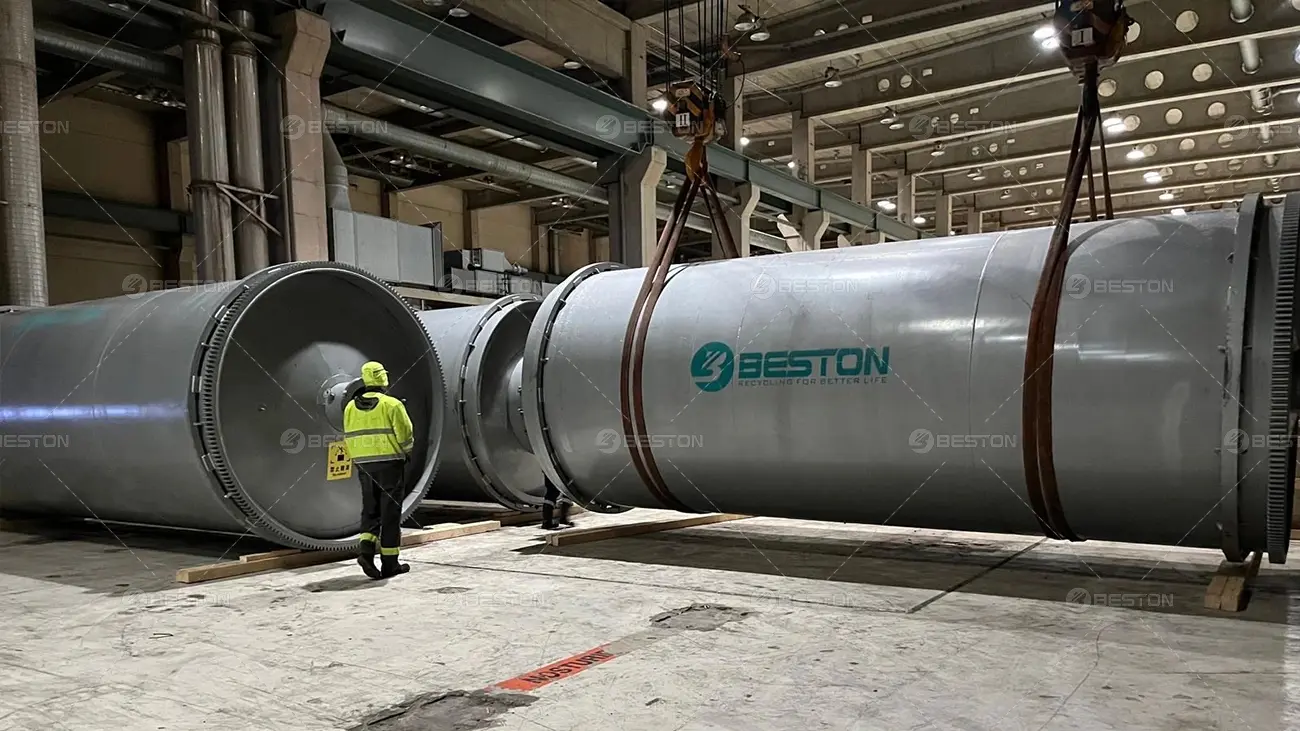
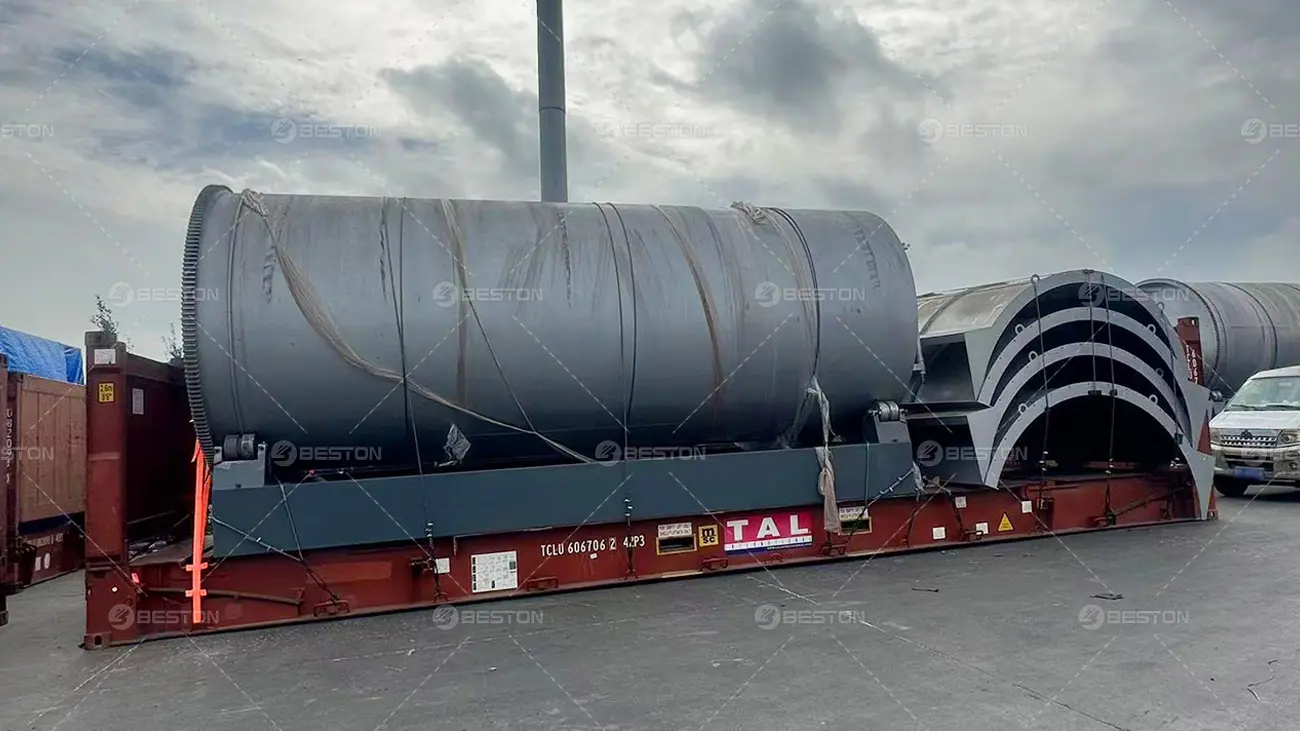
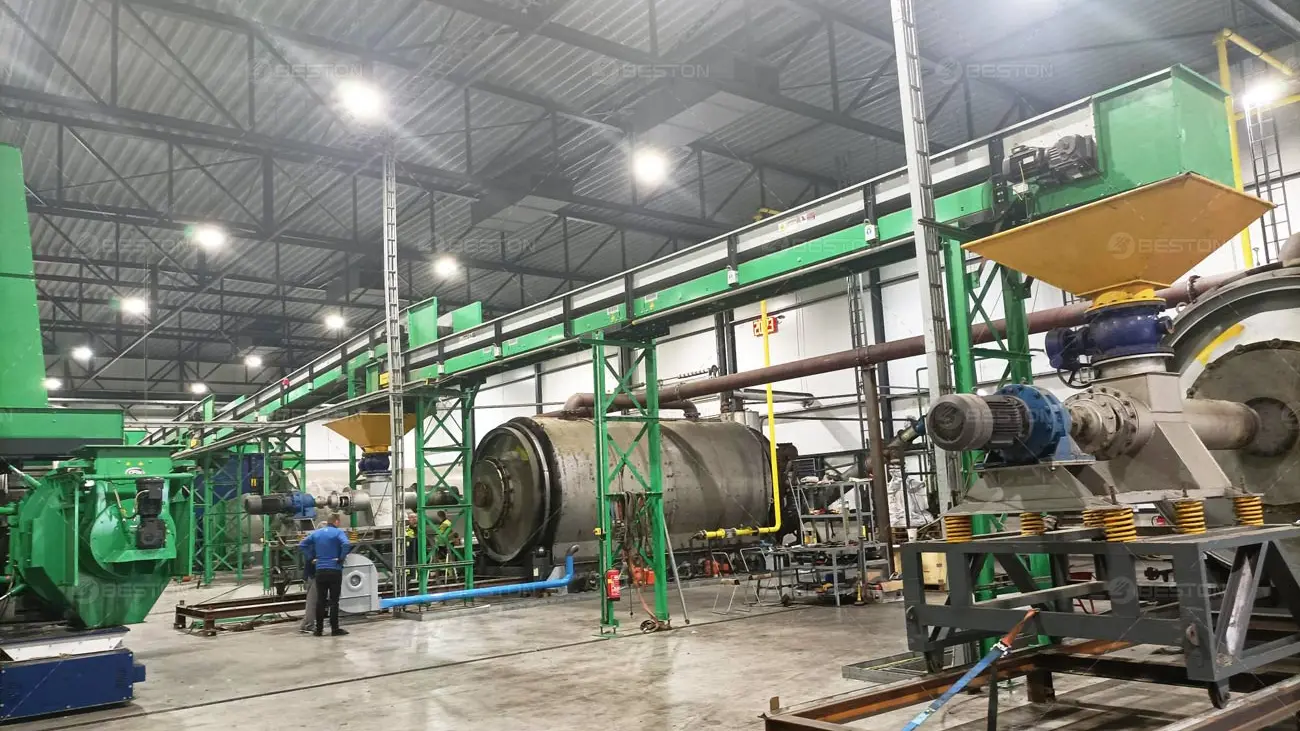
Beston plastic oil machine has garnered global acclaim with a myriad of successful cases around the world. The following content showcases the success stories of plastic to oil pyrolysis cases from different regions. Welcome contact us to consult plastic to oil pyrolysis machine price!



How to Turn Plastic into Oil?
01 Preheating and Feeding
02 Plastic Catalysis Pyrolysis
Polymer in waste plastic decomposes due to heat. At 180℃, oil gas begins to appear. At 280-400°C, large amounts of oil gas are produced. During the plastic to oil process, the oil gas enters the catalytic tower and reacts with the catalyst. This improves pyrolysis efficiency. The heavy particles of the oil gas (mainly oil dregs) drop into the sludge tank, while the light particles rise and enter the condenser.
03 Oil Gas Condensation and Syngas Recycling
Partial oil gas is liquefied into oil, remaining in the oil tank.
The non-condensable oil gas goes through a hydro-seal for purification, and then returns to the combustion chamber as fuel. Usually, the burner for preheating can be shut down after 2 hours once the system starts to generate oil.
04 Dedusting
Taking BLL-30 plastic oil machine as an example, the smoke is discharged safely after dust removal, water spraying, activated carbon adsorption, and ceramic ring absorption. It can meet the EU environmental emission standards.
05 Solid Residues Collection
Excellent Beston Plastic to Oil Machine: Better Production Experience
Environmental Compliance
- The advanced dedusting system ensures that flue gas emissions meet EU environmental standards.
- Water-cooling slagging system can reduce flowing dust pollution.
- We have ISO14001 environmental management system certification.
Intelligent Operation
- PLC and DCS remote control system: It features a high level of automation. This enhances production efficiency and reduces the needs and risks of manual operation.
- IoT technology: It enables real-time online monitoring and feedback. This not only makes the production process more intelligent and automated.
Efficient Production
- BLL-30 continuous machine enables continuous, efficient, and automated operation for 30 days. Help customers handle large quantities of plastic over an extended period.
- The syngas recycling system maximizes the efficient utilization of energy, converting plastic to oil with minimal resources and costs.
- High-temperature and corrosion-resistant materials ensure plastic to oil plant’s stability and durability during prolonged operation.
Safety Guarantee
- Operation safety: Multiple safety designs like pressure release valves, explosion-proof valves, safety instruments, etc.
- Quality Safety: Plastic to fuel machine‘s design strictly adheres to national standards and sector-specific standards, along with ISO9001 certificate.
- Worker health safety: The pyrolysis reactor uses high-temperature ceramic wool from the British Morgan brand which meets EU standards. This prevents carcinogens and lung infection risks for workers.
Beston Group’s Role in Sustainable Cycle
Beston Group is committed to the development of the Circular Economy. Our primary focus is to prevent waste plastic from reaching a landfill or incinerator by developing a kind of chemical recycling way, that is plastic to oil plant. Ultimately, we contribute to propelling the plastic industry towards a circular economy in the following ways:
Upstream – Petrochemical Industry
- Pyrolysis oil, as an energy source, reduces the demand for crude oil and petrochemical products, saving oil resources.
- Plastic pyrolysis as raw materials for new plastics reduces reliance on petroleum extraction and promotes more sustainable resource circulation.
Midstream – Plastic Processing Industry
- Plastic manufacturing is an energy-intensive industry. Pyrolysis oil can provide a new energy source for it.
- Pyrolysis oil is expected to enrich the raw material sources for plastic production, reducing dependence on crude oil and making production more flexible and sustainable.
Downstream – Waste Plastic Management Industry
- Plastic recycling factories can expand revenue streams and broaden the industry chain through the use of plastic to oil machine.
- Pyrolysis technology can efficiently address large quantities of waste plastics with minimal environmental impact. It offers innovative eco-friendly solutions for the processing and recycling of discarded plastics.
One-Stop EPC Service: Streamline Your Project from Design to Delivery
EPC services provide a one-stop solution for your plastic-to-oil project by integrating engineering, procurement, and construction management. With centralized responsibility, controllable risks, efficient timelines, and transparent costs, it significantly reduces your project management burden.

01 Engineering Phase
- Core Tasks: Preliminary design, detailed design, technical solution optimization
- Deliverables: Design documents, construction drawings
02 Procurement Phase
- Core Tasks: Material and equipment procurement, supplier management
- Deliverables: Equipment list, purchase contracts, logistics arrangements
03 Construction Phase
- Core Tasks: Civil works, equipment installation, construction management
- Deliverables: Construction records, quality inspection reports, progress reports
04 Handover Phase
- Core Tasks: System commissioning, inspection, training, handover
- Deliverables: Completion certificate, operation manuals, project handover
Contact Us for Plastic to Oil Solution
Looking for an efficient plastic recycling solution? Look no further! Beston Group continues to innovate and provide effective plastic to oil machine solution tailored to your needs. Contact us now and let us assist you in plastic waste management. Stay updated with the latest developments by following us on Facebook, YouTube, and Linkedin.