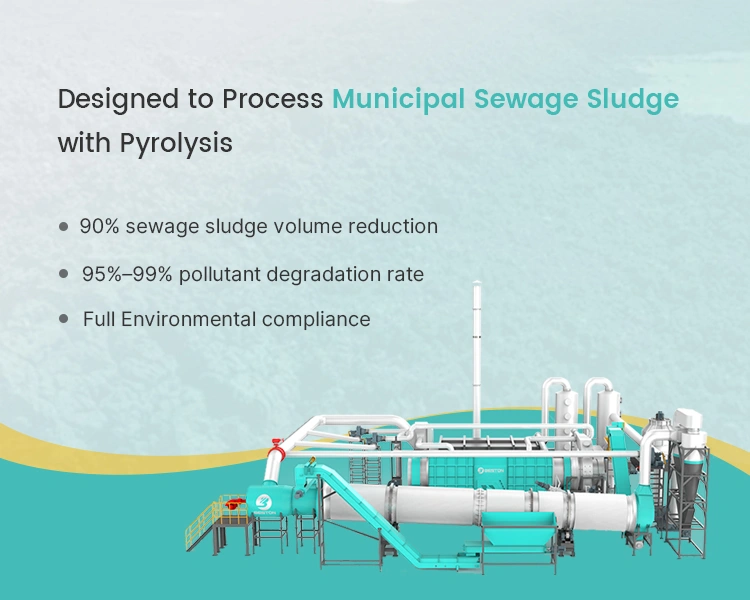
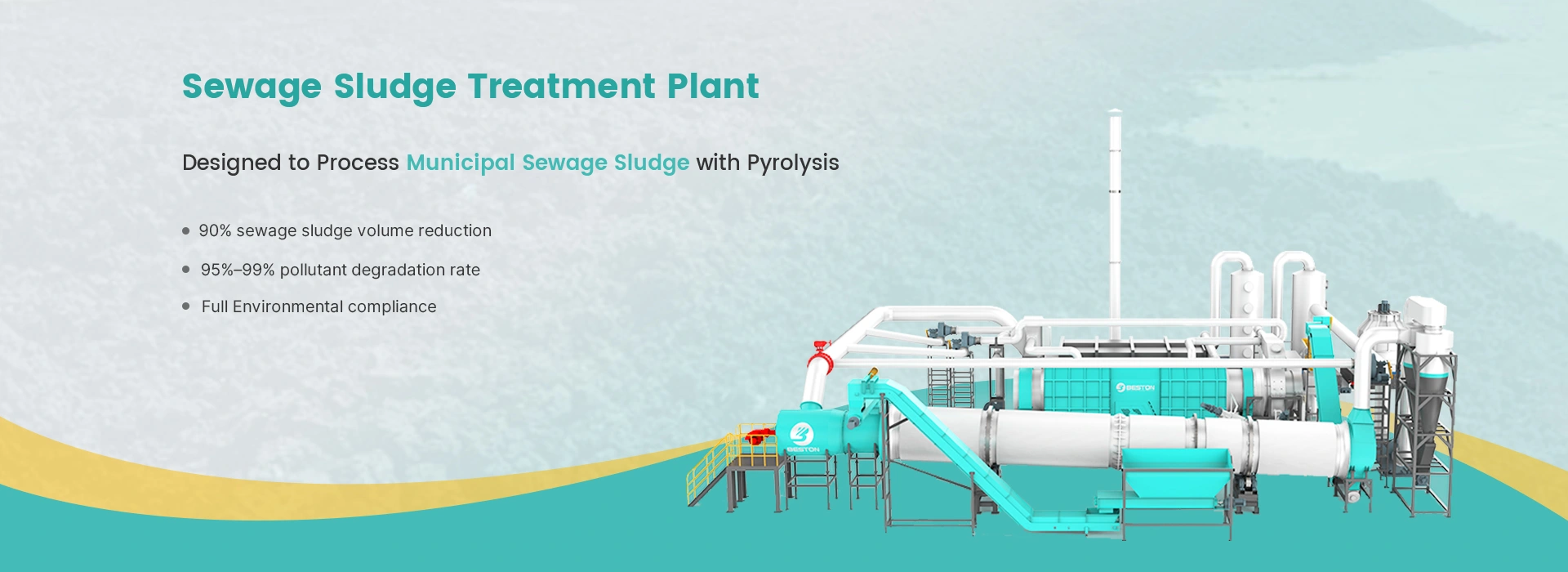
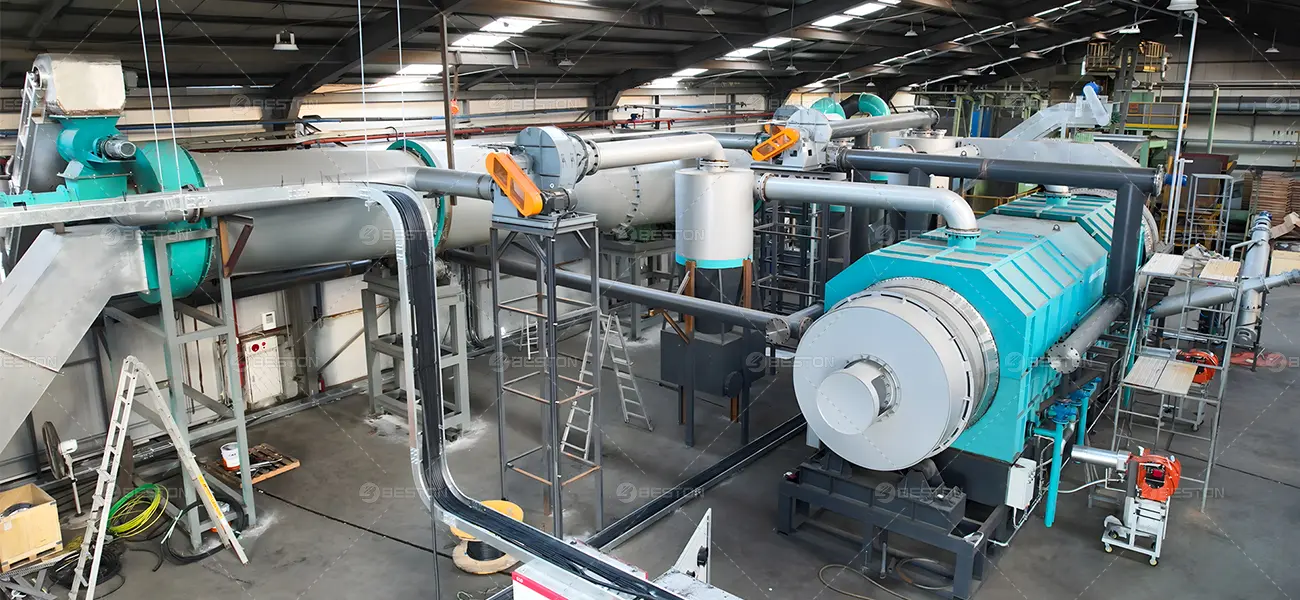
Beston Group’s sewage sludge treatment plant utilizes pyrolysis technology to convert high-moisture municipal sewage sludge into biochar. This process can significantly degrade persistent organic pollutants, with degradation rates reaching about 95% to 99%. Its primary goals are volume reduction, stabilization, harmlessness, and resource recovery. This solution serves as a sustainable alternative to landfilling and incineration, helping mitigate the growing challenges of land availability, secondary pollution, and disposal costs.
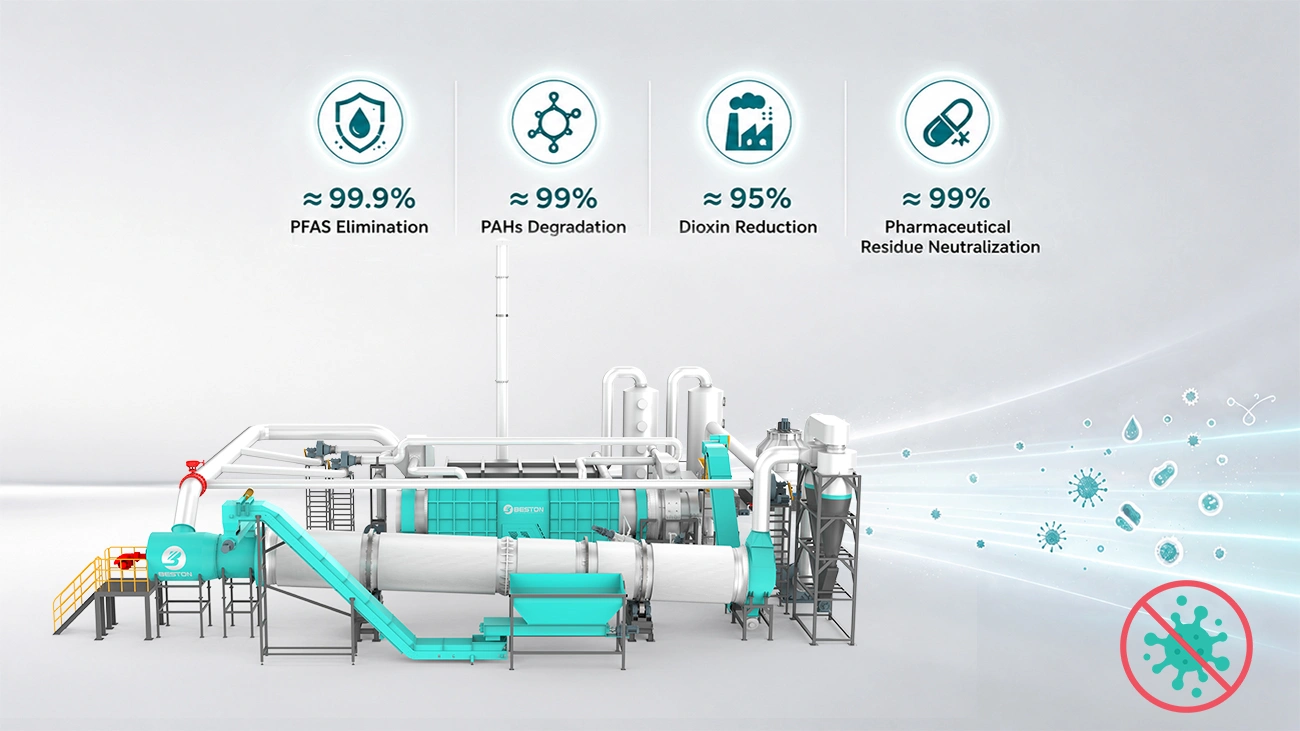
Dewatering, Drying & Pyrolysis: Integrated Sewage Sludge Treatment Solution
To address the high moisture content and complex pollutants in municipal sewage sludge, Beston Group has developed an integrated technology pathway: Ultra-High-Pressure Dewatering → Low-Temperature Belt Drying → Pyrolysis → Syngas Recycling → Biochar Resource Utilization. This guarantees a stable, highly efficient, and environmentally compliant operation with measurable social and environmental value.
- Up to 90% sewage sludge volume reduction
- Up to 95%-99% destruction of persistent pollutants (PFAS/PAHs/Dioxin)
- Safe output of sewage sludge biochar
- Syngas recovery & Flue gas waste heat recovery for energy self-sufficiency
- Environmental compliance & clean emissions
- Significantly reduce disposal costs (vs. landfilling/incineration)
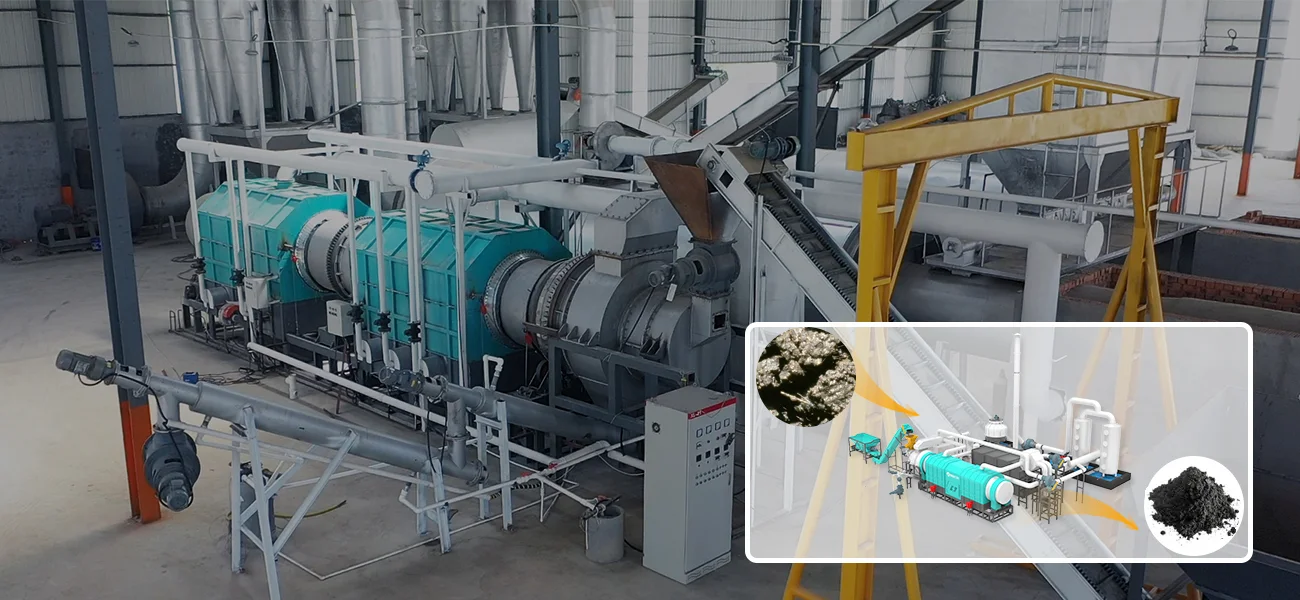
Feedstock Compatibility: What Sewage Sludge Can We Treat?
Beston Group’s sewage sludge treatment plant applies to municipal sewage sludge. It does not apply to high-toxicity, heavy-metal industrial sludges such as tannery, textile dyeing, and chemical sludge. Feedstock compatibility takes into account environmental compliance, off-gas control safety, and downstream biochar application safety.
| Types of Sewage Sludge | Coming from | Applicability |
|---|---|---|
| Municipal Sewage Sludge | Sourced from wastewater treatment plants; moisture content 75–85%; relatively stable composition | ✅ |
| Tannery Sludge | Complex composition, leaching risk. | ❌ |
| Textile Dyeing Sludge | High organic load, generates hard-to-degrade off-gas. | ❌ |
| Chemical Sludge | Complex composition, predominantly hazardous waste | ❌ |
💡 Tip: If your specific sludge type is not listed above, please provide a sludge test report for our technical team to assess feasibility.
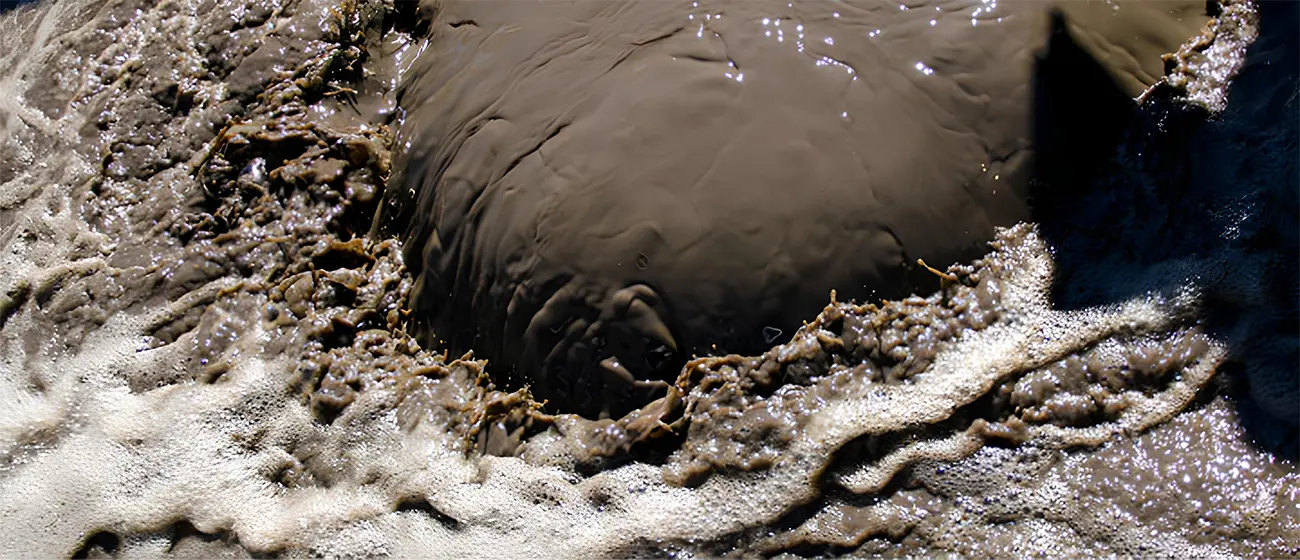
Parameters of Beston Sewage Sludge Treatment Plant for Sale
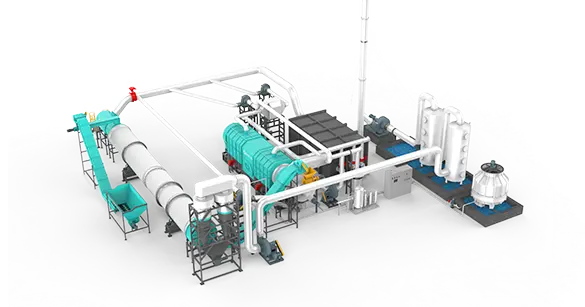
BST-50: Industrial-scale Model
- 6,000 tons of biochar production annually
- 7200 hours/year stable & safe operation
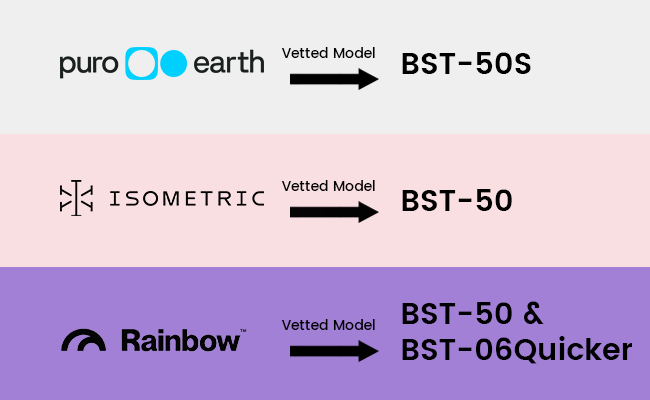
- Vetted by Puro.earth, Rainbow, pre-approved by Isometric
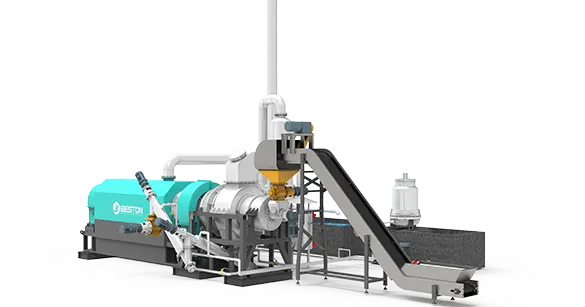
BST-06Quicker: Pilot-scale Model
- 8-hour rapid installation and deployment
- Movable design allowing 8-hour disassembly and reassembly
- Vetted by Rainbow
| Model | BST-06 Quicker | BST-50S |
|---|---|---|
| Operating Mode | Continuous | Continuous |
| Application | Pilot Testing | Commercial-scale |
| Certification Platform | Rainbow | Puro.earth, Isometric, Rainbow |
| Reactor Material | Staineless Steel 310s | Staineless Steel 310s |
| Feedstock Moisture | Below 15% | From 15% to 85% |
| Feedstock Size | 5-20mm | 5-20mm |
| Feeding Capacity (only for pyrolysis) | 300-350KG/H | 150T/d |
| Max. Pyrolysis Temperature (Combustion Chamber) | 650℃ | 650℃ |
| Residue Retention Time | 15-20 minutes | 15-20 minutes |
| Operating Pressure | -20 - 0 pa | -20 - 0 pa |
| Cooling Method | Water | Water |
| Exhasut Gas Treatment | Standard | Standard |
| Biochar Temperature | 45℃ | 45℃ |
| Annual Operating Hours | >7200hrs | >7200hrs |
| Service Life | 5-8 years | 5-8 years |
| Land Space Required (L*W*H*m) | 35*15*8 | 80*90*12 |
| Power Consumption | 25.1kw/h | 584.5kw/h |
| Water Consumption | 3-5m³/day | 5-7m³/day |
| Fuel Consumption | 30-50m³/day | 220-260m³/h |
| Installation Period | 7 days | 90 days |
Step-by-Step Sewage Sludge Treatment Process
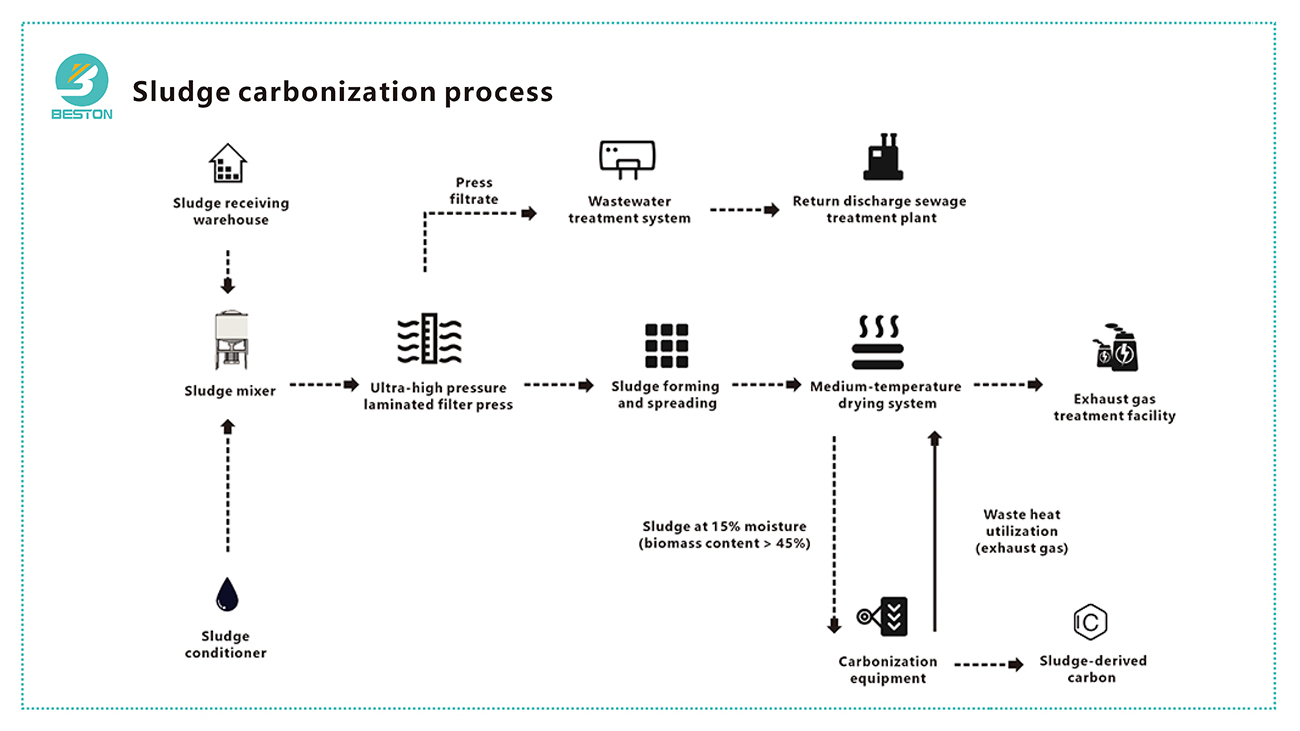
- 1Sewage Sludge Reception (Moisture ≈ 80%)Municipal sewage sludge (approx. 80% moisture) from wastewater treatment plants is transported to an enclosed sludge receiving warehouse for temporary storage.
- 2Sewage Sludge Deep Dewatering (Moisture < 50%)After conditioning with organic agents, sewage sludge is deeply dewatered by an ultra‑high‑pressure laminated filter press to drop moisture content below 50%. This significantly reduces sludge volume and subsequent drying energy consumption.
- 3Sewage Sludge Drying (Moisture < 15%)The dewatered sewage sludge is extruded into strips via a forming machine, and evenly spread across a low-temperature belt dryer for drying, reducing moisture content to below 15%. This creates suitable material conditions for subsequent pyrolysis.
- 4Biomass Blending (Optional Step)Dried sewage sludge with organic content above 45% can proceed directly to pyrolysis. If below 45%, it can be blended with organic biomass in a set ratio to supplement calorific value, ensuring self-sustaining and continuous operation of the pyrolysis unit.
- 5Sewage Sludge Pyrolysis (Products: Biochar < 5% Moisture & Syngas)Sewage sludge (or blended feedstock) undergoes anoxic pyrolysis at 450°C–600°C inside a sealed reactor, converting into stable biochar and syngas. The syngas is recovered for reactor heating, thereby reducing external energy consumption.
- 6Flue Gas Treatment & Heat RecoveryWaste heat from flue gas is recycled to power the drying stage; then the exhaust gas undergoes multi-stage dedusting to strictly meet local emission standards.
SGS Test Report: Sewage Sludge Pyrolysis Performance
Test Report 1: Proximate Analysis & Calorific Value of Sewage Sludge Biochar
Key Conclusion: According to SGS testing (Report No. TJE26-J00331), the pyrolysis process of the sewage sludge treatment plant demonstrates that sewage sludge biochar has retained energy value and fuel potential. The resulting biochar has a fixed carbon content of 10.22% and a net calorific value (LHV) of 6.05 MJ/kg.
| Test Parameter | Municipal Sludge (Before Pyrolysis) | Municipal Sludge Biochar (After Pyrolysis) |
|---|---|---|
| Total Moisture | 6.8% | <0.1% |
| Volatile Matter | 49.03% | 11.51% |
| Fixed Carbon | 5.01% | 10.22% |
| Ash Content | 45.96% | 78.27% |
| Lower Heating Value | 10.27 MJ/kg | 6.05 MJ/kg |
| Iodine Adsorption Value | – | 166 mg/g |
Download Municipal Sludge Report Download Municipal Sludge Biochar Report
Test Report 2: Heavy Metal Stabilization in Sewage Sludge Biochar
Key Conclusion: SGS testing (Report No. TJE26-C01133R02) confirms that after high-temperature pyrolysis (>500°C), heavy metals including zinc, copper, lead, chromium, cadmium, and arsenic in sewage sludge are effectively stabilized, with significantly reduced leaching risks. This prevents the end-product from being classified as hazardous waste, cuts subsequent disposal costs, improves project environmental compliance, and contributes to long-term ecological safety.
| Solid Waste Test Report | Sample ID | TJE26-C01133.001 | TJE26-C01133.002 | |
|---|---|---|---|---|
| Sample Name | Municipal sludge | Municipal sludge biochar | ||
| Date Received | 2026/07/09 | 2026/07/09 | ||
| Sample Description | Brown loose | Black loose | ||
| Parameters | Units | MDL | Solid waste | Solid waste |
| Cadmium(Cd) | mg/kg | 0.1 | 1.6 | 3.2 |
| Chromium (Cr) | mg/kg | 0.5 | 100 | 180 |
| Copper(Cu) | mg/kg | 0.4 | 143 | 262 |
| Nickel (Ni) | mg/kg | 0.4 | 44.1 | 73.2 |
| Lead (Pb) | mg/kg | 1.4 | 72.2 | 122 |
| Zinc (Zn) | mg/kg | 1.2 | 1.18×10³ | 1.99×10³ |
| Mercury(Hg) | mg/kg | 0.002 | 1.70 | 0.008 |
| Arsenic (As) | mg/kg | 0.010 | 9.32 | 12.4 |
Download Sewage Sludge Biochar Report
Economics and Revenue Streams of Sewage Sludge Treatment Project
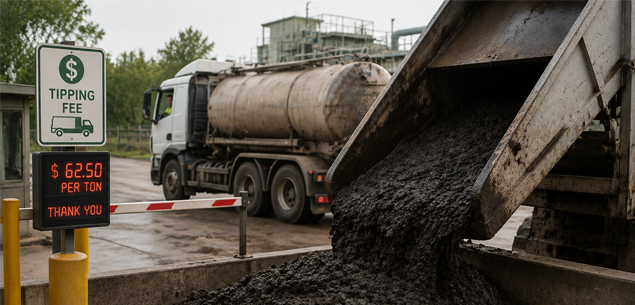
Revenue from Tipping Fees / Gate Fees
Investors can charge a gate fee to third parties (municipalities, other wastewater treatment plants, industrial clients) for accepting and processing their sewage sludge. Typical gate fees range from $30–$80/ton depending on local fees.
Revenue from Sewage Sludge Biochar Sales
Investors can sell biochar to end-users for soil remediation, substitute fuel, or other applications. Market price typically ranges from $100 to $450 per ton, depending on carbon content, heavy metal compliance, and local agricultural or industrial demand.

Unlocking Sewage Sludge Biochar Monetization: Key Market Applications
Biochar produced from a sewage sludge treatment plant can be utilized for soil amendment, road engineering backfill, building material additives, and carbon credit development. Specific applications should be aligned with regional regulatory approvals.
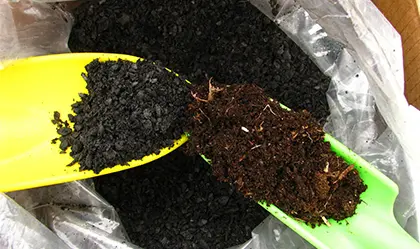
Soil Amendment
Sewage sludge biochar contains relatively concentrated phosphorus, making it a substitute for a portion of conventional phosphate fertilizers.
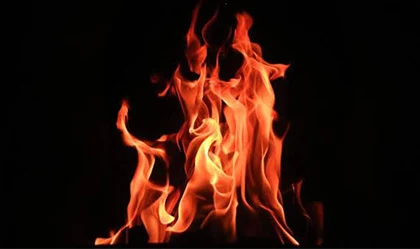
Alternative Fuel
With residual calorific value, sewage sludge biochar can serve as a supplementary heat source for the pyrolysis reactor or be sold as a product.
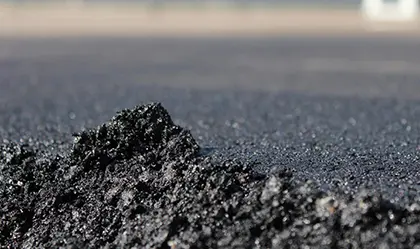
Road & Construction Backfill
Sewage sludge biochar offers compaction properties, making it suitable for municipal road subgrade, cut slopes, and engineering backfill aggregate.
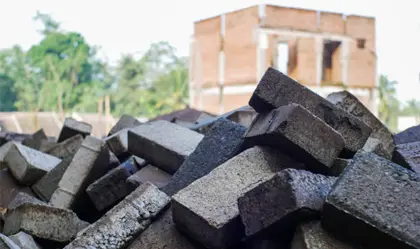
Building Material Additive
Sewage sludge biochar can be blended into raw materials for fired bricks, ceramsite, and other building materials, replacing a portion of natural aggregate.
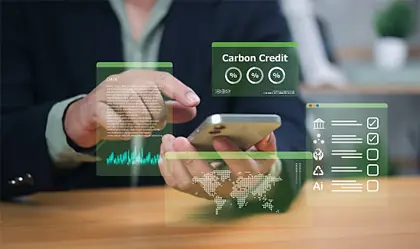
Carbon Credits Potential
Sewage sludge pyrolysis endows biochar products with carbon‑sequestration potential. This can leverage carbon‑trading methodologies to develop carbon‑credit opportunities.
4 Core Technical Advantages of Sewage Sludge Treatment Plant
Strict Environmental Compliance
Features a multi-stage flue gas cleaning system (310S stainless steel spray towers + plasma odor control) to ensure full compliance with strict global emission standards.
Advanced Energy Self-Sufficiency
Recycles high-calorific syngas generated during pyrolysis back to fuel the reactor, dramatically reducing external natural gas/diesel consumption during continuous operation.
7200 Hour/Year Safe & Continuous Operation
Features indirect heating, continuous pyrolysis, dynamic sealing, and automatic safety interlocks to eliminate explosive dust risks and equipment clogging.
High Automation & Reduced Labor Costs
Centralized PLC smart control system with intuitive touch-screen HMI supports one-touch startup/shutdown, automated temperature control, and remote diagnostics.
Compliance & Endorsement of Beston Sewage Sludge Treatment Plant
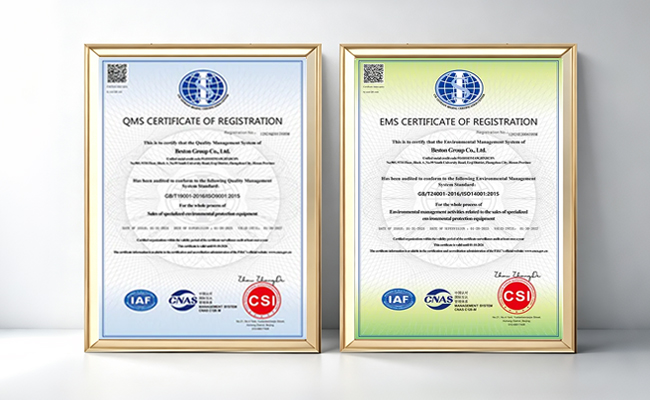
ISO 9001 / ISO 14001 Manufacturing & Quality Standards
Beston Group’s factory is fully certified with ISO 9001 Quality Management System and ISO 14001 Environmental Management System, ensuring strict quality control from raw material procurement to heavy equipment assembly.
Puro.earth / Isometric / Rainbow Technical Vetting Endorsement
Beston sewage sludge treatment plant is compliant with global carbon removal (CDR) methodologies, including Puro.earth, Isometric, and Rainbow, enabling project owners to explore carbon credits revenue.
Industry Trends: Why Pyrolysis Is the Future of Sewage Sludge Disposal
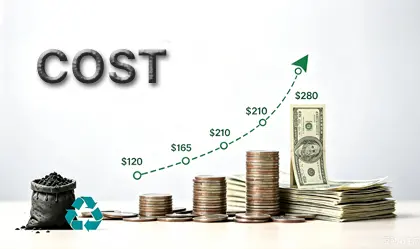
Rising Sludge Treatment Costs
Costs for conventional sludge disposal continue to climb, with treatment costs at some wastewater treatment plants reaching €200 per tonne — pushing the industry to seek more cost-effective treatment pathways.
Growing Sludge Volumes
Sewage sludge generation continues to rise alongside population growth, representing a large and persistent resource that requires scalable, sustainable upcycling approaches.
Tightening Environmental Rules
Traditional treatment methods like sludge incineration, which often result in added emissions, face increased regulatory scrutiny. This drives the industry toward alternative treatments that can reduce and remediate our environmental impact.
Views referenced from an interview with Donata Chiarì, Policy Officer at the European Biochar Industry (EBI). EBI is a membership organization representing the European biochar industry, working to bridge the gap between market innovation, policymaking, and research.
End-to-End Engineering & Project Services
Feasibility & Custom Process Design
Comprehensive analysis of your project conditions to deliver tailored material calculations and custom process design.
Custom Site Layout Design
Full 3D CAD/P&ID engineering packages tailored to your site footprint, existing utility connections, and local environmental permit requirements.
On-site Installation, Commissioning & Training
On-site execution by senior field engineers for civil work guidance, mechanical assembly, system commissioning, and comprehensive operator training.
Lifecycle Maintenance & Technical Support
24/7 remote diagnostics, rapid spare parts supply, and lifetime technical guidance to ensure 7200+ hours of continuous, trouble-free plant operation per cycle.
FAQ of Sewage Sludge Pyrolysis Treatment
01 What is sewage sludge pyrolysis?
02 What types of sludge is sewage sludge treatment plant suitable for treating?
03 What are the applications for the sewage sludge biochar?
04 Can biochar from sewage sludge be used as fertilizer?
Ready to Transform Your Sewage Sludge Management Strategy?
Beston Group specializes in advanced pyrolysis solutions tailored for municipal sewage sludge treatment plants. Our expertise can help you evaluate and implement efficient sewage sludge pyrolysis processes, turning a waste liability into valuable energy and materials. Contact us today to achieve your sludge waste reduction and resource recovery goals. Welcome follow us in LinkedIn for more useful information.