Biochar carbon dioxide removal (CDR) is an increasingly established pathway in the durable carbon removal market. Demand for carbon removal credits and the commercial value of biochar are attracting investment from biomass resource owners, waste management companies, and carbon removal developers. However, successful CDR projects require more than biochar production. This guide covers six key stages of project development, from initial investment planning to commercial carbon removal delivery.
Biochar CDR Project Development Roadmap
| Stage | The Decision You Face | What It Mainly Determines | |
|---|---|---|---|
| 01 | Strategy | Should we do this, and how will it make money? | Business model and revenue mix |
| 02 | Feasibility and Eligibility | Can this project actually qualify and perform? | Whether the project is bankable |
| 03 | Launch and Setup | How much do we invest, and in what? | Capital cost, schedule and operating cost |
| 04 | Registration and Audit Preparation | Which registry and methodology? | Credit quality, buyer appetite and timeline |
| 05 | Commissioning and Production | How do we prove what we produce? | Data integrity and issuance risk |
| 06 | Credit Issuance | How and to whom do we sell? | Cash flow and returns |
Stage 1: Define Your Biochar CDR Business Model
Expected Outcome: A preliminary business plan defining target markets, revenue streams, investment objectives, and potential commercial partners.
- Carbon Removal Credits: Revenue from verified net carbon removal.
- Biochar Product Sales: Income from agricultural, construction, or other eligible applications.
- Waste Treatment Fees: Revenue from processing eligible biomass residues.
- Energy and Byproducts: Commercial utilization of recoverable heat or other pyrolysis outputs.
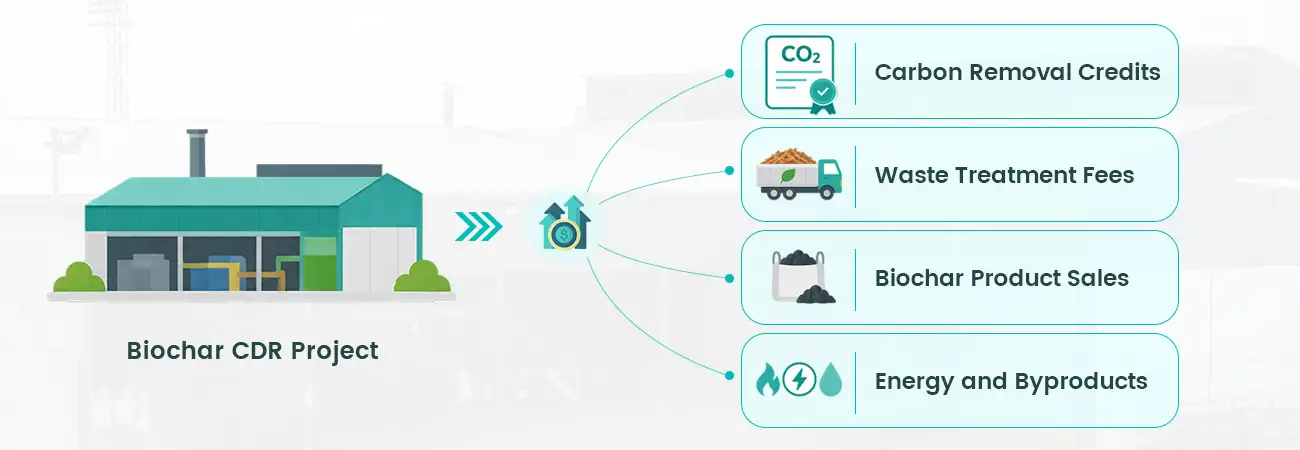
The availability of these revenue streams depends on local market conditions and project configuration. Investors should avoid assuming that carbon credit revenue alone will support project profitability. Physical biochar sales and other commercially viable revenue streams can improve financial resilience, particularly before the first credit issuance.
Stage 2: Assess Project Feasibility and CDR Eligibility
Expected Outcome: A feasibility study covering feedstock security, production performance, estimated net carbon removal, eligible end-use pathways, and preliminary financial viability.
Assess Feedstock Availability and Sustainability
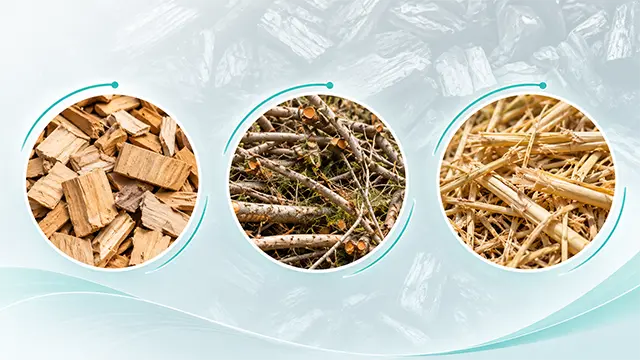
Feedstock selection directly affects project economics, production performance, and CDR eligibility. Investors should assess:
- Supply Security: Annual biomass availability, seasonality, and long-term supply reliability.
- Total Feedstock Cost: Collection, transportation, storage, pretreatment costs, and associated lifecycle emissions.
- Material Properties: Moisture content, particle size, ash content, and carbon content.
- CDR Eligibility: Biomass origin, sustainability, existing uses, and methodology requirements.
Validate Production Performance and Carbon Removal Potential
Feedstock-specific pyrolysis testing helps determine biochar yield, organic carbon content, H/Corg ratio, contaminant levels, and optimal operating conditions. Net carbon removal can be estimated using the following simplified formula:
Net Carbon Removal = Dry Biochar Mass × Organic Carbon Content × Carbon Persistence Factor × 44/12 − Applicable Emissions and Deductions
Consider an illustrative industrial-scale biochar project:
| Parameter | Estimated Value |
|---|---|
| Annual Dry Biochar Production | 6,000 tonnes |
| Organic Carbon Content | 75% |
| Carbon Persistence Factor | 80% |
| Gross Durable Carbon Storage | 13,200 tCO₂e |
| Project Emissions and Applicable Deductions | 1,200 tCO₂e |
| Annual Net Carbon Removal | 12,000 tCO₂e |
This example is hypothetical. Actual carbon credit issuance depends on verified production data, eligible end-use volumes, lifecycle emissions, and the accounting rules of the selected methodology.
Confirm End-Use and Regulatory Feasibility
Beyond biochar equipment, projects must establish an eligible and traceable carbon storage pathway, such as agricultural soil improvement, growing media, or biochar-amended construction materials. Before committing to plant construction, investors should also assess local environmental permitting, land-use requirements, emissions regulations, product standards, and preliminary methodology eligibility.
Stage 3: Design, Finance, and Build the Biochar Plant
Expected Outcome: A project execution plan covering production system design, investment costs, financing, and construction schedules.
Select the Appropriate Production Scale and Technology
Production capacity and equipment configuration should match feedstock availability, market demand, investment capacity, and carbon removal targets. A complete line may include feedstock pretreatment, pyrolysis, energy recovery, biochar handling, emission control, and monitoring systems. Investors can consider two development approaches:
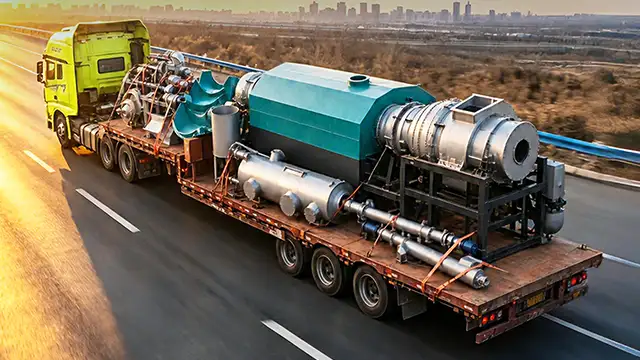
Pilot-Scale Validation
BST-06Quicker features easy installation and mobility, supporting technical and commercial validation before large-scale investment.
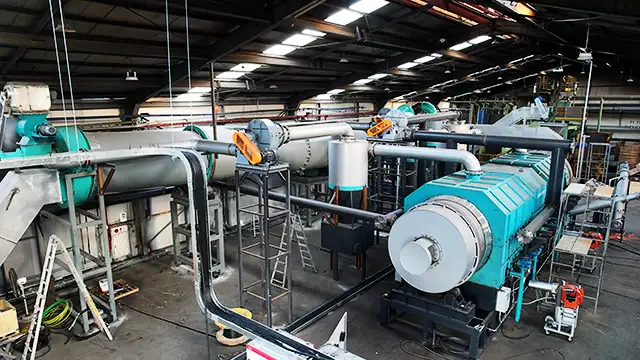
Industrial-Scale Production
BST-50 series offers high capacity and stable operation for projects with secured feedstock supply and carbon credit offtake agreements.
Evaluate Project Economics and Investment Returns
Investors should evaluate total project costs and potential revenue rather than equipment price alone.
| Financial Component | Key Variables |
|---|---|
| CAPEX | Equipment, land, civil works, utilities, and installation |
| OPEX | Feedstock, labor, energy, maintenance, and logistics |
| CDR Costs | LCA, MRV, laboratory testing, auditing, and registry fees |
| Working Capital | Operating expenses before revenue collection |
| Revenue | Carbon credits, biochar products, and other commercial outputs |
Conduct sensitivity analysis to assess how carbon credit prices, biochar yield, feedstock costs, plant utilization, and issuance delays affect project profitability.
Biochar CDR ROI Calculator
Explore different investment scenarios, estimate potential financial returns, and identify the key variables affecting your project’s profitability.
Calculate Your Project ROI →
Secure Financing and Plan Project Execution
Investors should establish a realistic financing and project execution plan covering three key areas:
- Financing Strategy: Equity investment, debt financing, strategic partnerships, grants, and carbon credit pre-purchases. Long-term offtake agreements can support financing but do not guarantee upfront capital.
- Project Timeline: Equipment manufacturing, site preparation, installation, commissioning, regulatory approvals, and certification.
- Working Capital: Sufficient financial reserves to cover initial operations and potential delays in carbon credit revenue.
Stage 4: Register the Project and Prepare for Certification
Expected Outcome: A selected carbon removal methodology, prepared project documentation, a preliminary carbon accounting framework, and an audit-ready MRV plan.
Select a Suitable Carbon Removal Methodology
Several established carbon crediting programs and standards provide frameworks for biochar carbon removal projects. When selecting a methodology, investors should evaluate feedstock eligibility, production and storage requirements, additionality, monitoring obligations, certification costs, and market acceptance. The applicable methodology version and its specific requirements should be confirmed before project implementation.
| Crediting Program | Methodology / Protocol |
|---|---|
| Puro.earth | Biochar Methodology |
| Isometric | Biochar Production and Storage Protocol |
| Verra | VM0044: Biochar Utilization in Soil and Non-Soil Applications |
| Carbon Standards International (CSI) | Global Biochar C-Sink Standard |
| Rainbow | Biomass Carbon Removal and Storage (BiCRS) Standard |
| Gold Standard | Production and Application for the Removal of Carbon via Biochar (PARC) |
| Climate Action Reserve (CAR) | U.S. and Canada Biochar Protocol |
Establish LCA and MRV Frameworks
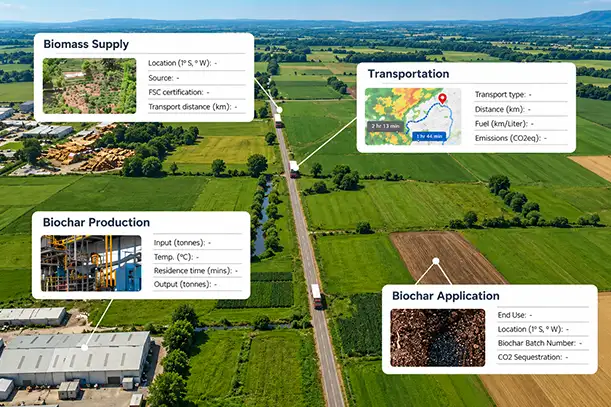
Life Cycle Assessment (LCA) evaluates greenhouse gas emissions and removals across the project value chain, including biomass transportation, pretreatment, energy consumption, pyrolysis, and biochar application. It defines carbon accounting boundaries and identifies key emission sources.
Monitoring, Reporting, and Verification (MRV) defines how production data, biochar quality, feedstock origin, and carbon storage or end-use are monitored and verified. Data collection and monitoring procedures should be integrated into equipment design and operational planning from the outset.
Prepare Project Registration and Audit Documents

- Project description and production facility design;
- Feedstock sourcing and sustainability documentation;
- Additionality assessment;
- Preliminary LCA and carbon removal calculations;
- Monitoring and quality management plans;
- Environmental permits and end-use documentation.
Pyrolysis equipment with third-party technical assessments can provide supporting evidence of equipment performance and help address technology-related requirements during project preparation. However, equipment-level assessment or pre-approval does not replace project-level certification or guarantee carbon credit issuance.
Stage 5: Commission the Plant and Implement dMRV
Expected Outcome: Stable biochar production, consistent product quality, and traceable operational data to support carbon removal verification.
Establish Stable Production and Quality Control
- Validate feedstock throughput, pyrolysis performance, biochar yield, and energy consumption under actual operating conditions.
- Test biochar quality according to the selected methodology and intended end-use requirements. Key indicators may include organic carbon content, H/Corg ratio, moisture content, and contaminant levels.
- Allow for a gradual production ramp-up to optimize operating parameters and stabilize product quality before reaching full design capacity.
Build a Verifiable Carbon Removal Data Chain
The dMRV systems link operational records with the evidence required for carbon credit verification.
| Operational Stage | Key Data |
|---|---|
| Feedstock Sourcing | Origin, weight, moisture content, and sustainability records |
| Biochar Production | Operating temperature, throughput, and energy consumption |
| Quality Testing | Biochar quantity, organic carbon content, and carbon stability |
| Transportation | Batch identification and delivery records |
| Eligible End Use | Application records and evidence of carbon storage |
Notes:
- Use calibrated instruments and standardized procedures to ensure accurate operational records.
- Assign unique batch IDs to feedstock, production, test results, transportation, and end-use records for supply chain traceability.
- Retain laboratory reports documenting organic carbon content, H/Corg ratio, and contaminant levels as required by the selected methodology.
- Digital monitoring supports data collection but does not replace independent verification by an approved third-party auditor.
Stage 6: Verify, Issue, and Monetize Carbon Credits
Expected Outcome: Verified carbon removal credits, established sales arrangements, and a repeatable credit delivery process.
Complete Carbon Removal Verification and Issuance
Once eligible biochar production and end-use activities are documented, project developers submit monitoring records and carbon removal calculations for independent verification. One carbon removal credit generally represents one metric tonne of verified net CO2e removal. Actual issuance volumes may vary depending on production performance, lifecycle emissions, eligible end-use quantities, and methodology-specific accounting requirements.
- Compile project documentation and monitoring records;
- Calculate net carbon removal based on the selected methodology;
- Complete independent third-party verification;
- Address verification findings and submit required revisions;
- Obtain issued credits through the selected registry.
Establish a Carbon Credit Sales and Delivery Strategy
Developers should plan credit sales during early project development. Common sales approaches include:
| Sales Approach | Commercial Considerations |
|---|---|
| Long-Term Offtake | Revenue visibility and future delivery commitments |
| Forward Sales | Agreed pricing and delivery terms before credit issuance |
| Pre-Purchase | Potential access to advance project funding |
| Spot Sales | Flexible sales timing and exposure to market prices |
Notes:
- Base sales commitments on conservative production and credit issuance forecasts to reduce delivery risks.
- Maintain consistent credit delivery across reporting periods to strengthen buyer confidence and support future project expansion.
- A mix of contracted and uncommitted credit volumes can balance revenue stability with market flexibility.
Turn Your Biochar CDR Concept into an Industrial Project
Beston Group supports investors throughout biochar project development, from feedstock testing and technical feasibility assessment to pilot-scale validation, industrial production, and operational support. Whether you are exploring a new biochar CDR opportunity or scaling up an existing project, we help you establish a reliable technical foundation for long-term carbon removal delivery. Share your feedstock resources, project location, and investment objectives with our team to develop a tailored biochar production solution.