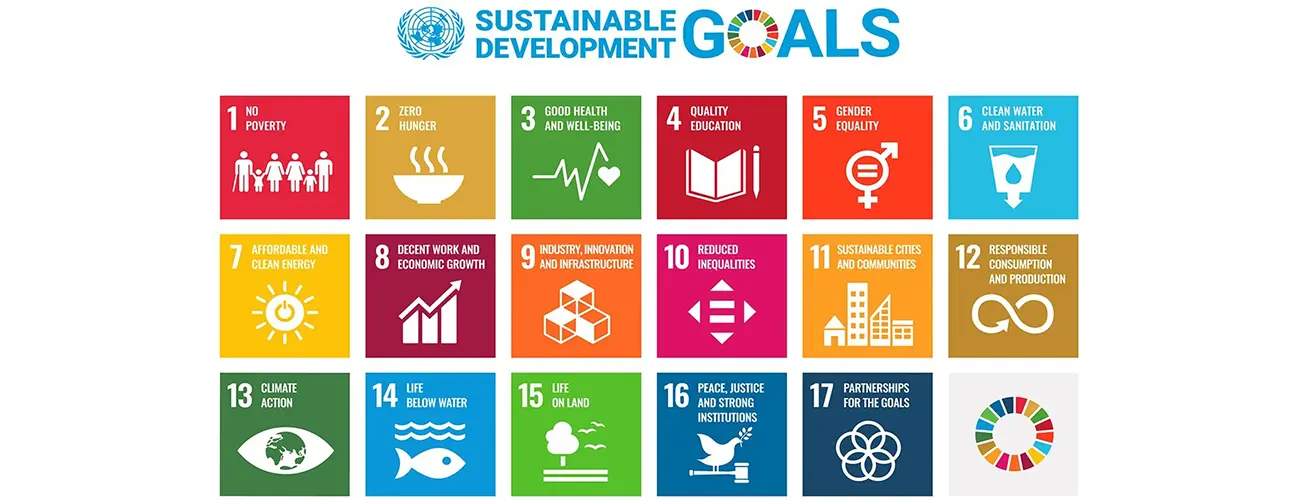
In recent years, the world is facing increasingly severe environmental challenges. Therefore, the United Nations Sustainable Development Goals (SDGs). This goal aims to achieve global economic, social and environmental sustainable development by 2030. Among them, biochar, as an innovative agricultural and environmental management technology, plays an important role in achieving multiple sustainable development goals.
What are Sustainable Development Goals?
The Sustainable Development Goals (SDGs) are a set of global goals set by the United Nations in 2015 to address a series of major social, economic and environmental issues by 2030. These 17 goals include poverty eradication, hunger eradication, health and well-being, quality education, gender equality, clean water and sanitation, renewable energy, decent work and economic growth, reduced inequality, sustainable cities and communities, responsible consumption and production, climate action, marine ecology, terrestrial ecology, peace and justice, etc. These goals aim to promote global sustainable development, improve people’s quality of life, and protect the earth’s environment.

What Goals does Biochar Promote?
Climate Action and Greenhouse Gas Mitigation (SDG 13)

Carbon Sequestration and Emission Reduction
- Long-term carbon storage: Biomass pyrolysis provides an effective route for stabilizing carbon in solid form. Unlike open burning, which rapidly emits CO₂, the process converts organic matter into biochar, where carbon remains inert for centuries. When applied to soil, biochar functions as a durable carbon sink.
- Avoid emissions: In addition to carbon storage, pyrolysis prevents methane (CH₄) and nitrous oxide (N₂O) emissions that would otherwise arise during biomass decomposition. Life-cycle assessments indicate that each ton of biomass converted can offset multiple tons of CO₂-equivalent gases, reinforcing the technology’s climate mitigation potential.
Carbon Credit Validation and Market Integration
- Verified carbon offsets: With the long-term stability of biochar increasingly validated, biomass pyrolysis has been incorporated into carbon certification frameworks such as Puro.earth. These programs quantify and verify carbon sequestration outcomes, converting proven storage into tradable carbon credits.
- Promote climate action: This market mechanism encourages broader adoption of pyrolysis technologies while directly aligning with SDG 13 – Climate Action. By delivering measurable emission reductions and reliable carbon retention, biomass pyrolysis supports global decarbonization initiatives and the transition toward a low-carbon economy.
Soil Restoration and Agricultural Sustainability (SDG 15)

Soil Restoration and Land Resilience
- Rebuild degraded soils: Biomass pyrolysis plays a crucial role in restoring degraded land through the application of biochar. When introduced into nutrient-poor or eroded soils, biochar improves structure, water retention, and cation exchange capacity while reducing nutrient leaching. Its porous network binds soil particles, promoting aggregation and limiting surface runoff or wind erosion.
- Enhance land stability: These benefits are particularly valuable in arid and semi-arid regions, where biochar-enriched soils demonstrate higher drought tolerance and plant productivity. By stabilizing soil systems and reducing degradation risks, biomass pyrolysis contributes to the achievement of SDG 15, which prioritizes land degradation neutrality and sustainable soil management.
Carbon Retention and Ecosystem Regeneration
- Long-term carbon sink: Beyond soil enhancement, biochar serves as a persistent form of carbon storage, immobilizing atmospheric CO₂ for centuries. This sequestration reduces climate stress on terrestrial ecosystems and helps sustain long-term ecological balance.
- Biodiversity and habitat recovery: As soil fertility improves, vegetation and microbial diversity thrive, creating conditions for habitat restoration and wildlife support. Through these regenerative effects, biomass pyrolysis aids in combating desertification and rebuilding resilient ecosystems under SDG 15 – Life on Land.
Renewable Energy Transition and Energy Security (SDG 7)

Energy Generation from Biomass Pyrolysis
- Renewable fuel production: Biomass pyrolysis provides a viable route for renewable energy generation. Through controlled thermal decomposition, organic feedstock is converted into syngas, which can be used for power generation or heating. These renewable fuels displace fossil-based energy, promoting localized, carbon-neutral energy systems in rural and agricultural areas. The integration of biomass pyrolysis into waste-to-energy networks supports SDG 7 by expanding access to affordable and clean energy.
- Circular energy utilization: The technology establishes a closed-loop approach, transforming agricultural and forestry residues into valuable energy carriers while resolving biomass disposal challenges. By converting waste into energy, pyrolysis bridges sustainable resource management and renewable energy production, reinforcing both environmental and economic sustainability.
Energy Efficiency and Process Optimization
- Thermal optimization: Modern pyrolysis plants are engineered for high energy efficiency. Recovered waste heat from exhaust streams is redirected into drying or preheating stages, reducing overall energy input. Continuous reactors maintain stable thermal profiles, maximizing conversion efficiency and minimizing emissions during operation.
- Sustainable process efficiency: These design advancements enable self-sustaining operation with minimal auxiliary fuel consumption. As a result, biomass pyrolysis achieves a favorable energy return on investment while lowering operational costs. This optimization not only improves process sustainability but also strengthens the role of pyrolysis as a core technology in global renewable energy development.
Resource Circularity and Responsible Consumption (SDG 12)

From Waste to Resource Circulation
- Circular resource conversion: Biochar production transforms organic residues such as crop waste, wood offcuts, and nut shells into reusable materials. Through thermochemical decomposition, these discarded feedstocks are converted into biochar and syngas—both of which re-enter productive use. Biochar enhances soil systems, while syngas provides renewable process heat, closing material loops and reducing reliance on virgin resources. This conversion from waste to utility aligns directly with circular economy principles.
- Pollution reduction and material recovery: By diverting biomass away from open burning or landfill, pyrolysis significantly curtails environmental contamination. The recovered products replace conventional materials, lowering overall emissions and waste generation. This sustainable waste valorization supports SDG 12 by promoting responsible production and consumption patterns.
Sustainable Industrial Utilization
- Agricultural and industrial integration: In agriculture, biochar improves soil fertility and moisture retention, diminishing the need for chemical fertilizers and irrigation. Within industrial contexts, pyrolysis-derived fuels such as syngas substitute fossil energy inputs, enabling lower carbon footprints across manufacturing operations.
- Resource efficiency and cleaner production: The combined utilization of all pyrolysis outputs demonstrates how sustainable technologies can uphold productivity while conserving natural resources. By integrating waste conversion with clean energy supply, biomass pyrolysis exemplifies a scalable model for industrial sustainability and responsible material management.
Biochar Brings a Sustainable Future
As a versatile material, the application of biochar involves multiple sustainable development goals. By supporting climate action, enhancing soil restoration, advancing clean energy use, and fostering resource circularity, biochar provides an effective solution for achieving the 2030 Sustainable Development Goals. In the future, with the advancement of technology and the expansion of applications, biochar is expected to play a greater role globally and contribute to sustainable development.