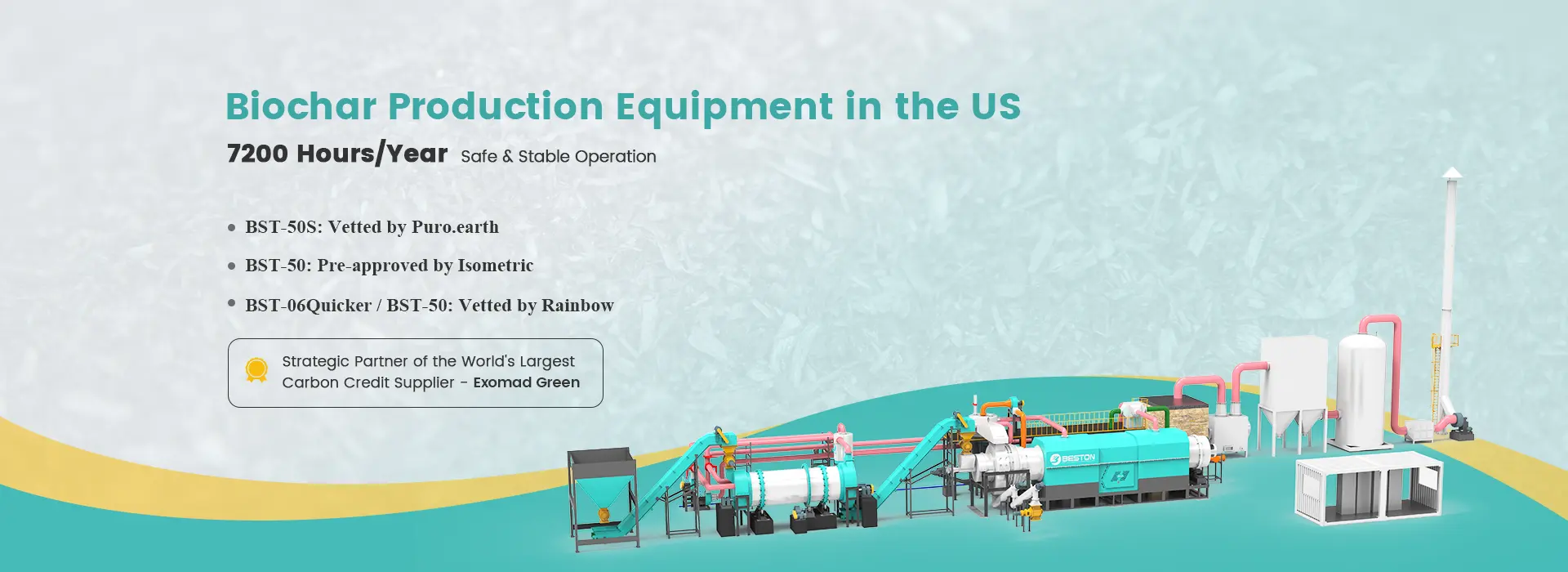
Biochar production equipment in the US converts biomass into biochar through high-temperature pyrolysis. Across the U.S., millions of tons of agricultural residue, forest debris, and processing byproducts are burned or landfilled every year. It generates emissions, compliance costs, and wasted potential. Biochar changes that equation. It rebuilds degraded soil, sequesters carbon for centuries, and generates carbon credits. Currently, Fortune 500 companies are actively competing to buy such a carbon asset. For those looking to invest in biochar production project in the US, the window is open.

Parameters of Biochar Production Equipment in the US
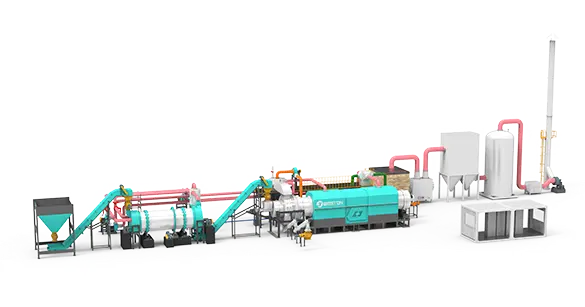
BST-50: Industrial-scale Model
- Vetted by Puro.earth, Rainbow, pre-approved by Isometric
- 6,000 tons biochar production annually
- 7200H/Y stable&safe operation
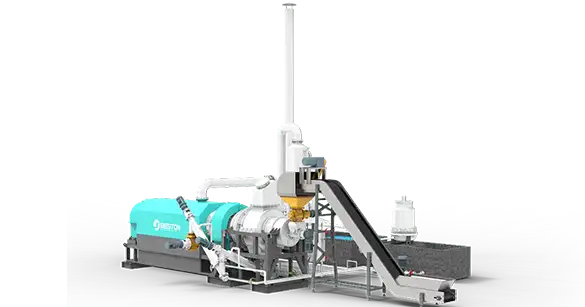
BST-06Quicker: Pilot-scale Model
- Vetted by Rainbow
- 8-hour rapid installation and deployment
- Movable design allowing 8-hour disassembly and reassembly
| Model | BST-50 Standard | BST-50 Max | BST-50S | BST-06 Quicker |
|---|---|---|---|---|
| Operating Mode | Continuous | Continuous | Continuous | Continuous |
| Application | Commercial-scale | Commercial-scale | Commercial-scale | Pilot Testing |
| Certification Platform | Isometric, Rainbow | Isometric, Rainbow | Puro.earth, Isometric, Rainbow | Rainbow |
| Reactor Material | Staineless Steel 304 | Staineless Steel 304 | Staineless Steel 310s | Staineless Steel 304 |
| Feedstock Moisture | Below 15% | From 15% to 55% | From 15% to 55% | Below 15% |
| Feedstock Size | 5-20mm | 5-20mm | 5-20mm | 5-20mm |
| Feeding Capacity (only for pyrolysis) | 10-15m³/h | 10-15m³/h | 10-15m³/h | 100-200KG/H |
| Max. Pyrolysis Temperature (Combustion Chamber) | 650℃ | 650℃ | 700℃ | 650℃ |
| Residue Retention Time | 15-20 minutes | 15-20 minutes | 15-20 minutes | 15-20 minutes |
| Operating Pressure | -20 - 0 pa | -20 - 0 pa | -20 - 0 pa | -20 - 0 pa |
| Cooling Method | Water | Water | Industrial Refrigeration Units | Water |
| Exhasut Gas Treatment | Standard | Standard | High Performance | Standard |
| Biochar Temperature | 45℃ | 45℃ | 45℃ | 45℃ |
| Annual Operating Hours | >7200hrs | >7200hrs | >7200hrs | >7200hrs |
| Service Life | 5-8 years | 5-8 years | 8-10 years | 5-8 years |
| Land Space Required (L*W*H*m) | 35*15*8 | 65*15*8 | 65*15*8 | 35*15*8 |
| Power Consumption | 121kw/h | 270-288kw/h | 270-304kw/h | 25.1kw/h |
| Water Consumption | 5-7m³/day | 5-7m³/day | 0 | 3-5m³/day |
| Fuel Consumption | 220-260m³/h | 220-260m³/h | 220-260m³/h | 30-50m³/day |
| Installation Period | 60 days | 60 days | 60 days | 7 days |
Beston Group: Reliable Biochar Machine Manufacturer in the US
Triple-Endorsed by the US Market’s Leading Carbon Credit Platforms
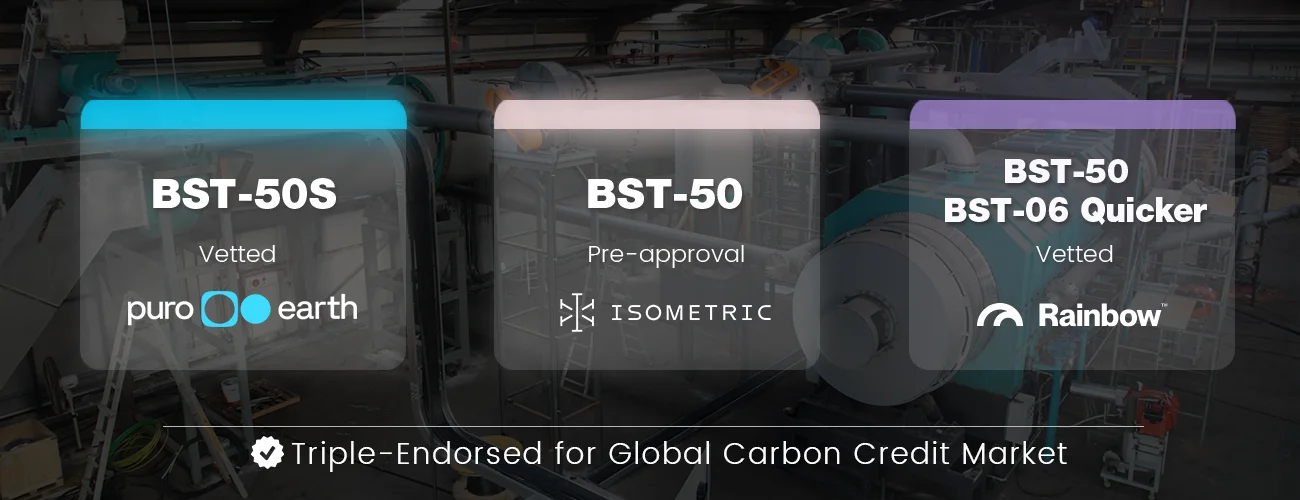
Puro.earth, Isometric and Rainbow carry strong influence across the North American carbon credit market. Select the registration pathway and methodology best fits your project.
Biochar production equipment in the US undergoing technical evaluation reduces redundant audits of production facilities. Gap between production and first credit issuance gets shorter.
No additional technical verification investment needed. Beston equipment meets platform standards out of the box — so you enter the carbon credit market on day one.
New to biochar production in the US? Start with the BST-06 to validate your feedstock and carbon credit pathway — then scale to BST-50 with confidence.
Core Technology Advantages of Biochar Machine in the US
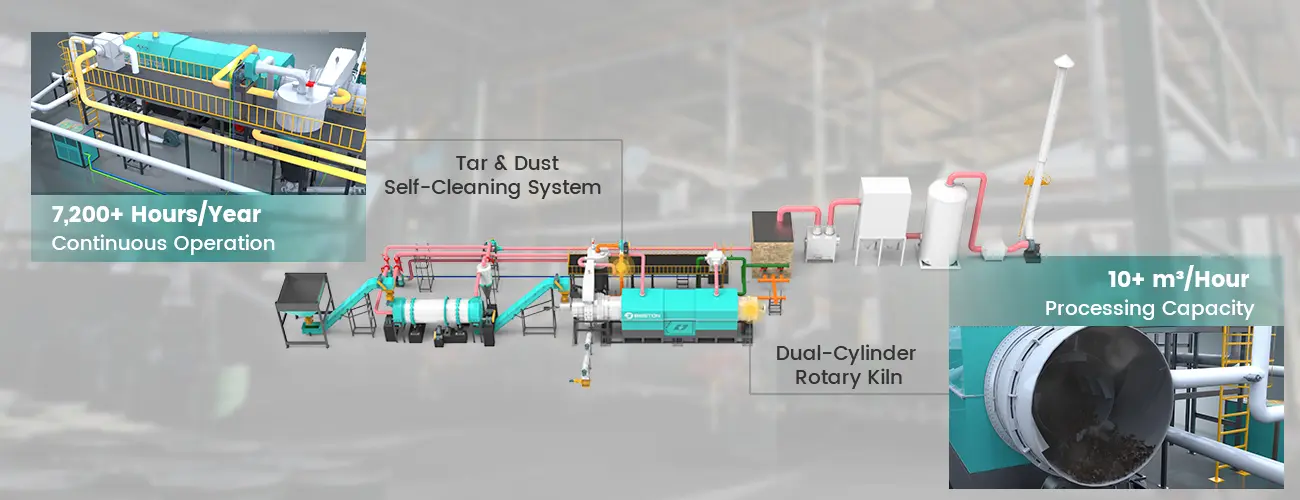
Tar & Dust Self-Cleaning System
7,200+ Hours/Year Continuous Operation
Thermal insulation prevents tar condensation and blockage. Auto-purging clears carbon dust from pipelines — keeping material flow uninterrupted without manual intervention.
Dual-Cylinder Rotary Kiln
10+ m³/Hour Processing Capacity
The nested reactor design uses concentric cylinders to separate drying and pyrolysis into dedicated stages. It maximizes throughput and thermal efficiency with the same space.
Benchmark Case: Almond Shell Biochar Carbon Removal Project, California
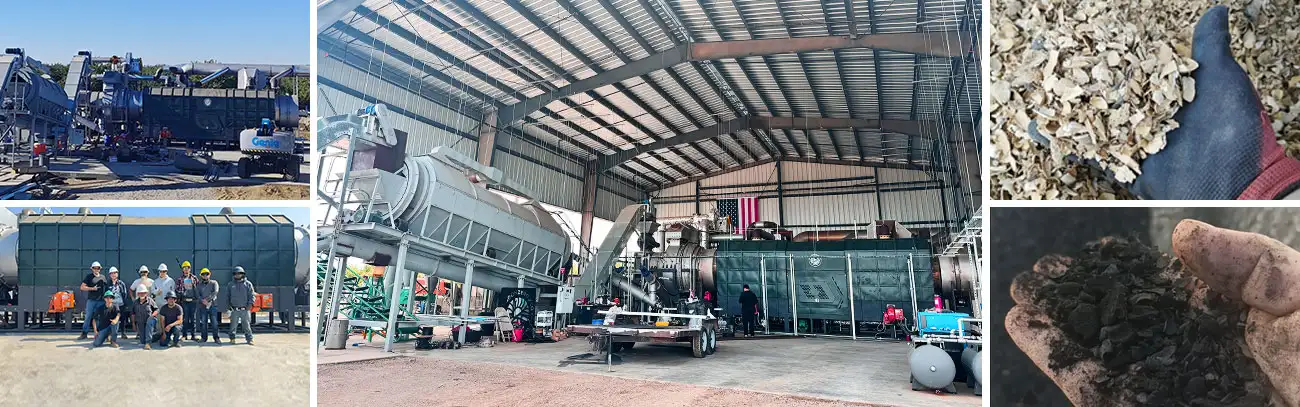
Project Information
- Customer: Carbonzero.ECO, California, USA
- Equipment Configuration: BST-50 biochar pyrolysis machine;
- Acceptance Date: August 2025;
- Raw Material: Almond shells;
- Biochar Application: soil Carbon sequestration + carbon credit generation.
Project Achievements
- Carbon Removal Certification: Entering the project audit phase of isometric;
- Annual Biochar Production: 6,000 tons/year
- Annual Carbon Sequestration:12,000 tons/year
- Industry Leadership: Co-host the 2026 North American Biochar Leadership Summit.
Biomass Resources for Biochar Production in the US
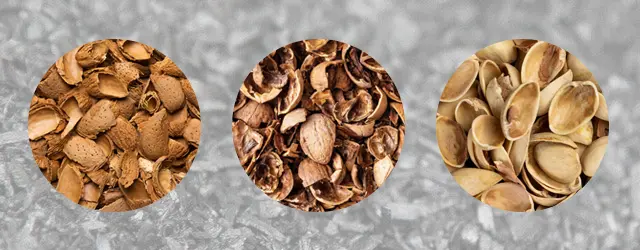
Nut Processing Waste
- Feedstock: Almond shells, walnut shells, pistachio shells;
- Key Region: California Central Valley;
- Characteristics: Low moisture, consistent composition, high carbon yield — ideal for stable, certified biochar.
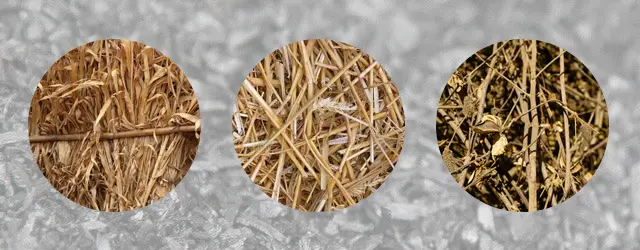
Agricultural Crop Residues
- Feedstock: Corn stover, wheat straw, rice husk, cotton stalks;
- Key Regions: Corn Belt (Iowa, Illinois, Nebraska); wheat (Kansas, North Dakota); rice (California, Arkansas); cotton (Texas);
- Characteristics: Widely available, burned or left to decompose; increasingly restricted under state air quality rules.

Forest Management Residues
- Feedstock: Logging slash, thinning residues, low-grade woody debris;
- Key Regions: California, Oregon, Washington, Montana, Idaho;
- Characteristics: Directly linked to wildfire prevention; federal and state programs actively support biomass removal.

Wood Processing Waste
- Feedstock: Sawdust, wood chips, bark, construction offcuts;
- Key Regions: Pacific Northwest (Oregon, Washington); Southeast furniture industry;
- Characteristics: Reliable, homogeneous stream; high carbon content; yields consistent, high-quality biochar.
US Policy & Incentives for Biochar Project Development
Federal Level
State Level
- IRA Section 45Q: For geological sequestration, the Inflation Reduction Act offers tax credits of $60–$85 per metric ton of CO₂ captured and stored for facilities meeting prevailing wage requirements. In contrast, a proposed biochar-specific credit adds $12/metric ton with a potential 5× multiplier — bringing eligible projects up to $60/metric ton in federal incentives.
- USDA Programs: USDA has committed $3.1 billion across 141 projects under the Partnerships for Climate-Smart Commodities program, with biochar explicitly listed as a supported practice. Individual biochar projects have received grants up to $20.4 million.
- EPA Solid Waste Regulations: US agricultural and wood processing operations that fail to manage organic waste streams properly face penalties under EPA’s Resource Conservation and Recovery Act (RCRA). Biochar production equipment in the US eliminates disposal liability before it becomes a fine.
- California: California’s cap-and-trade carbon market is valued at $73 billion, with trading volume growing nearly 250% over the past five years. Meanwhile, SB 1383 mandates 75% organic waste diversion from landfills, with penalties reaching $10,000/day for non-compliant jurisdictions since January 2024. Biochar qualifies as a compliant diversion pathway under both frameworks.
- Oregon: In July 2025, the US Forest Service awarded $80 million in Wood Innovation Grants to support wood products manufacturing, active forest management, and energy innovation — with Oregon among the primary beneficiary states. Biochar production in Oregon from forest residues qualifies directly under this funding framework.
- Iowa: Iowa operates the Renewable Chemicals Production Tax Credit Program — one of the few US state-level incentives that explicitly covers biochar as a qualifying bioproduct. Open-field burning restrictions are tightening. It pushes operators toward compliant biochar production as the preferred residue management pathway.

Why Invest in Biochar Production Equipment in the US?
1. From Worthless Residue to Carbon Revenue
2. From Agricultural Emissions to Soil Asset
3. From Hidden Dangers to Wildfire Prevention

US CDR Market at a Glance
- US biochar market reached $602.2M in 2025, projected to reach $1.51B by 2034 (IMARC Group)
- US accounts for 68% of all global BCR purchases (CDR.fyi, Q1 2025)
- US biochar credits trading at ~$150/tonne CO₂e for 2025 delivery (S&P Global, Oct 2025)
Why Now to Develop a Biochar CDR Project?
- Stable credit prices — biochar holds price stability where other CDR methods fluctuate, a signal of genuine market confidence
- Industrial-scale projects are rare — BST-50’s high-volume output is what major buyers such as Microsoft and Google prioritize when signing long-term offtake agreements
- Rising entry barriers — verification methodologies grow stricter each year; early movers lock in certification under lighter requirements

What Biochar Returns to the Farmland?
- Soil Carbon — Biochar application rebuilds soil organic carbon levels, improving long-term soil fertility and structure;
- Water Retention — Improved moisture holding capacity, reducing irrigation needs in drought-prone states;
- Fertilizer Savings — Biochar improves soil nutrient retention, reducing nitrate leaching and dependence on synthetic fertilizers;
- Crop Yield — Biochar application improves crop yields by an average of 16% over the long term.
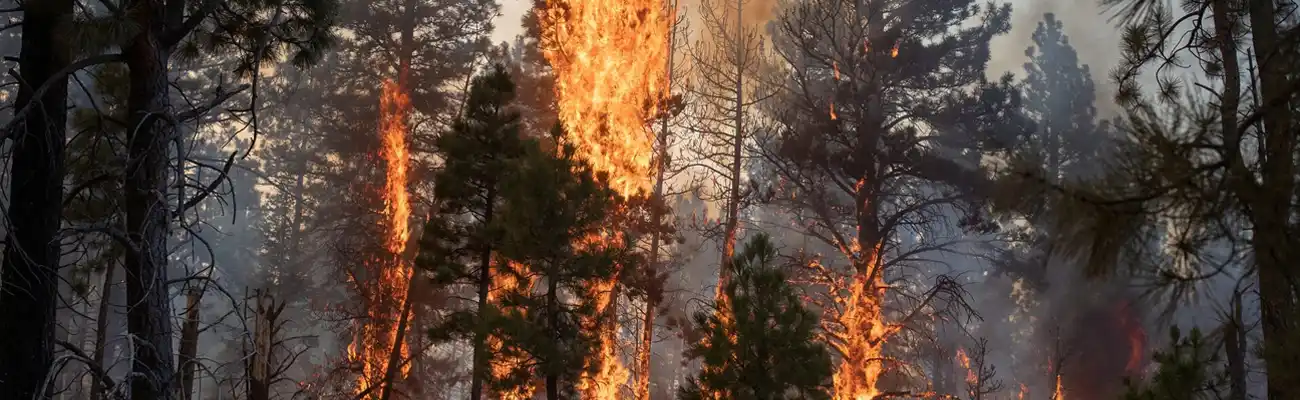
The Scale of the Problem
- 64,897 wildfires burned 8.9 million acres across the US in 2024, above both 5 and 10 year national averages;
- Direct + indirect wildfire costs: estimated $394–$893 billion per year;
- Root cause in the West: accumulated dry biomass — slash piles, dead trees, dense undergrowth left unmanaged.
How Biochar Production Equipment in the US Helps?
- Converts fire-risk forest residues into stable biochar on-site, eliminating fuel load
- Replaces open burning with a zero-emission, revenue-generating alternative
- Eligible for state biomass removal programs and forestry subsidies (California, Oregon, Washington)
Working Process of Biochar Making Machine in the US
How to Start a Biochar Production Project in the US?
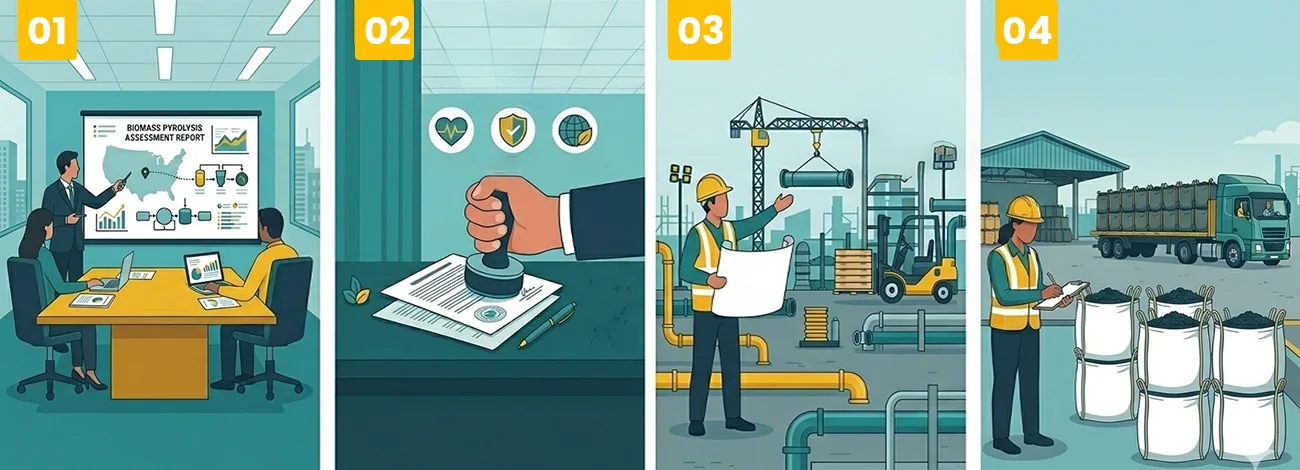
1. Site & Feedstock Assessment
- Feedstock evaluation: availability, consistency, and moisture content;
- Site requirements: accessibility for biochar machine in the US delivery and biomass logistics;
- Federal guidance: consult USDA NRCS for feedstock eligibility on agricultural biomass projects.
2. Permitting & Compliance
- Air quality permit: state environmental agency (e.g. CARB in California; typically 3–6 months);
- Solid waste handling permit: state / county level;
- Clean Air Act compliance: equipment and related components fall under EPA’s OSWI framework;
- OSHA safety compliance: applies to all construction and operational phases.
3. Facility Construction
- Site preparation — civil foundation, utility connections (water, electricity, gas) and site grading completed prior to equipment arrival
- Equipment installation — installation engineers coordinate civil, mechanical, and electrical trades on-site. Beston Group provides installation services
- Key inspection — structural and mechanical work subject to special inspection by certified third-party inspectors before operation commences
4. Full-Scale Operation
- Trial run: initial batches verify biochar output quality against target application;
- Offtake agreements: : secure and execute long-term purchase contracts with agricultural or industrial buyers;
- Ongoing compliance: periodic state environmental agency inspections throughout operational lifecycle.
Start Your Biochar Project in the US
Biochar production equipment in the U.S. is ready for your feedstock, your scale, and your market. The U.S. biochar opportunity does not wait — let’s build it. Do you have a consistent biomass stream you’re currently burning or landfilling? Are you looking to enter the carbon credit market with verified, industrial-scale production? Tell us what you’re working with, we’ll take it from there. For the latest biochar industry insights, project updates, and market developments, follow us on LinkedIn.