As Indonesia targets Net-Zero Emissions by 2060, managing massive waste from overflowing landfills has become critical. Rapid urbanization and major industrial sectors generate huge amounts of plastics, scrap tyres, and hazardous oil sludge daily. Beston Group’s pyrolysis plant in Indonesia provides a profitable, eco-friendly way for local waste management companies to turn these troubling wastes into high-value fuel oil and carbon black.
The Waste Challenge in Indonesia: Regional Feedstock Breakdown

Plastic Waste Crisis
📍 Jakarta, West Java, and Bali
As a massive consumer market driven by dense populations and heavy coastal tourism, Indonesia generates over 7 million tons of plastic waste annually. In urban centres like Jakarta and holiday hubs like Bali, mismanaged single-use bags, packaging, and bottles clog vital rivers and wash up on tourist beaches, heavily damaging the marine ecosystem and hurting the local hospitality economy.
Scrap Tyre Accumulation
📍 Surabaya and Greater Jakarta Area
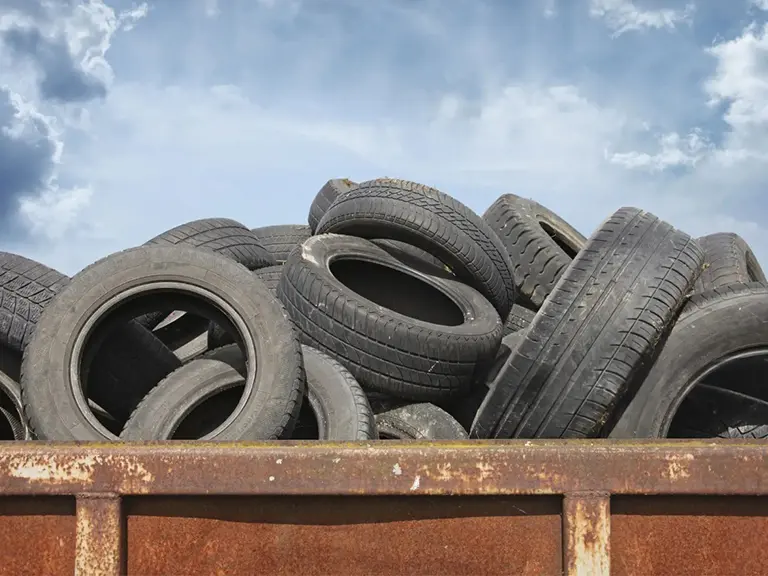
Driven by rapid urbanization and serving as the country’s primary commercial transport hubs, the Greater Jakarta and Surabaya regions face a massive vehicle boom. With over 130 million motorbikes and cars nationwide, Indonesia produces 250,000 tons of waste tires annually that pile up in scrap yards, creating severe fire hazards and breeding disease-carrying mosquitoes.
Oil Sludge Environmental Threat
📍 Riau (Sumatra) and East Kalimantan
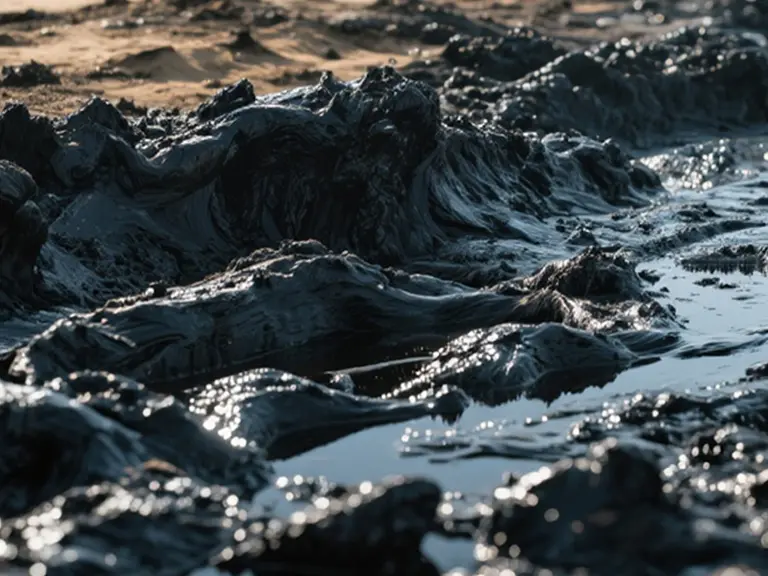
As the heartlands of Indonesia’s massive oil refining, drilling, and commercial palm oil extraction operations, Riau and East Kalimantan generate hundreds of thousands of tons of hazardous oil sludge each year. Without ex-situ treatment, this oil waste leaks into local soils and groundwater, permanently destroying agricultural crops and poisoning drinking water for nearby villages.
Beston Group’s Pyrolysis Plant Solutions for the Indonesian Market
Current Waste Management Practices
Currently, local waste is handled through harmful methods like open burning, basic landfills, open dumping, and direct discharge into oceans, lakes, and rivers. These practices cause severe, lasting damage to the local environment and public health.
✅ Beston’s Sustainable Solution
Beston provides industrial waste pyrolysis plant in Indonesia specifically engineered to handle these waste streams. By using cutting-edge pyrolysis technology, our pyrolysis plant provides a clean, sustainable way to completely revolutionize how Indonesia processes industrial waste.
To help investors choose the right system for local operations, here is a detailed breakdown of our available pyrolysis plant models and technical specifications:
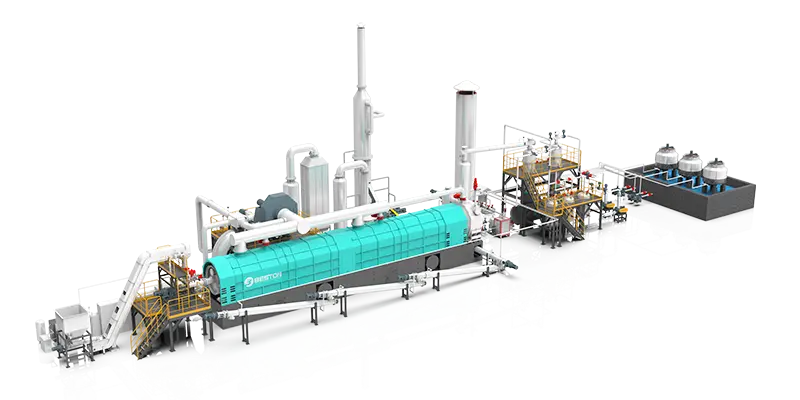
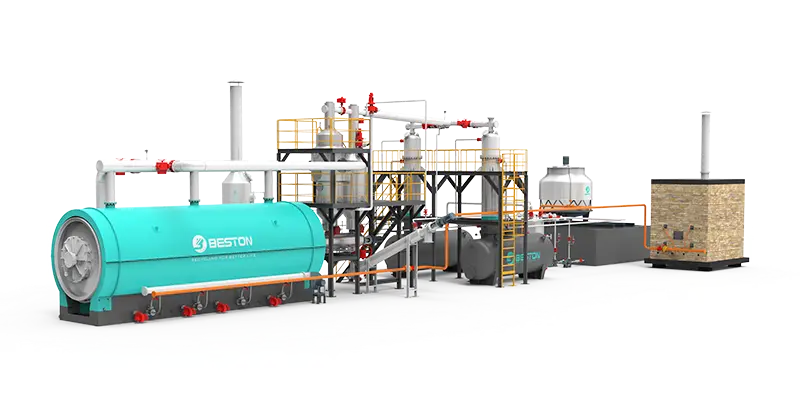
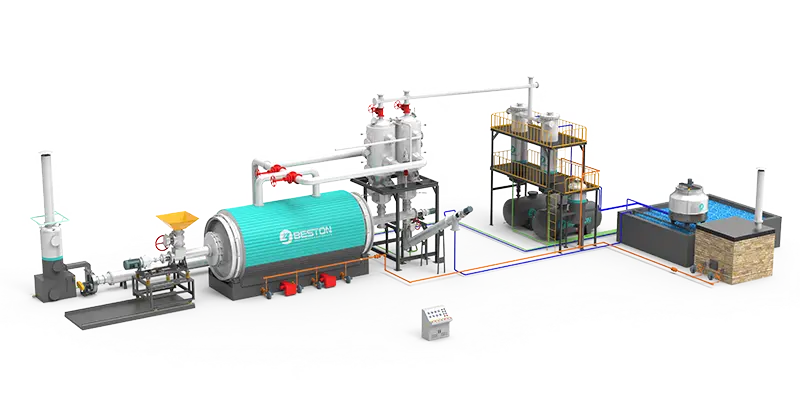
Continuous Type: Blackgold P30
- Large-scale processing choice
- 30 day continuous operation
- High automation: 4 operators required
- Get naphtha & non-standard diesel
- Policy support and incentives
- Easy to get environmental compliance and approval
Batch Type: BLJ-20
- Get naphtha & non-standard diesel in one step
- Large-capacity Pyrolysis Reactor (ø2800*10000)
- 1 batch/day
Batch Type: BLJ-16
- Small processing choice
- 1 batch/day
- 5 Configuration options
| Model | Blackgold P30 | BLJ-20 | BLJ-16 Standard | BLJ-16 TDU | BLJ-16 WAX | BLJ-16 CAT | BLJ-16 ULTRA |
|---|---|---|---|---|---|---|---|
| Time to Market | 2026 | 2025 | 2013 | 2013 | 2022 | 2022 | 2022 |
| Motor Brand | Chinese brand | Chinese brand | Chinese brand | Chinese brand | Chinese brand | Chinese brand | ABB Explosion-proof |
| Suitable Raw Materials | Waste plastics; Tires; Oil sludge | Waste plastics; Tires; Oil sludge | Whole tire<120cm; Tire blocks<15cm; Oil soil with liquid content<30% | Oil sludge; Landing oil sludge; Drilling waste; Tank bottom oil sludge | Waste plastic bales (Max.0.9*0.9*1.6m) | Waste plastic bales (Max.0.9*0.9*1.6m) | Waste plastics; Tires; Oil sludge |
| Input Capacity (Max.) | Waste plastic pellets: 0.8-1.05t/h; Rubber powder: 1.25-1.5t/h; Oil sludge:1.8-2.3t/h | Waste plastic pellets: 12-13t/d; Tire: 18-20t/d; Oil sludge:20-25t/d | Whole tire <120cm or Tire blocks<15cm: 10-12t/batch; Sidewall removed tire: 15-16t/batch; Oil soil: 16-18t/batch | 16-18t/batch | 8-10t/batch | 8-10t/batch | Waste plastic bales: 8-10t/batch; Whole tire <120cm or Tire blocks<15cm: 10-12t/batch; Sidewall removed tire: 15-16t/batch; Oil sludge: 16-18t/batch |
| Working Method | Fully Continuous | Batch | Batch | Batch | Batch | Batch | Batch |
| Final Oil Quality | Pyrolysis oil; Pyrolysis oil with wax or light oil; Gasoline blending components | Pyrolysis oil; Light oil and non-standard diesel | Pyrolysis oil | Pyrolysis oil | Pyrolysis oil with wax | Pyrolysis oil with light oil | Pyrolysis oil; Pyrolysis oil with wax or light oil |
| Reactor Material | 304/310S Stainless steel | Q345R Boiler steel and 304/316L/310S Stainless steel | Q345R Boiler steel | 304 Stainless steel | 304 Stainless steel | 304 Stainless steel | 304 Stainless steel |
| Reactor Life Span (Years) | 5-8 Years | Q345R Boiler steel: 2-3 Years; 304/316L Stainless steel: 5-8 Years; 310S Stainless steel: 8-10 Years | 2-3 Years | 5-8 Years | 5-8 Years | 5-8 Years | 5-8 Years |
| Guarantee (Months) | 12 | 12 | 12 | 12 | 12 | 12 | 12 |
| Delivery Time (Calendar Days) | 60-90 | 60 | 45 | 60 | 60 | 60 | 90 |
| Land Space Required (L*W*H*m) | 50*20*10 | 40*13*8 | 33*13*8 | 33*13*8 | 33*13*8 | 33*13*8 | 33*26*8 |
| Packing | 20*6*3m in bulk+13*40HQ | 1*40FR+4*40HQ | 1*40FR+3*40HQ | 1*40FR+3*40HQ | 1*40FR+3*40HQ | 1*40FR+3*40HQ+1*20GP | 1*40FR+8*40HQ |
| Installation Period (Calendar Days) | 60-90 | 45 | 45 | 45 | 45 | 45 | 60 |
Successful Cases of Beston Pyrolysis Machine in Indonesia
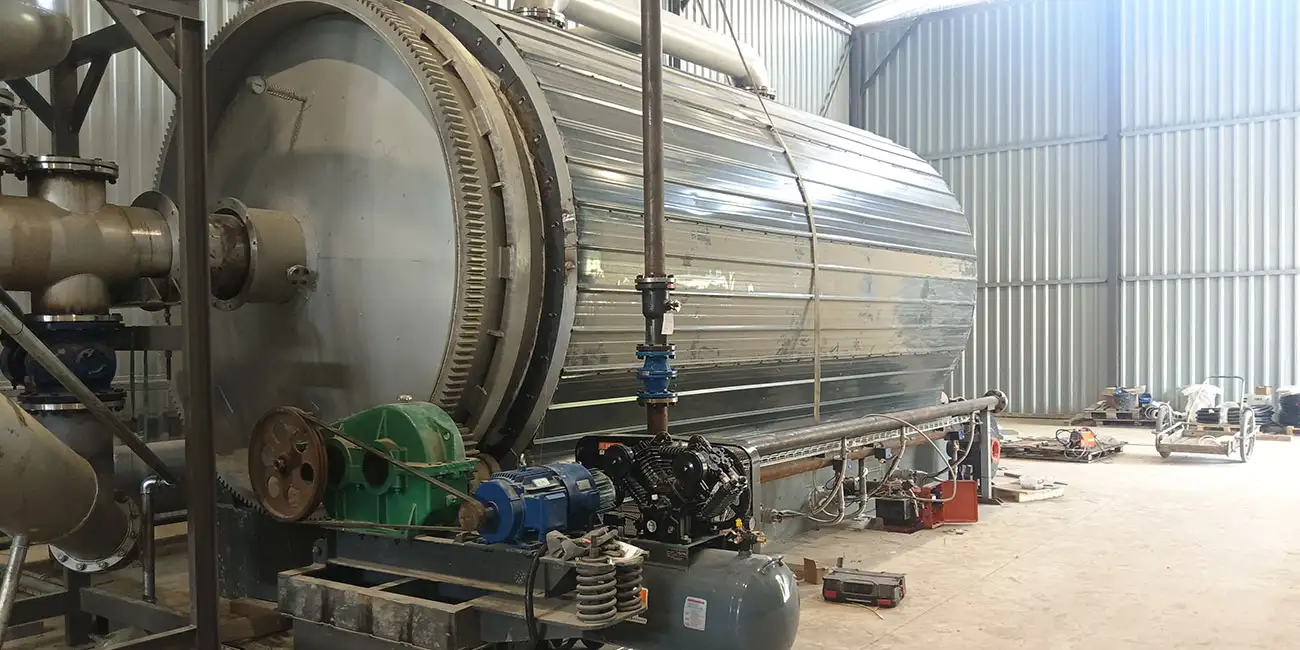
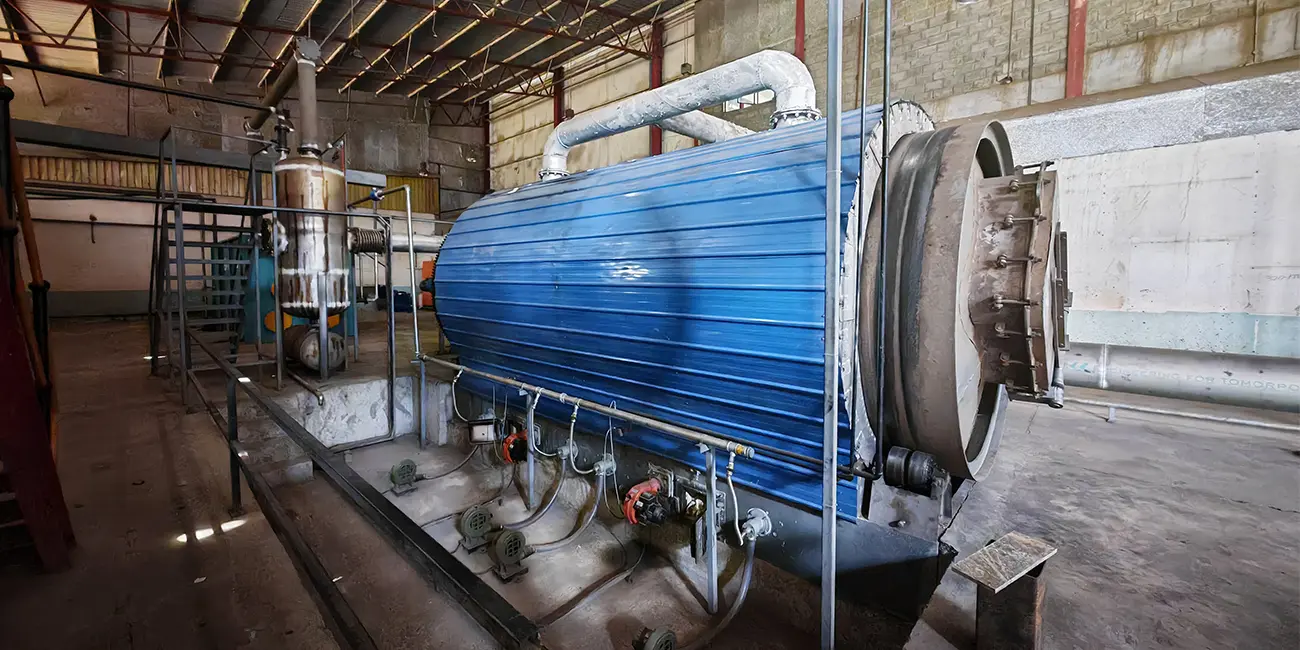
Beston’s advanced thermal desorption technology has been widely recognized as a highly efficient waste management solution by Indonesian engineering firms and recyclers. Below are two proven, successful tyre pyrolysis plant project implementations within the Indonesian market:
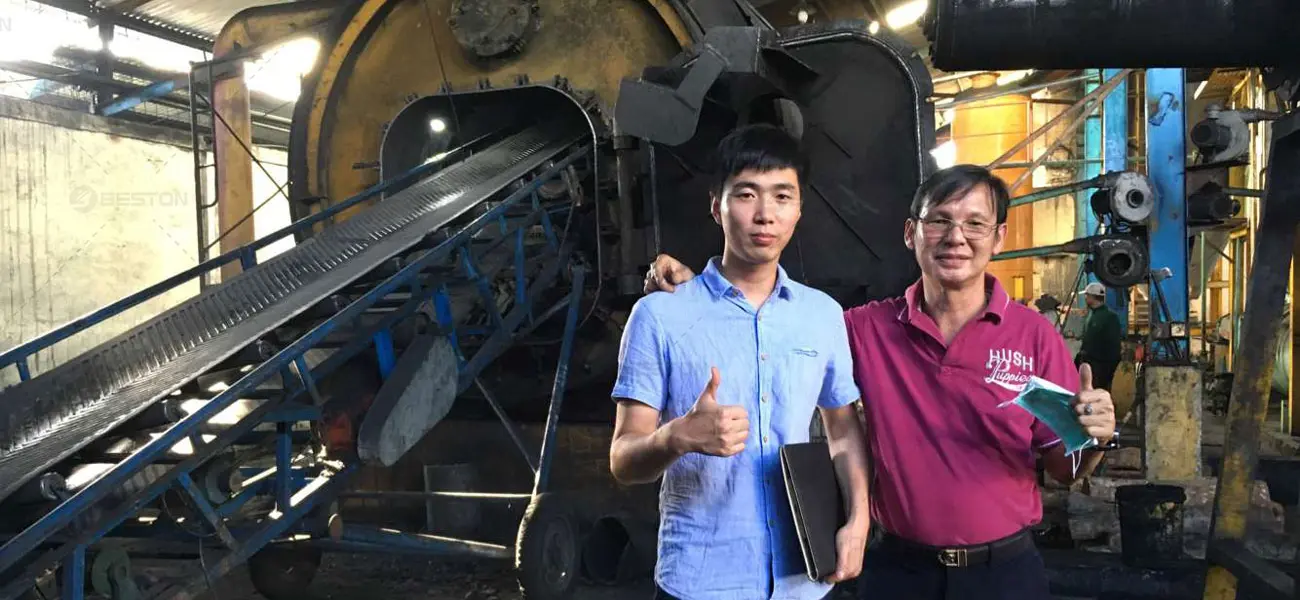
 Case 1: 8-10 Tons/D Tyre Pyrolysis Machine Installed in Indonesia
Project Information
- Daily capacity: 8–10 Tons per day (batch operating mode).
- Model configured: BLJ-10 pyrolysis reactor.
- Processed feedstock: Car and truck scrap tires.
- Project overview: Customized for small-to-medium scale operations, this plant successfully processes shredded rubber into industrial fuel oil, perfectly aligning with customer’s needs.
Indonesian Client Feedback
“We initially partnered with Beston online, and their after-sales engineering team provided exceptional support every single step of the way—from foundation layout to final assembly. Despite running into minor local adjustments, they guided us day and night to clear every single technical question. After a few months, the system was set up, and our initial three test trials were a massive success. The oil yield and smooth operations are impressive and went far beyond our high expectations.”


Case 2: 10-14 Tons/D Waste Tyre Pyrolysis Plant in Indonesia
Project Information
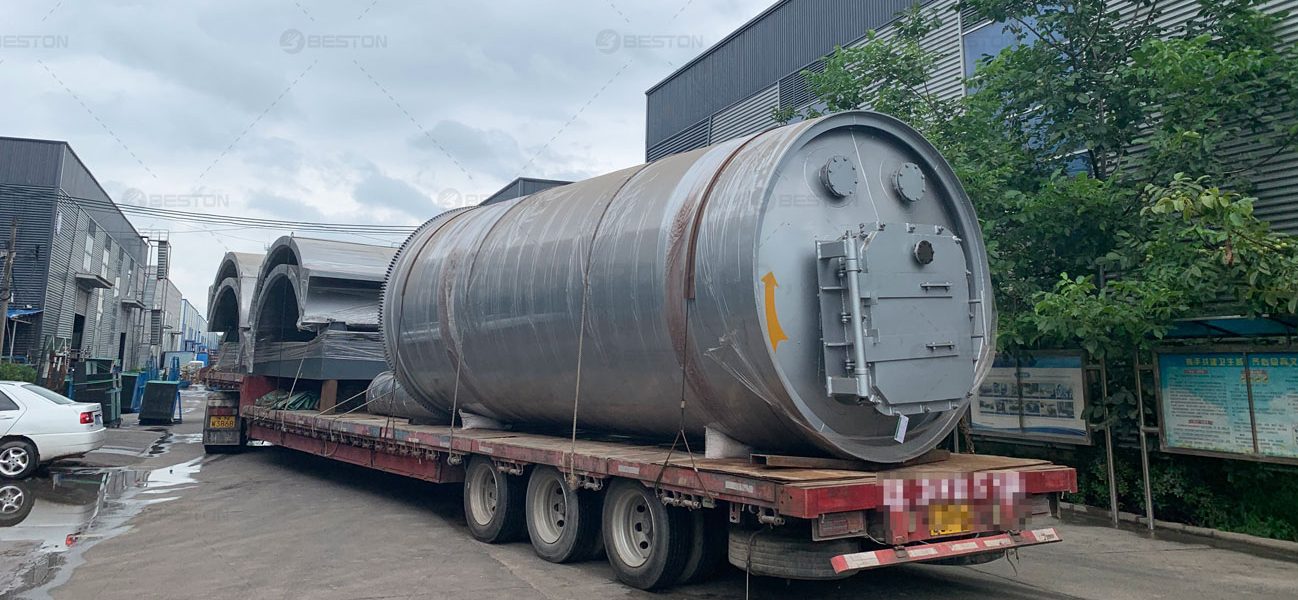
- Daily capacity: 10–14 tons per day.
- Model configured: BLJ-16 pyrolysis reactor with automatic feeding.
- Processed feedstock: High-volume scrap tyre recycling.
Project Highlights
Designed for industrial applications, this system features Beston’s high-efficiency modular condensing system, which ensures maximum oil cooling efficiency even under Indonesia’s warm tropical climate.
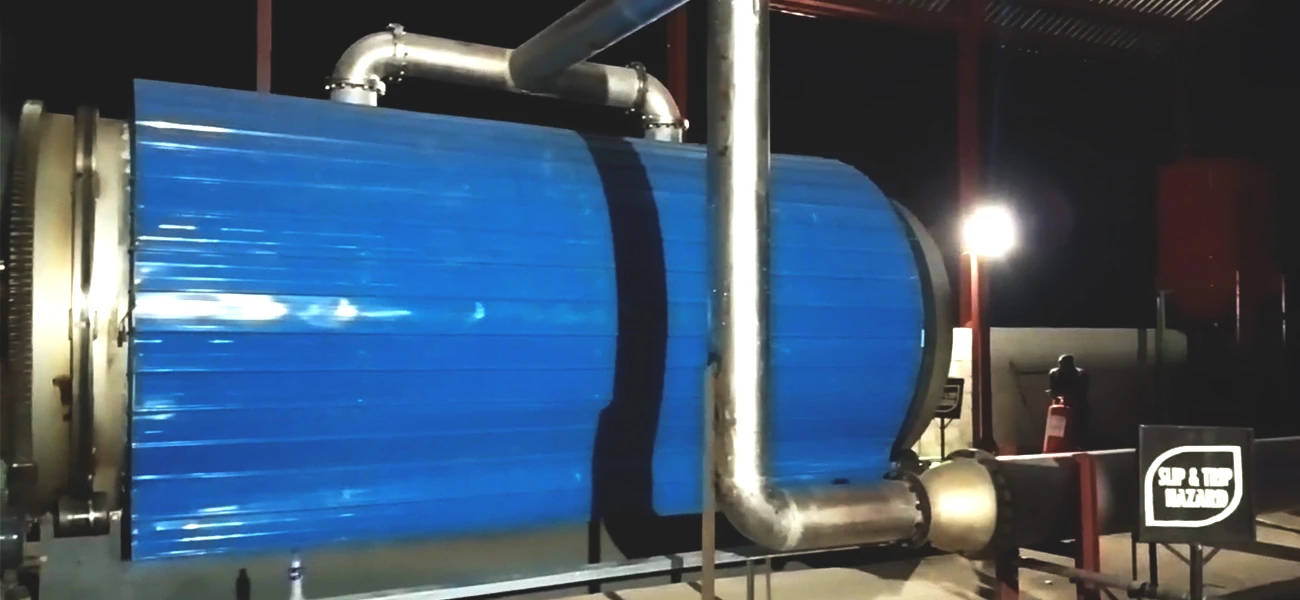
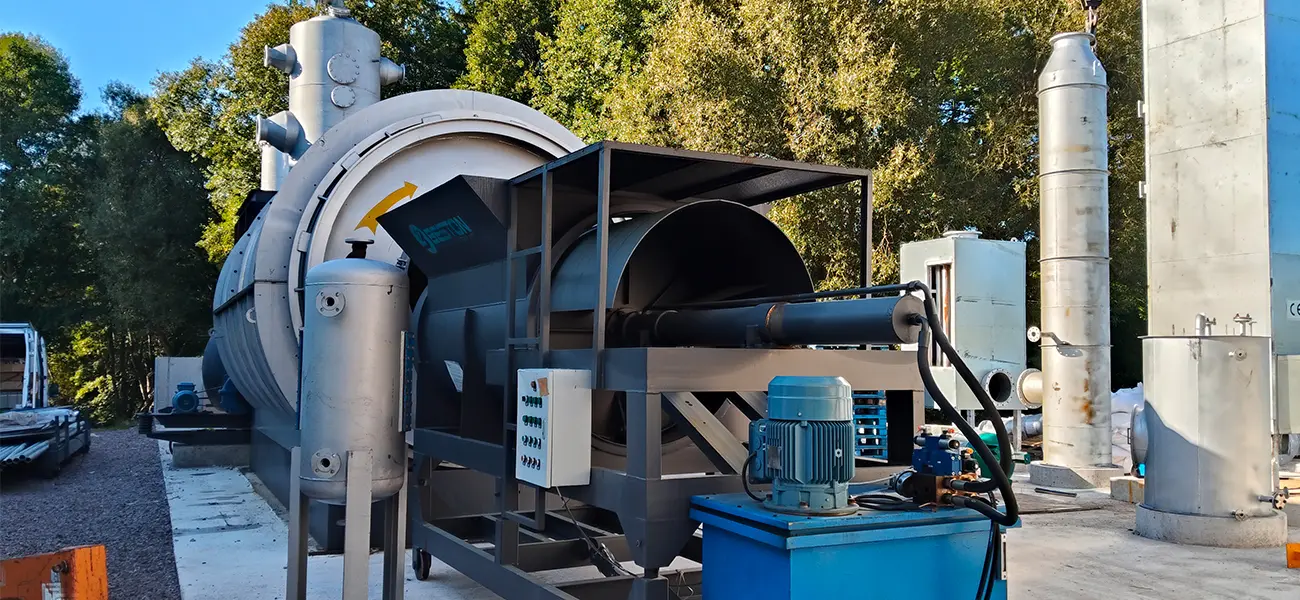
Beston Group Successful Cases in the Global Market
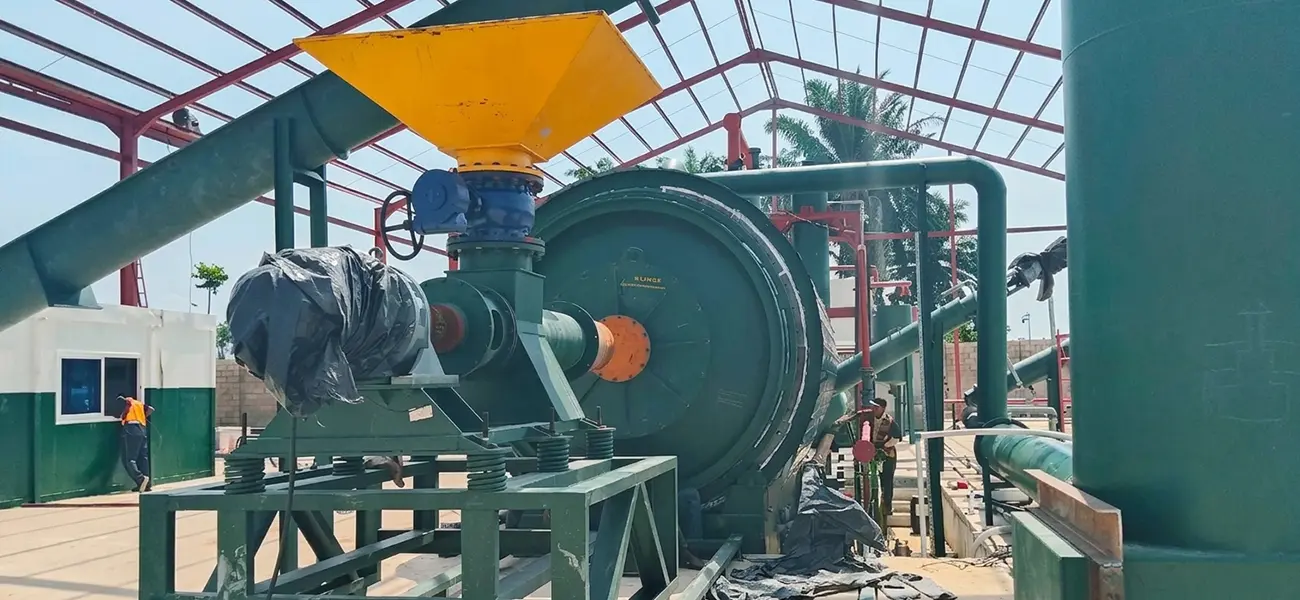
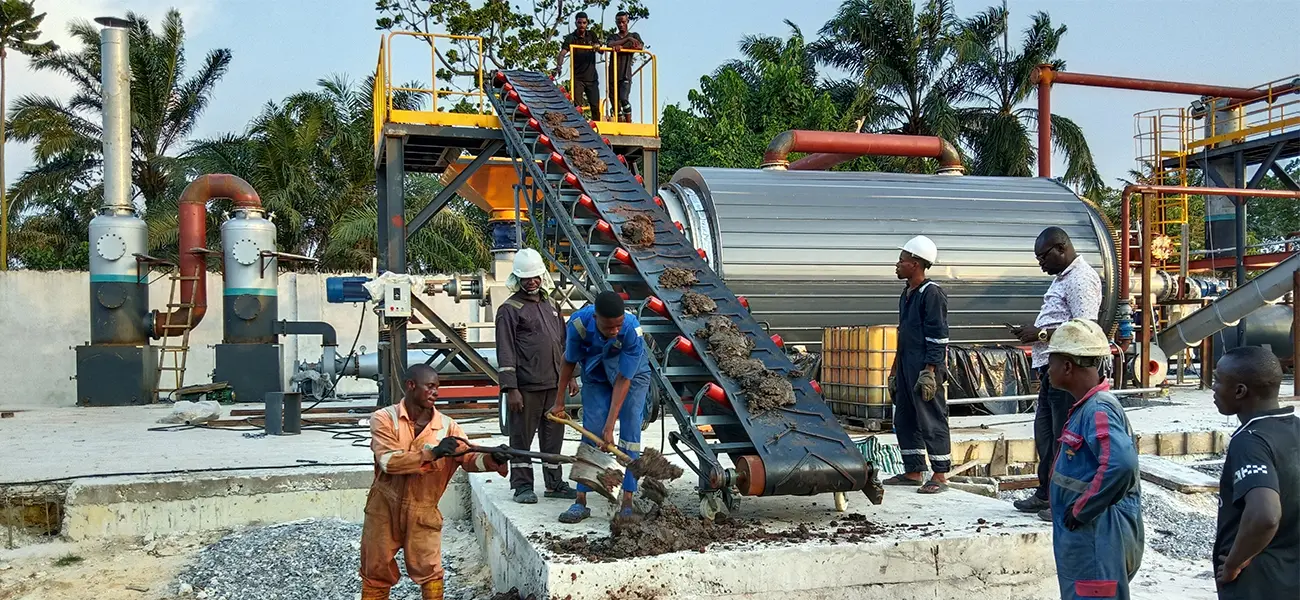


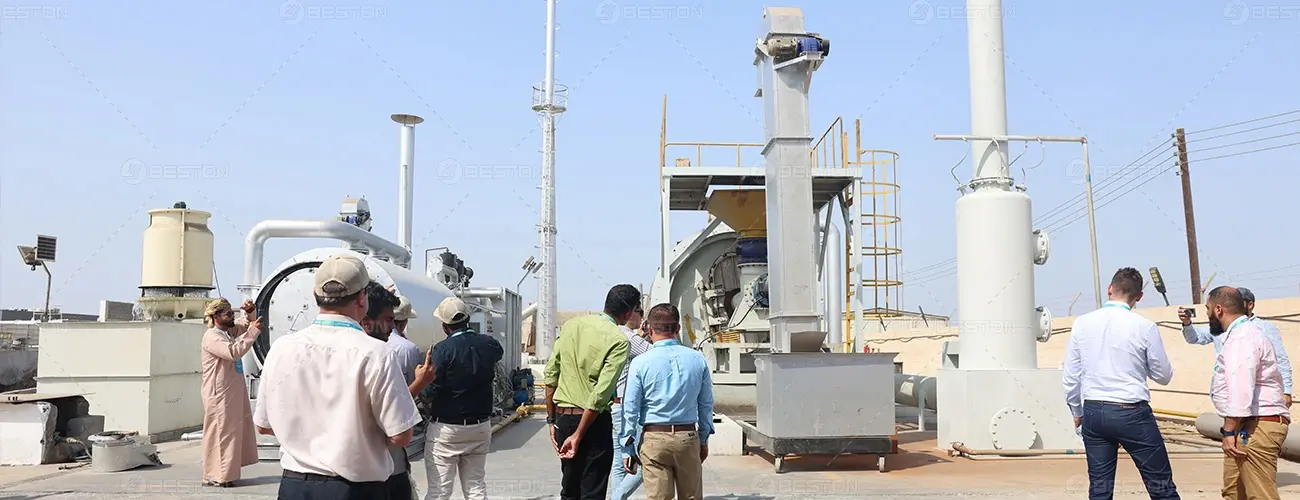
What is the Pyrolysis Plant Process in Indonesia?
Step 1: Feedstock Shredding and Pre-Treatment
First, raw waste like scrap tyres, plastics, or oil sludge is collected and sorted. For tyres and large plastics, shredding machines cut the material into small, uniform pieces. This pre-treatment step creates an even surface area, which helps the material heat up faster and process more efficiently inside the reactor.
Step 2: High-Temperature Thermal Desorption
Next, the prepared waste pieces move into the sealed pyrolysis reactor. As the furnace heats between 200°C and 300°C, a thermal desorption reaction begins, changing the solid waste into hydrocarbon gas.
Note: Power grids can fluctuate in remote industrial zones, so a reliable backup generator is key to keeping reactor temperatures steady.
Step 3: Oil Gas Condensation and Liquefaction
The hot hydrocarbon gas flows out of the reactor and enters a cooling condenser system. As the gas passes through water-cooled pipes, it cools down rapidly and condenses into heavy liquid pyrolysis fuel oil. This final liquid oil drains safely out of the cooling system and into industrial storage tanks.
Note: Because local cooling water is often warm, vertical condensers help keep oil conversion rates high during hot seasons.
Step 4: Emission Gas and Solid Residue Recycling
The non-liquefiable oil gas will go through a cleaning system and is routed back to the furnace of pyrolysis plant in Indonesia to heat the reactor, significantly reducing daily fuel costs. Finally, the remaining solid powder is discharged automatically as recycled carbon black (Feedstock: tyres).
Note: To pass strict Indonesian EIA air emission audits easily, gas treatment system is essential for investors.
Downstream Market Monetization: Final Products and Prices in Indonesia
Establishing a pyrolysis machinery in Indonesia offers excellent economic returns due to the massive local market demand for sustainable end products. By deploying advanced pyrolysis equipment, investors can efficiently convert solid waste into multiple high-value products. Below is the detailed breakdown of these end products, their industrial applications, and their active trading prices within the Indonesian domestic market:
Pyrolysis Fuel Oil
Recycled Carbon Black
Recycled Steel Wire
Non-Liquefiable Syngas

Pyrolysis Fuel Oil (Oil Yield: ~45%)
- Sourced from: plastic/tyres/oil sludge
- Local applications: Used as heating fuel; can be processed to produce naphtha and non-standard diesel for plastic manufacturing or to generate electricity
- Estimated local price: Around 7,000 to 8,500 IDR per liter ($450 – $550 USD/ton).
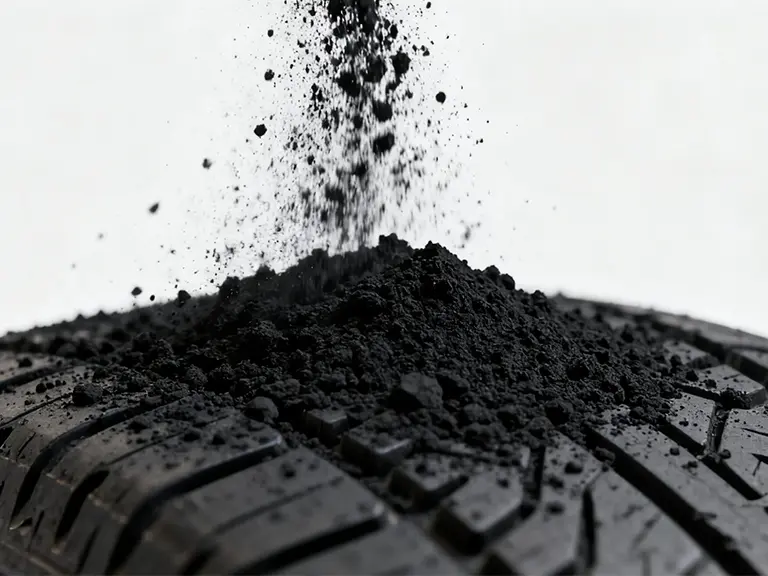
Recycled Carbon Black (Yield: ~35%)
- Sourced from: tyres
- Local applications: Can be directly used in the production of cement; can be further processed into N330, N550 and N660 carbon black; used as an additive in asphalt mixtures
- Estimated local price: Around 1,500 to 2,500 IDR per kg ($100 – $160 USD/ton)
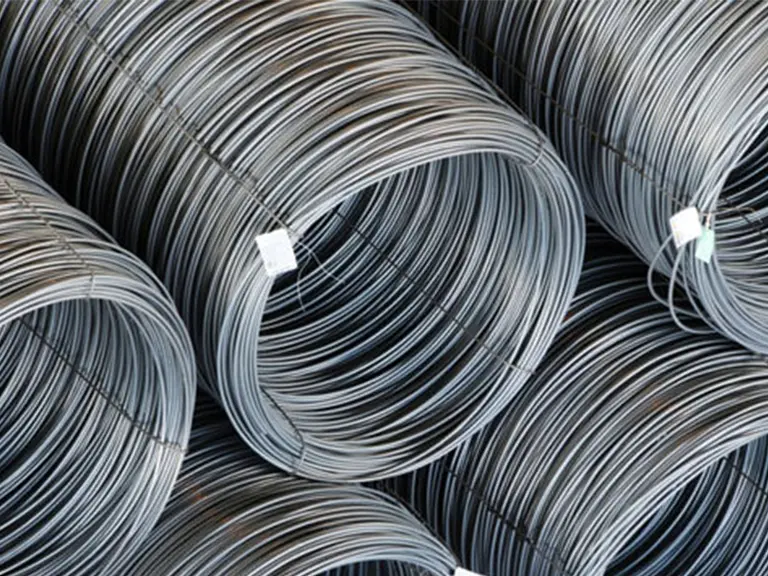
Recycled Steel Wire (Yield: ~12%)
- Sourced from: tyres
- Local applications: Sold directly to scrap steel recycling yards and metal melting plants.
- Estimated local price: Around 4,000 to 5,500 IDR per kg ($260 – $350 USD/ton).

Non-Liquefiable Syngas (Yield: ~10%)
- Sourced from: plastic/tyres/oil sludge
- Local applications: Routed straight back into the furnace system to heat the pyrolysis reactor during standard operations.
Benefits of Sustainable Waste Management via Pyrolysis Plant in Indonesia
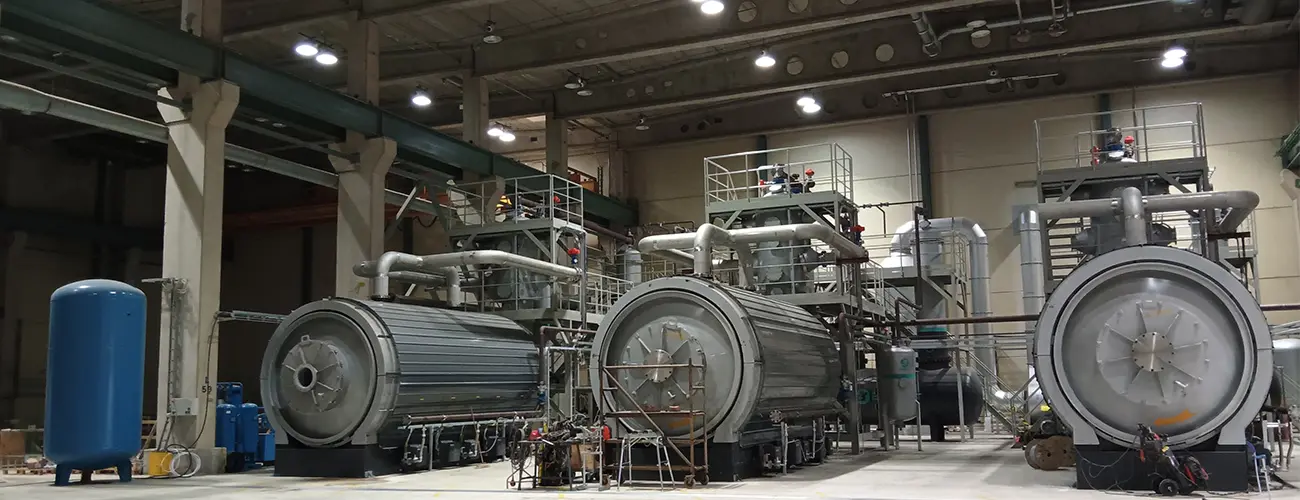
Environmental Protection and Landfill Diversion
Implementing advanced pyrolysis technology directly targets Indonesia’s waste crisis by diverting massive volumes of plastics, oil sludge and tyres from overflowing local landfills. Because the thermal process operates in a sealed, oxygen-free chamber, it safely breaks down waste without open burning, significantly reducing hazardous air pollution and protecting regional ecosystems.
High-Yield Resource Recovery
This technology turns local environmental liabilities into highly valuable commodities. Instead of leaving waste to pollute domestic waterways, the process extracts premium industrial fuel oil, carbon black, and steel. This sustainable approach conserves natural resources by providing local factories with a steady supply of recycled raw materials.
Job Creation and Economic Growth
Establishing a pyrolysis plant in Indonesia boosts regional economies by creating stable jobs in waste collection, sorting, and factory operations. Furthermore, selling the high-demand end products to local industries generates strong, consistent revenue streams, turning solid waste management into a highly profitable local business venture.
Strategic Regulatory Alignment
Operating a clean recycling facility positions investors to benefit from Indonesian government initiatives that support green infrastructure. Meeting local environmental standards becomes much easier with integrated multi-stage scrubbing systems, ensuring smooth operations and full compliance with strict local EIA air emission and waste management audits.
Get Sustainable Waste Recycling Solutions in Indonesia from Beston Group!
As Indonesia drives toward a circular economy, Beston Group is ready to partner with local investors to build a cleaner future. We offer proven pyrolysis plant in Indonesia to help you secure smooth EIA approvals and maximize returns in the Indonesian fuel market. Let’s turn waste challenges into a profitable, eco-friendly venture together. Leave a message today for your customized solution! More updates on LinkedIn.