The UK Environment Agency published the Tyre Pyrolysis Oil: Resource Framework on June 30, 2026. The new framework clarifies the conditions under which tyre pyrolysis oil (TPO) can achieve End-of-Waste status in England and be used as a refinery feedstock. It marks an important development for the waste tyre recycling industry, bringing greater attention to oil quality, regulatory compliance, and the role of pyrolysis technology in resource recovery.
What Does the UK’s New Tyre Pyrolysis Oil Resource Framework Require?
The UK Environment Agency’s new framework establishes several conditions that producers must meet for tyre pyrolysis oil (TPO) to achieve End-of-Waste status in England. These requirements cover feedstock eligibility, product specifications, intended applications, and regulatory responsibilities.
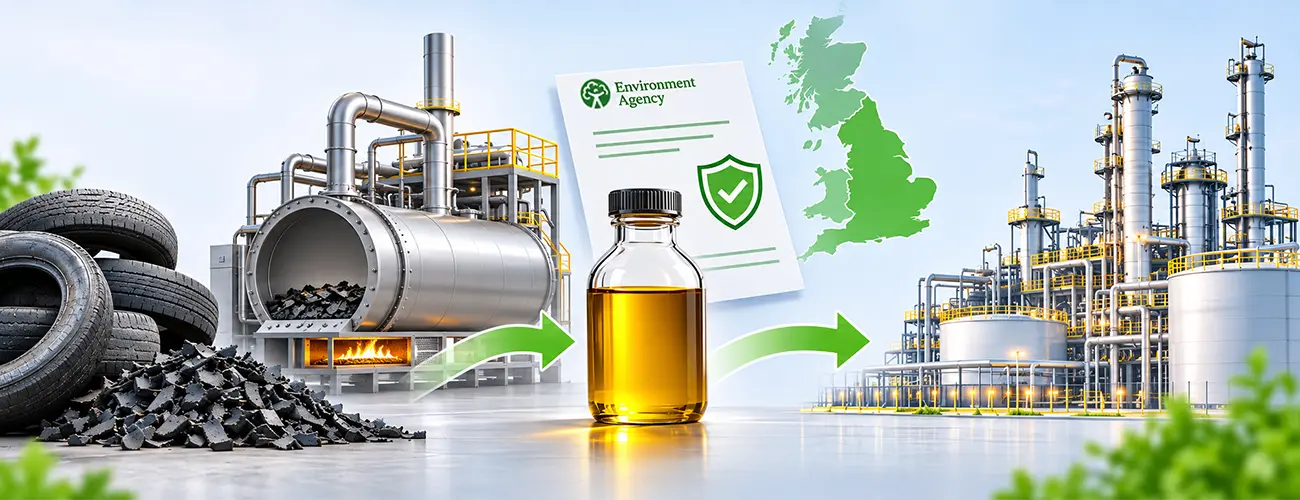
Approved Waste Feedstock
The framework only covers specific waste categories used to produce TPO. These include end-of-life tyres classified under waste code 16 01 03 and shredded tyres or tyre crumb under code 19 12 04. Other waste materials fall outside the scope of this framework. Therefore, producers must verify and document the origin and classification of incoming feedstock.
Designated End Use in Refineries
Recovered TPO must be supplied to a refinery for use as a feedstock in the production of marketable products. Producers must establish a clear downstream application rather than relying on an unspecified future market. This requirement connects the recovery of waste tyre resources with an identifiable industrial use.
Product Quality and Refinery Authorization
TPO must comply with the minimum quality specifications established by the framework, as well as any additional requirements agreed upon with the receiving refinery. Furthermore, the refinery must hold the appropriate environmental permit to receive and process the oil at the intended quantities. Meeting the framework’s minimum specifications alone does not guarantee acceptance by every refinery.
Certainty of Use and Record-Keeping
Producers must demonstrate that the recovered oil has a confirmed destination and will be used for its designated purpose. TPO stored without an identified end user may remain subject to waste management controls. Producers must also maintain relevant records covering feedstock sources, incoming waste quantities, production outputs, suppliers, deliveries, and compliance declarations.
Official Source: UK Environment Agency — Tyre Pyrolysis Oil Resource Framework
Key Quality Standards for Tyre Pyrolysis Oil Under the New Framework
Physical and Chemical Quality Requirements
The UK Environment Agency’s framework establishes specific limits for the physical and chemical properties of tyre pyrolysis oil (TPO). Key parameters include kinematic viscosity, sulphur content, total acid number, and total halogens. It also controls the concentrations of various metal contaminants, helping ensure that recovered oil meets the basic requirements for its intended refinery application.
Testing and Refinery Acceptance Requirements
Producers must conduct representative laboratory testing before dispatching TPO from the tyre pyrolysis plant. Each quality parameter must be assessed using the corresponding analytical method specified in the framework. In addition, receiving refineries may impose further specifications based on their processing capabilities and intended applications. Therefore, meeting the framework’s minimum limits does not automatically guarantee refinery acceptance.
| Property | Units | Limit | Test Method |
|---|---|---|---|
| Kinematic viscosity at 20°C | mm² per second | 15 | IP 71 |
| Sulphur content | % mass | 2 | IP 336 |
| Total acid number | mg potassium hydroxide (KOH) per gram | 20 | ASTM D664 |
| Total halogens (as chlorine) | mg per kg | 150 | IP 503 |
| Aluminium | mg per kg | 15 | IP 592 |
| Arsenic | mg per kg | 5 | IP 592 |
| Cadmium | mg per kg | 5 | IP 592 |
| Chromium | mg per kg | 5 | IP 592 |
| Cobalt | mg per kg | 5 | IP 592 |
| Copper | mg per kg | 5 | IP 592 |
| Iron | mg per kg | 50 | IP 610 |
| Lead | mg per kg | 5 | IP 592 |
| Manganese | mg per kg | 15 | IP 592 |
| Mercury | mg per kg | 0.01 | IP 594 |
| Nickel | mg per kg | 5 | IP 592 |
| Phosphorus | mg per kg | 10 | IP 610 |
| Titanium | mg per kg | 10 | IP 592 |
| Vanadium | mg per kg | 15 | IP 592 |
| Zinc | mg per kg | 15 | IP 592 |
How Does the Framework Affect the Tyre Pyrolysis Oil Supply Chain?
The new framework affects different participants across the tyre recycling and refining supply chain. Its requirements place greater emphasis on feedstock traceability, production management, and downstream coordination.
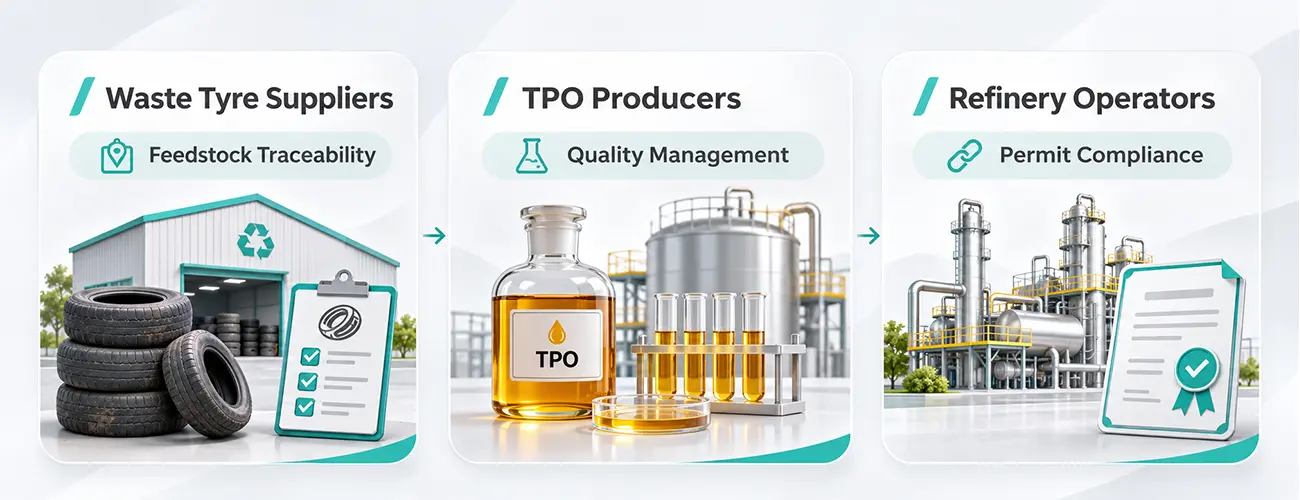
Greater Feedstock Traceability for Waste Tyre Suppliers
Waste tyre recycling companies must pay closer attention to the origin, classification, and quantity of incoming materials. Only eligible waste categories can be used under the framework. Accurate feedstock records are therefore essential for demonstrating compliance and maintaining material traceability.
Stricter Quality Management for TPO Producers
For tyre pyrolysis operators, product quality testing and production records become important parts of daily operations. Producers need to verify that recovered oil meets the framework’s specifications and any additional requirements agreed upon with receiving refineries. Consistent production and batch testing can help improve product quality management and facilitate downstream transactions.
Clearer Requirements for Refinery Operators
Refineries receiving TPO must hold the appropriate environmental permits for accepting and processing the material. They also need to establish suitable feedstock specifications based on their processing capabilities and intended applications. This makes coordination between TPO producers and refineries particularly important.
Tyre Pyrolysis Equipment for Refinery-Oriented TPO Production: Key Technical Factors
Refinery acceptance of tyre pyrolysis oil (TPO) depends on stable production and consistent oil quality, both of which are shaped by the equipment. When selecting a tyre to oil plant for refinery-oriented TPO production, three technical areas deserve particular attention. Beston Group integrates reactor design, heating, condensation, and process control in its tyre pyrolysis plants to support stable operation and efficient oil recovery.
Note: Compliance with the UK’s End-of-Waste framework ultimately depends on feedstock eligibility, oil quality testing, and refinery acceptance.
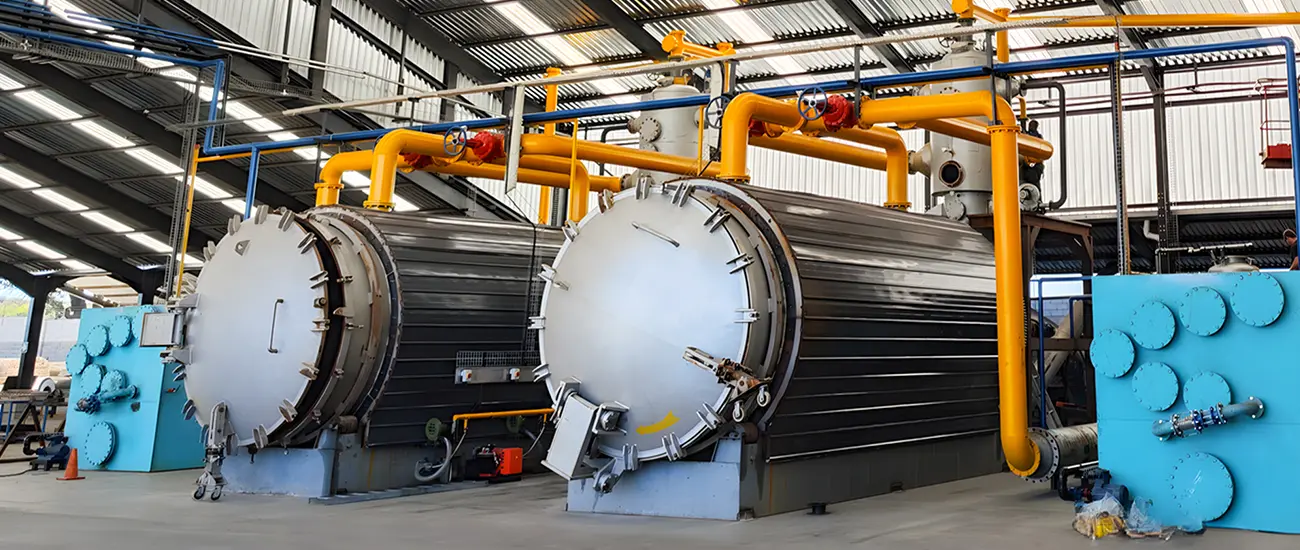
Reactor and Temperature Control
- Stable temperature control: Consistent operating temperatures and appropriate material residence time reduce process fluctuations and support consistent production.
- Heating and insulation: Reliable heating systems and effective insulation improve operational stability and energy utilization.
Condensation and Oil Collection
- Condenser and separator setup: Properly configured condensers and oil-gas separation units improve the collection of condensable products and keep the system running stably.
- Pipeline and cooling design: Pipeline layout, cooling efficiency, and prevention of oil or wax accumulation affect equipment performance and maintenance requirements.
Monitoring and Quality Control
- Real-time parameter monitoring: Automated controls track reactor temperature, pressure and other process conditions, helping identify abnormal operation and improve consistency.
- Sampling and storage access: Accessible sampling points and suitable oil storage allow representative sampling and laboratory testing, so producers can evaluate oil characteristics and spot quality deviations.
Conclusion: Advancing Tyre Pyrolysis Oil Recovery Through Quality and Compliance
The UK’s new Tyre Pyrolysis Oil Resource Framework represents an important development in the regulatory recognition of waste tyre-derived resources. By setting specific requirements for feedstock, product quality, and refinery use, it provides clearer guidance for compliant TPO producers. Moving forward, stable production systems, effective quality management, and stronger downstream cooperation will be important factors in advancing tyre pyrolysis as a resource recovery industry.