The Thermal Desorption Implementation Issues paper, issued by the U.S. Environmental Protection Agency (EPA), is an engineering forum publication that examines the design and operational challenges of ex-situ thermal desorption systems. It aims to guide project investors and remediation professionals in applying thermal desorption to contaminated soils, oil sludge, and sediments within regulatory frameworks such as RCRA and CERCLA.

1. Understanding Thermal Desorption
1.1 Definition and Operating Principle
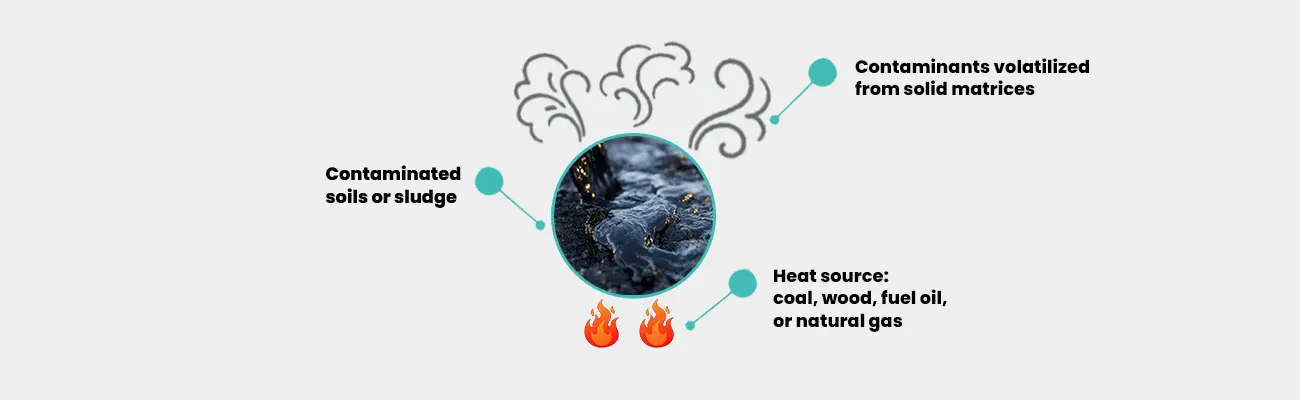
Thermal desorption (TD) is a widely used separation technology recognized by the U.S. EPA as a preferred remedy for volatile organic compounds (VOCs). In this process, contaminated soil, sludge, or waste is heated to volatilize organic pollutants, separating them from the matrix without complete destruction. Air, combustion gases, or inert gases such as nitrogen are introduced to prevent combustion and carry the volatilized contaminants to air pollution control units.
1.2 Treatment Objectives
The goal of thermal desorption is to reduce contaminant concentrations to meet site-specific cleanup levels. The technology targets volatile and semi-volatile organics such as petroleum hydrocarbons and solvents. It can also enhance resource recovery, enabling reuse of treated soil or oil sludge as fill material.
2. Site Characterization and Remedy Selection
2.1 Preliminary Site Assessment
Before selecting or designing a thermal desorption (TD) system, detailed site investigations must be carried out to define the nature and extent of contamination. This includes identifying contaminant types and concentrations, soil classification, structural characteristics, and other relevant site features. These parameters directly influence TD system configuration and operational performance.
2.2 Treatability Testing
There is ongoing debate regarding the necessity of treatability testing at the system design level. In many cases, the TD vendor is best positioned to decide whether such testing is required, considering variables such as soil texture, contaminant concentration, and regulatory cleanup standards. Some remedial project managers (RPMs) recommend performing treatability studies during the Remedial Investigation (RI) phase to generate reliable site-specific data.
3. Record of Decision (ROD) and Applicable or Relevant and Appropriate Regulations (ARARs)
3.1 Defining System Classification
A common regulatory challenge is distinguishing thermal desorption (TD) from incineration. TD is a physical separation process designed to volatilize and remove contaminants, not to destroy them. However, if the system includes afterburners, operates at high temperatures, or combusts the desorbed organics, it may fall under the RCRA Subpart O incinerator classification rather than Subpart X for desorbers. Accurate system classification is essential to ensure appropriate permitting and emission compliance.
3.2 Record of Decision (ROD) Flexibility
Implementation time and cost can vary significantly depending on site conditions and regulatory procedures. To streamline approval and maintain flexibility, it is recommended that RODs refer broadly to “thermal treatment” as the selected remedy. This allows project managers to choose between TD or incineration systems based on site-specific needs without requiring ROD modification. Early coordination with state air and hazardous waste agencies helps clarify Applicable or Relevant and Appropriate Requirements (ARARs) and minimize delays in the review process.
3.3 Air Quality and Stack Testing
Material handling and permitting requirements often dominate TD project schedules and budgets. Excavation, soil preparation, dewatering, and emissions control must all be evaluated early in remedy selection. For sites with high VOC levels or extensive soil handling needs, in situ alternatives such as soil vapor extraction may be more cost-effective.
4. Implementation and System Performance
4.1 Soil Characteristics and Treatment Efficiency
Thermal desorption performance depends on site-specific soil properties:
- Moisture content: High moisture increases energy demand; pre-dewatering or blending improves efficiency.
- Particle size: Large or compacted particles hinder heat transfer; crushing or screening may be needed.
- Organic and clay content: High levels retain contaminants, requiring higher temperatures and longer residence times.
Understanding these factors during site characterization supports proper system selection and operation.
4.2 Material Handling and Preparation
Soil excavation, transfer, and feeding are critical to maintaining continuous operation. The handling process must minimize dust, odors, and vapor release. Pre-treatment measures—such as blending, screening, and temporary storage—help maintain consistent feed quality and system throughput. For large-scale or VOC-rich sites, the cost and complexity of these operations may favor in situ remediation alternatives.
4.3 Operational Costs and Performance Optimization
The total project cost should distinguish between treatment-specific expenses and general site operations such as excavation or backfilling. Operating variables—temperature range, residence time, and off-gas treatment—directly influence fuel consumption and system efficiency. Comparative cost evaluation with other ex situ technologies requires isolating thermal system operations from shared handling costs.
4.4 Regulatory Coordination and Permitting
Extended review periods from regulatory agencies are a frequent cause of project delays. Early engagement with air quality and hazardous waste authorities helps clarify Applicable or Relevant and Appropriate Requirements (ARARs). EPA regions generally aim to meet substantive state requirements without duplicative permitting, emphasizing coordination over procedural formality.
5. Air Emissions Control
5.1 APC System Selection
Air pollution control equipment (APCE) is essential for capturing particulates and vapors during thermal desorption. A typical multi-stage system removes particulates, condenses vapors, and adsorbs residual organics on carbon beds. Compared with thermal oxidation or scrubbers, this approach generally meets emission standards with lower complexity. However, very high contaminant concentrations may require supplemental thermal oxidation to achieve cleanup goals.
5.2 Dioxin and Furan Considerations
At sites contaminated with chlorinated aromatics, dioxins or furans may be present. APCE systems must be designed to capture these compounds, and Proof-of-Process (POP) testing should include measurements to detect and quantify dioxins in exhaust streams.
6. Community Involvement
6.1 Early Engagement and Communication
Community relations should begin at the earliest stages of site investigation and remediation planning. Risk communication must be presented in clear, non-technical language, with ample opportunities for the public to observe the remediation process safely. Fact sheets and public meetings should clearly explain how air emissions will be controlled to safe levels.
6.2 Site Visits and Transparency
Encouraging community members to visit the site and observe the TD system, within safety limits, helps build trust and understanding. Demonstrating operational procedures and emission controls firsthand can reduce public concern and improve transparency.
6.3 Addressing Public Perception
Thermal desorption is often confused with incineration, which can generate public apprehension. Clear explanations of how TD differs from incineration, the comparative air emissions of alternative remedial technologies, and safeguards against toxic releases are critical for gaining public acceptance.

Conclusion
Thermal desorption (TD) is a proven technology for soil and sludge remediation, effectively reducing hazardous waste while recovering reusable soil and minimizing long-term liability. Its implementation requires careful consideration of site-specific soil properties, contaminant characteristics, and system design challenges. As environmental regulations tighten, TD is increasingly applied to oil sludge and contaminated soil treatment. The Thermal Desorption Implementation Issues paper provides guidance on design considerations, regulatory compliance, and operational practices, helping practitioners achieve efficient, safe, and effective remediation while supporting sustainable site management.