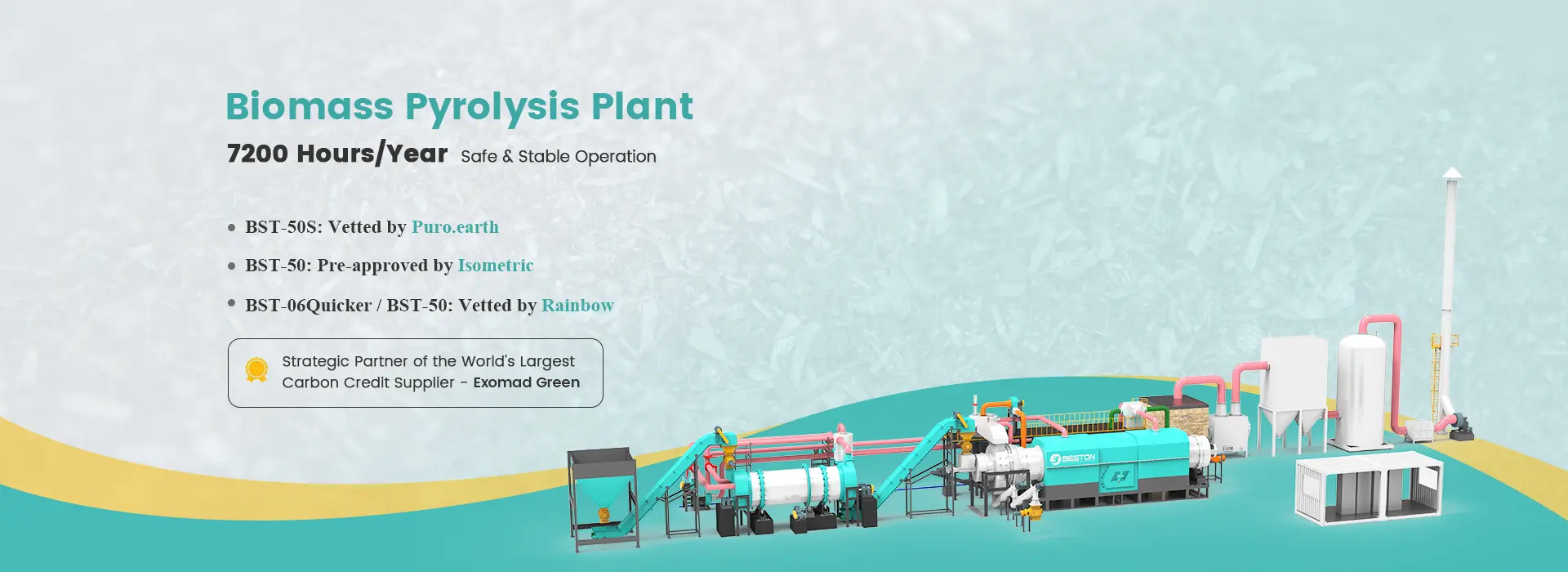
Biomass pyrolysis plant converts various biomass into valuable eco-friendly biochar. It is a sustainable solution for biomass waste reduction and recovery. With biochar’s potential in carbon removal and alternative fuels, more investors are recognizing the investment opportunities. If you have abundant biomass resources, now is the perfect time to invest in a profitable Beston biomass pyrolysis machine!
What is Pyrolysis of Biomass?- Materials Conversion Process
Biomass pyrolysis process is a chemical decomposition process, which can be achieved in a biochar machine. This technology operates by heating biomass in a low-oxygen environment, causing its components to break down into solids, gases, and liquids. The material conversion process is as follows:


Raw Material: Biomass
Biomass is organic matter derived from plants. It is the most abundant renewable carbon source on Earth. Main components of biomass include:
Cellulose: A complex polysaccharide in plant cell walls that provides structural support.
Hemicellulose: A polysaccharide present in plant cell walls, more easily degraded than cellulose.
Lignin: The most rigid structural material in plants, particularly abundant in wood.
Pyrolysis Process
Pyrolysis achieves biomass recovery through two essential core conditions:
Condition 1: High Temperature It promotes the release of volatile organic compounds (e.g., water, alcohols) in biomass, mainly containing hydrogen and oxygen.
Condition 2: Anaerobic or Low-Oxygen It prevents carbon combustion into carbon dioxide (CO₂). Also, it allows most of the carbon to remain in a solid form, ultimately forming biochar.
End Product: Biochar
Biochar is the stable, carbon-rich solid residue left after biomass pyrolysis process. Biochar offers various environmental and agricultural benefits. This is due to the unique properties of biochar:
Porous Structure: This offers biochar high specific surface area and great adsorption capacity. It can store water and nutrients.
High Stability: Biochar’s aromatized carbon structure gives it strong chemical stability. This allows it to last for hundreds of years in soil.
Parameters of Beston Biomass Pyrolysis Plant for Sale
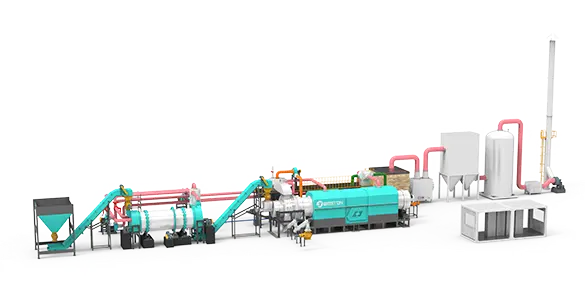
BST-50: Industrial-scale Model
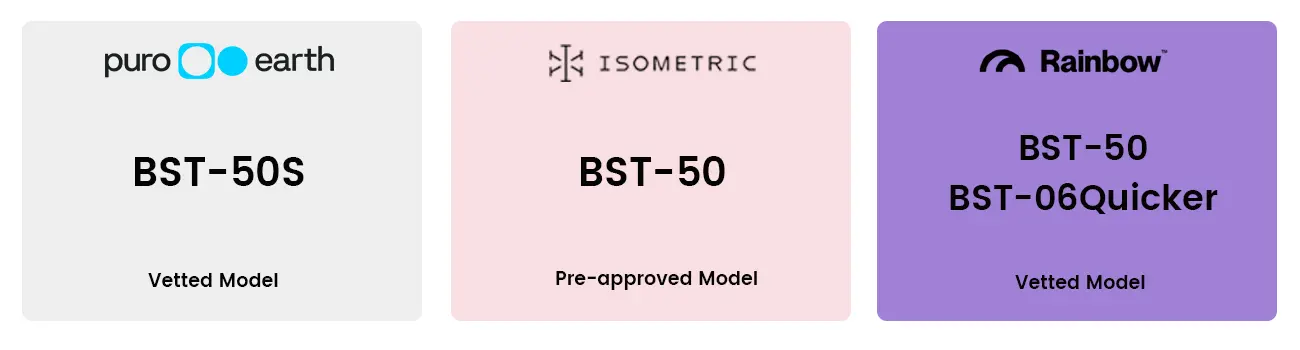
- Vetted by Puro.earth, Rainbow, pre-approved by Isometric
- 6,000 tons biochar production annually
- 7200H/Y stable&safe operation
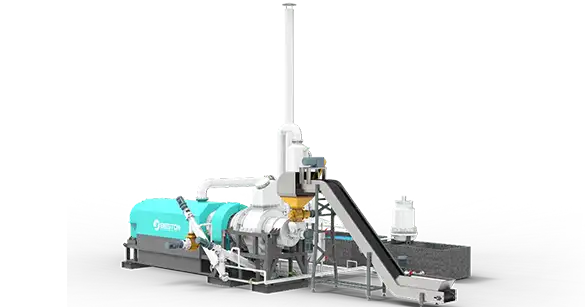
BST-06Quicker: Pilot-scale Model
- Vetted by Rainbow
- 8-hour rapid installation and deployment
- Movable design allowing 8-hour disassembly and reassembly
| Model | BST-50 Standard | BST-50 Max | BST-50S | BST-06 Quicker |
|---|---|---|---|---|
| Operating Mode | Continuous | Continuous | Continuous | Continuous |
| Application | Commercial-scale | Commercial-scale | Commercial-scale | Pilot Testing |
| Certification Platform | Isometric, Rainbow | Isometric, Rainbow | Puro.earth, Isometric, Rainbow | Rainbow |
| Reactor Material | Staineless Steel 304 | Staineless Steel 304 | Staineless Steel 310s | Staineless Steel 304 |
| Feedstock Moisture | Below 15% | From 15% to 55% | From 15% to 55% | Below 15% |
| Feedstock Size | 5-20mm | 5-20mm | 5-20mm | 5-20mm |
| Feeding Capacity (only for pyrolysis) | 10-15m³/h | 10-15m³/h | 10-15m³/h | 100-200KG/H |
| Max. Pyrolysis Temperature (Combustion Chamber) | 650℃ | 650℃ | 700℃ | 650℃ |
| Residue Retention Time | 15-20 minutes | 15-20 minutes | 15-20 minutes | 15-20 minutes |
| Operating Pressure | -20 - 0 pa | -20 - 0 pa | -20 - 0 pa | -20 - 0 pa |
| Cooling Method | Water | Water | Industrial Refrigeration Units | Water |
| Exhasut Gas Treatment | Standard | Standard | High Performance | Standard |
| Biochar Temperature | 45℃ | 45℃ | 45℃ | 45℃ |
| Annual Operating Hours | >7200hrs | >7200hrs | >7200hrs | >7200hrs |
| Service Life | 5-8 years | 5-8 years | 8-10 years | 5-8 years |
| Land Space Required (L*W*H*m) | 35*15*8 | 65*15*8 | 65*15*8 | 35*15*8 |
| Power Consumption | 121kw/h | 270-288kw/h | 270-304kw/h | 25.1kw/h |
| Water Consumption | 5-7m³/day | 5-7m³/day | 0 | 3-5m³/day |
| Fuel Consumption | 220-260m³/h | 220-260m³/h | 220-260m³/h | 30-50m³/day |
| Installation Period | 60 days | 60 days | 60 days | 7 days |
ISO & CE Certificates of Beston Biomass Pyrolysis Machine
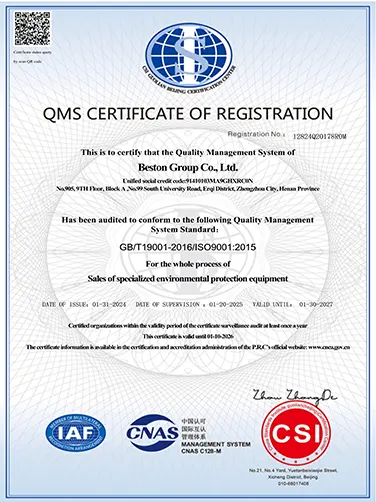
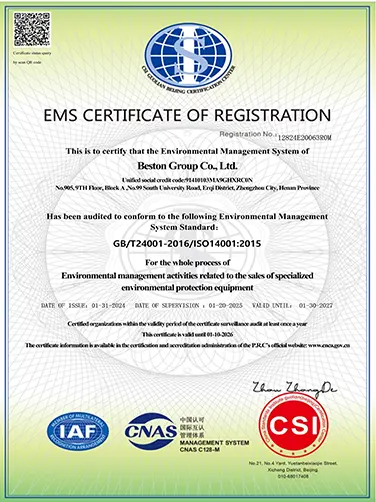
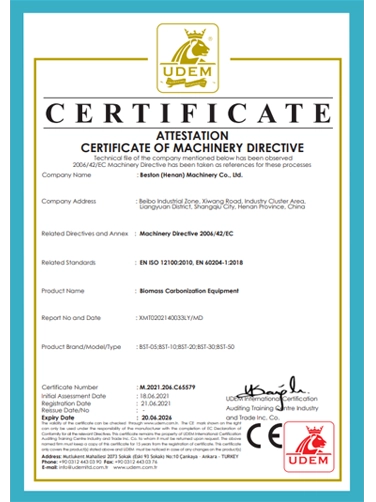
Beston Biomass Pyrolysis Technology Passes Puro.earth & Isometric & Rainbow Evaluation
Emissions Meet EU Eco-Standards
Vetted model biomass pyrolysis machine satisfies EU limits on greenhouse gas and air pollutant emissions. It complies with strict international environmental rules, helping your biomass project pass local government approval smoothly.
Biochar Certified to EBC Standards
Biochar made by the BST-50/BST-06Quicker meets European Biochar Certificate (EBC) criteria. Independent tests from German and Chinese official labs have verified its performance. The finished biochar features long-term stability in soil and ecological use.
Technology Meets CDR Standards
Biomass pyrolysis tech has passed assessments by Puro.earth, Isometric and Rainbow. It is approved for global biochar carbon removal (CDR) projects. By locking carbon inside biochar permanently, our system delivers a reliable, eco-friendly carbon reduction solution.
Data Integrity Meets Registry Standards
The equipment supports dMRV integration to match carbon registry rules. It automatically records full production data 24/7 to prove measurable, verifiable carbon sequestration. This simplifies third-party audits and speeds up carbon credit issuance for project developers.
BST-50 Biomass Pyrolysis Plant: Dual Technological Innovation
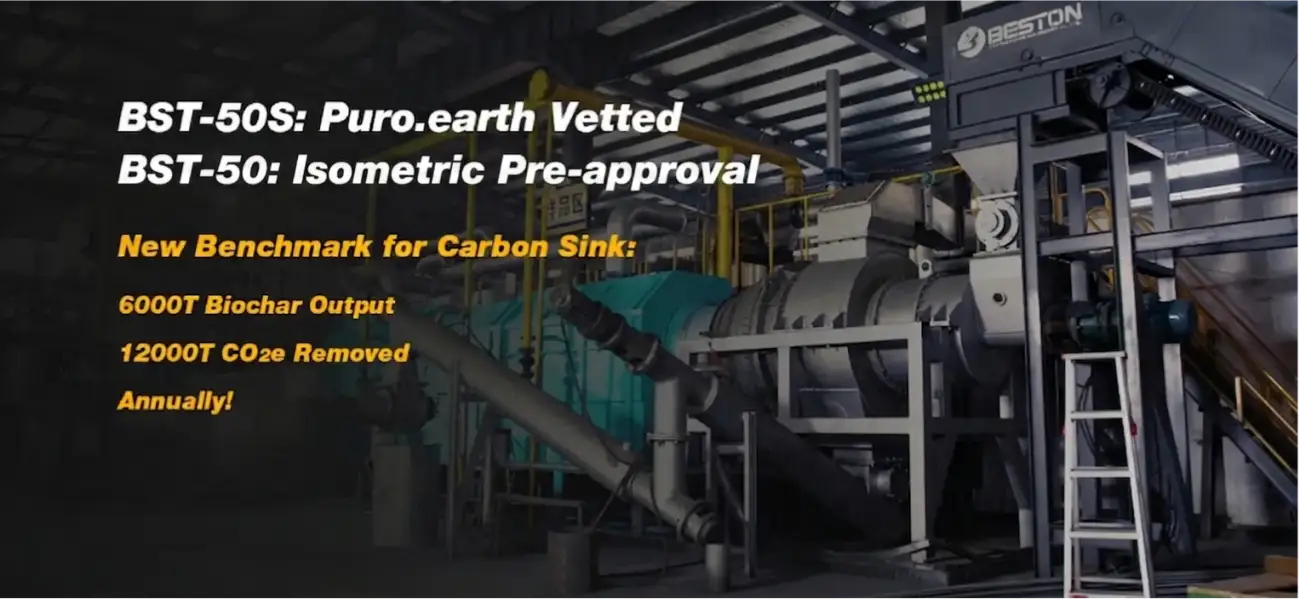
biochar output annually
sequestered CO₂ annually
operation time annually
Tar & Wood Vinegar Self-Cleaning System
The multi-layer insulation system prevents blockages caused by tar, wood vinegar, and other substances. The nitrogen purging system prevents clogging from fine biochar dust. This system offers the following advantages:
- Reduce downtime, ensuring continuous and stable operation for up to 7,200 hours annually
- Ensure environmental compliance by effectively controlling pollutant emissions
- Enhance safety by lowering the risk of fire and dust explosions
- Avoid frequent manual maintenance, reducing labor intensity
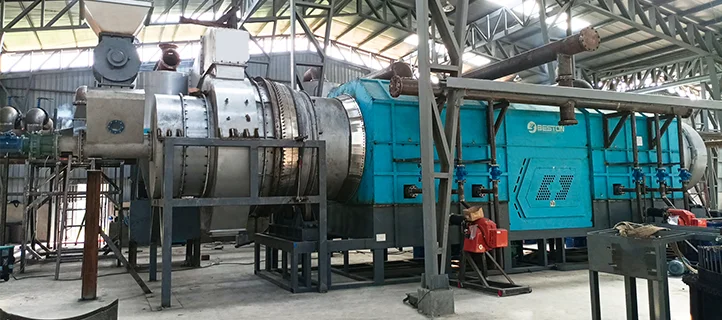
Double-Barrel Rotary Reactor: Multi-Stage Carbonization Structure
Biomass first undergoes drying and semi-carbonization in the inner cylinder, then is conveyed by screw device into the outer cylinder for complete carbonization at higher temperatures. The rotary core design ensures uniform heating, resulting in thorough carbonization. Benefits:
- High processing capacity, exceeding 10 cubic meters per hour (m³/h)
- Complete carbonization with controllable biochar quality
- High thermal efficiency, reducing energy consumption
- Compact structure, saving floor space
Integrate dMRV System in Biomass Pyrolysis Plant—Driving CDR Project LCA
Stage 1: Data Collection via dMRV
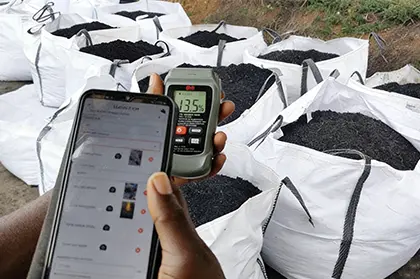
dMRV system collects detailed data from each stage of the project, such as:
- Feedstock Data: Records biomass type, physical mass, moisture content, and carbon content used in biochar production.
- Production Data: Monitors pyrolysis parameters, auxiliary energy consumption, and non-CO2 emissions.
- Logistics Data: Tracks transport mileage, payload, and fuel consumption for both feedstock procurement and biochar distribution.
- Application Data: Logs precise coordinates, application rates, and mixing depths for biochar incorporated into soil or other media.
Stage 2: Dynamic Life Cycle Assessment Accounting
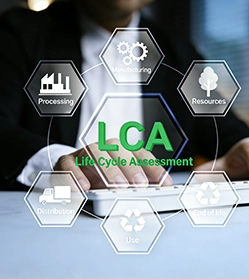
Using dMRV primary data, the LCA performs dynamic accounting in accordance with carbon removal standards:
- Emission Accounting: Calculates GHG emissions from production, processing, and logistics based on real-time energy and transport data.
- Net Removal Calculation: Deducts incremental emissions generated during production and distribution from the total carbon sequestered in the biochar to determine net carbon removal.
- Permanence Assessment: Evaluates biochar stability by key indicators (e.g., H/Corg <0.7) to verify theoretical sequestration duration.
Stage 3: Carbon Credit Verification and Issuance
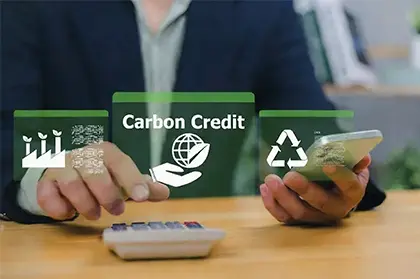
Following successful verification, the project can generate carbon credits that can be issued and traded on carbon markets, helping to monetize the environmental benefits of the project while promoting further investment in carbon removal initiatives.
- LCA results will be used to verify the total amount of carbon removed and ensure compliance with carbon credit standards.
- The data collected through the dMRV system will support third-party verification processes, ensuring that the carbon removal claims are accurate and transparent.
Successful Project Delivery: Biomass Pyrolysis Project Worldwide
Olive Wood Biomass Pyrolysis Project in Spain for Biochar Carbon Removal
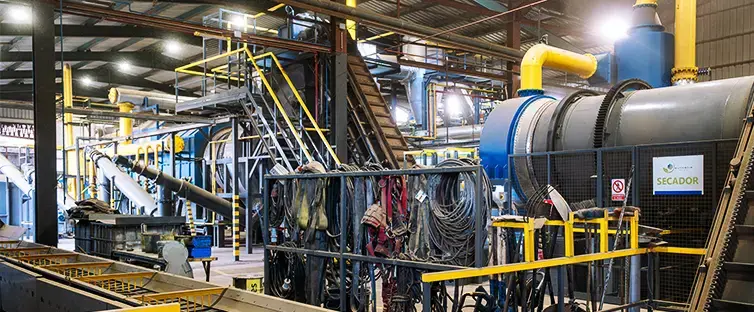
Background: Euthenia Energy is expanding into biochar carbon removal using industrial-scale equipment supplied by Beston Group. This is backed by over 25 years of experience from its parent company Euthenia Capital in carbon management, renewable energy, and waste treatment projects.
Project Information
- Project Timeline: Jan 2023 Launch | Mar 2024 Start Operation
- Project Configuration: BST-50 industrial biochar machine + dryer + crusher
- Annual Output: 6,000 tons of biochar
- CO₂ Sequestration Potential: ~12,000 tons/year
- Application: Biochar-based carbon removal and carbon credit generation
Project Status
Current Status:
- Installed, commissioned, and in stable operation
- Site visits are available upon request for qualified industry professionals.
Industry Recognition | On-site Technical Exchange
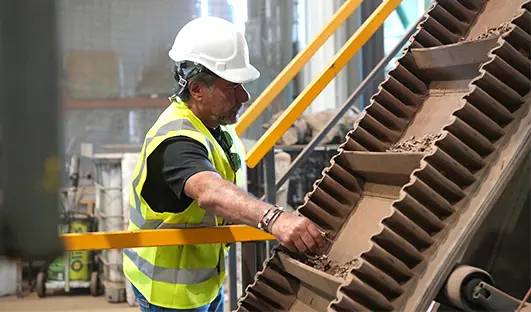
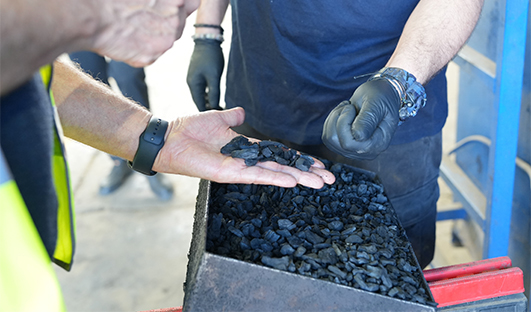
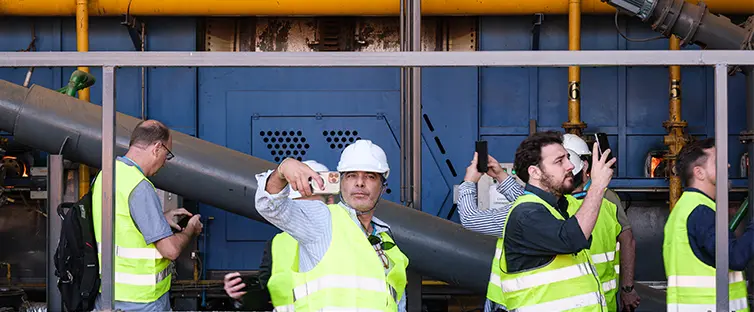
In November 2025, the project site hosted the 2025 European Biochar CDR Conference. Experts studied and verified its operational stability and engineering reliability through an on-site visit, confirming its practical feasibility for commercial, industrial-scale CDR applications.
Biomass Pyrolysis Project in Asia
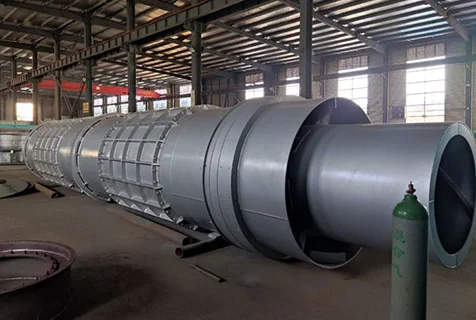
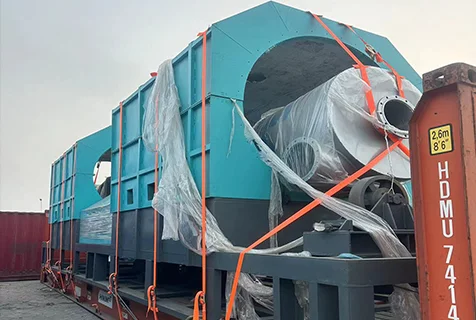
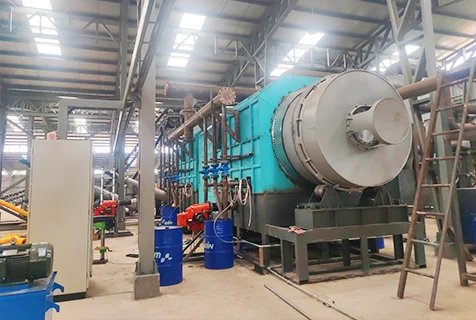
Prior to partnering with Beston Group, the Asian customer used traditional methods to produce charcoal. However, low production efficiency and inconsistent product quality led them to seek alternatives. The company’s leadership, an industry expert, chose us as the solution provider for industrial innovation. Beston Group’s end-to-end supply chain solutions significantly improve the customer’s production efficiency. Also, it enhances industry influence of the customer.
Project Information
- Project start date: July 1, 2023
- Successful operation date: July 31, 2024
- Project duration: 397 days
- Project configuration: BST-50 biomass pyrolysis plant + dryer + drum screen
- Raw material: Coconut shells, palm shells, rice husks, etc.
Project Achievements
- Production upgrade: continuous machine replaces traditional kilns
- Daily processing capacity: 3 tons/hour, operation 24 hours/day
- End product application: shisha charcoal/activated carbon production
- Social welfare impact: 30 Job opportunities created
Biomass Pyrolysis Machine Cases Spread Worldwide

Straw Biomass Pyrolysis Project
- Recycled Biomass: wheat straw
- Machine Capacity: 10-15m³/h
- Biochar Use: alternative fuels, soil improvement

Wood Biomass Pyrolysis Equipment
- Recycled Biomass: wood chips
- Charcoal use: barbecue charcoal for sale
- Machine Capacity: 2-4m³/h

Mixed Biomass Recycling Project
- Recycled Biomass: greenhouse planting waste; mixed biomass;
- Charcoal use: barbecue charcoal for sale;
- Machine Capacity: 10-15m³/h

Palm Waste Biomass Recycling Project
- Recycled Biomass: palm fiber from EFB;
- Biochar Application: soil improvement;
- Machine Capacity: 2-4m³/h;
Available Biomass Sources for Pyrolysis

Wood Waste
Tree waste from logging, pruning, etc.
Wood chips, sawdust, shavings

Food Processing Waste
Food shells like coconut shells, palm shells
Fruit residues like sugarcane bagasse, EFB

Crop Waste
Various agricultural straws/stalks, rice husks, etc.
Suitable biomass feedstock should follow the following criteria:
Biomass with poor flowability can clog the hopper during feeding. For example, palm fibers have poor flowability and need to be granulated before pyrolysis.
Oversized materials can jam the feed screw, while overly thin materials tend to turn into powder. Please keep the biomass size at 5-20mm for smooth feeding.
Excessive powder in raw materials can clog pipelines and affect biochar quality. (Harder materials, such as coconut shells, are recommended.)
Applications of Biochar from Biomass Pyrolysis Plant
In Carbon Removal Field

Decarbonized Agriculture
Soil Improvement: It improves soil structure, water retention, pH value and nutrient content, boosting crop yields.
Fertilizer Reduction: Biochar’s porous structure retains nutrients and slows their release, reducing fertilizer application rates while maintaining crop yields.
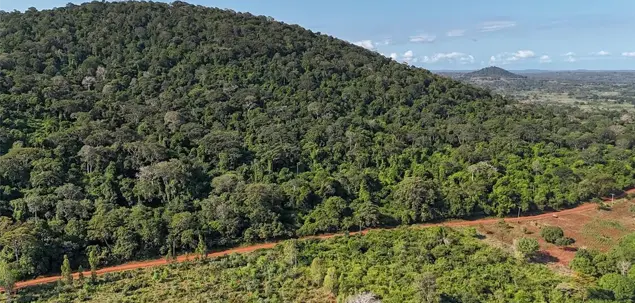
Decarbonized Forestry
Degraded Forest Restoration: Biochar improves soil structure on harvested land, boosting seedling survival rates.
Afforestation Enhancement: Combined with afforestation/reforestation projects, biochar extends soil carbon retention and boosts carbon sink output.

Decarbonized Animal Husbandry
Feed Additive: Adding biochar to animal feed has been shown to influence the gut microbiome and improve the livestock digestive system, thus reducing enteric methane production in ruminants.
Gas Adsorbent: Biochar itself possesses strong adsorption properties, enabling it to capture and absorb methane emitted by livestock to the air.

Decarbonized Construction Industry
Biochar is highly porous, which gives it excellent thermal insulation properties. When incorporated into building materials like concrete, plaster, or insulation boards, it can enhance the thermal efficiency of buildings. This can result in a significant reduction in energy consumption for heating and cooling, further lowering a building’s overall carbon footprint.
In Industrial Carbon Substitution Field

Metal Smelting: Sustainable Metallurgical Carbon
Metal Oxides Reduction Agent: Biochar helps convert metal ores into pure metals by capturing oxygen.
Low-emission Fuel: Using biochar instead of fossil fuels in smelting reduces carbon footprint.

Industrial Fuel: Cleaner Energy
Sustainable Energy: Biochar is a renewable fuel for energy-intensive industries, reducing reliance on traditional fossil fuels and lowering carbon emissions.
Applications: Ideal for power plants, boilers, and other industrial uses.
Economic Feasibility of Biomass Pyrolysis Plant Investment
Investing in a biomass pyrolysis machine offers promising financial returns. Key factors influencing profitability include initial costs, revenue generation, and operational savings. Customers can benefit from:

Revenue from Biochar Sales
Biochar, a byproduct of biomass pyrolysis process, is valuable and versatile, with prices ranging from $100 to $500 per ton. This provides a steady revenue stream.

Carbon Credit Opportunities
Companies that operate biomass pyrolysis equipment may potentially qualify for carbon credits and carbon trading. 1 unit of carbon credit typically represents the reduction of 1 metric ton of CO2 emissions, with prices ranging from tens to hundreds of dollars.

Policy Subsidies
As a cleaner waste treatment technology, biomass pyrolysis may qualify for additional compensation.
- Subsidies on renewable energy production
- Environmental grants on waste reduction and carbon emission cuts

Waste Management Cost Reduction
- Save on landfill fees, incineration expenses, and other biomass disposal costs.
- Reduced environmental fines due to improper waste disposal.
Compare Biomass Disposal Methods: Why Pyrolysis is Better?

Biomass Pyrolysis – Advantages
- Most eco-friendly solution: carbon removal, minimal greenhouse gas emissions
- High resource utilization: turn biomass into long-term beneficial biochar Self-sustained energy system due to syngas recycling

Composting – Limitations
- Methane production
- Long processing time, limited production scale
- Large space requirements

Biofuel Production – Limitations
- Limited application, mainly for heating and power generation.
- Gasification: More technical complexity
- Pelletization: Low added value of products

Incineration – Limitations
- High fossil fuel consumption
- High CO2 and pollutant emissions
- Low resource utilization; burn biomass into heat and ash for one-time use
How to Pyrolysis Biomass into Biochar?
01 Drying and Crushing: Biomass Pre-processing
Beston biomass pyrolysis machine requires biomass with a particle size between 5mm and 20mm and a moisture content of under 15%. To meet these specifications, configure dryer and crusher at the front of the machine.
02 Pyrolysis: Material Conversion
After preheating the biomass pyrolysis reactor, a screw belt conveyor feeds the biomass into the reactor.
At high temperatures (380℃–450℃), the internal moisture of the biomass is removed, and some organic matter volatilizes.
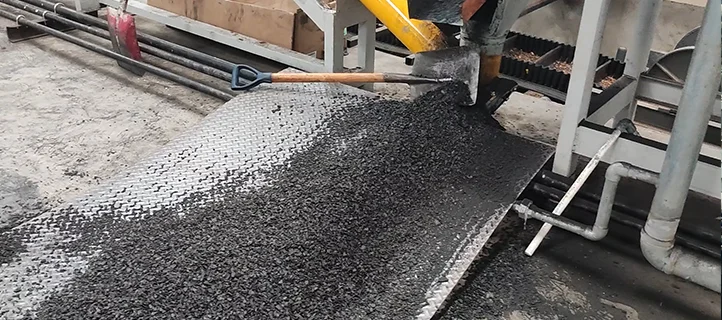
Finally, biochar, a carbonaceous material with a stable structure forms. After pyrolysis reaction, the water-cooled slag extractor discharges biochar from the reactor.
Unique Designs in Biomass Pyrolysis Plant

Double Heating Structure
The biomass pyrolysis reactor is an inner and outer cylinder design.
- Achieve biomass semi-carbonization/torrefaction in inner cylinder.
- Achieve full-carbonization of biomass in outer cylinder.
- Produce high-quality, standardized biochar that meets Puro.earth standards.

Three-point Support Design
This design features one main drive wheel and two auxiliary wheels.
- Evenly distribute the load and pressure.
- Ensure stable operation of biomass pyrolysis machine.
- Reduce machine wear or tilting for greater durability.

Unique Sealing Design
Biomass pyrolysis plant has a patented dynamic sealing design with 8 structural seals.
- Prevent oxygen from entering biochar reactor, ensuring safe pyrolysis.
- Enhance operator safety.
- Minimize potential economic losses.

EU Standard Dedusting System
Advanced flue gas treatment technology integrates cooling, denitration, desulfurization, and wet electrostatic precipitator processes.
- Enables final emissions to meet EU emission standards. (SO: 50 mg/m³, NOx: 200 mg/m³, HF: 1 mg/m³, HCl: 10 mg/m³, Total dust: 1 mg/m³)
- Allows you to customize dedusting system based on local standards, saving budget.

PLC and IOT Access
This integrates automatic safety alarms and remote monitoring technology.
- Automatic alarms to alert operators when anomalies occur.
- Quickly cut off fault points to ensure safe operations.
- Allow customers to monitor equipment data anytime, anywhere.

Syngas Recycling Technology
A well-designed biomass pyrolysis equipment can be self-sustaining in terms of energy production.
- Save fuel consumption and cost by 20%.
- Ensure safe and controlled burning of excess syngas.
Beston Group: Reliable Biomass Pyrolysis Plant Manufacturer
Founded in 2013, Beston Group has developed into a high-tech enterprise integrating scientific research, production, sales, service, and import and export trade. If you are interested in biomass pyrolysis machine, Beston Group is your reliable partner.

Strict Quality Control
Beston Group follows strict standard quality control procedures in every stage of charcoal machine production, including:
- raw material warehousing inspection
- production inspection
- air tightness safety inspection
- delivery & installation inspection
Professional Technical Support
Professional technical team offers customers drawing guidance for biomass pyrolysis equipment, including:
- layout diagram design
- basic diagram design
- PID diagram design
- 3D simulation diagram


Closed-loop Solution
- We offer customized technical solutions including site-specific layout design, full sets of project drawings, and more.
- We manage the end-to-end supply chain, from the high-standard manufacturing of the core equipment to the sourcing of premium auxiliary components (e.g., PLC systems).
- Our engineering team provides professional on-site guidance, overseeing mechanical installation, commissioning, personnel training, and other related services.
FAQ of Biomass Pyrolysis Machine
01 What materials can be used as feedstock?
02 What’s the working temperature range for biomass pyrolysis?
Biomass carbonization temperature: 380–450°C; internal furnace temperature: 500–650°C. This temperature setup delivers balanced biochar yield and quality.
03 Is PLC control & remote monitoring available?
04 Does the pyrolysis technology meet Puro.earth and Isometric standards?
05 Do you provide overseas on-site installation services?
Get Biomass Pyrolysis Solution Today
At Beston Group, we provide efficient and sustainable biomass pyrolysis plant designed to maximize both revenue and environmental benefits. Through continuous innovation, we help global customers achieve success. Join us in exploring green business opportunities. Stay connected for industry trends, tech updates, and success cases by following our LinkedIn page.