Under the global push for carbon neutrality, Europe is facing an industrial trilemma: achieving climate-neutrality while securing its strategic autonomy and industrial competitiveness. The metallurgical industry, as the backbone of European industry, consumes about 50–60 million tonnes of metallurgical coal annually. CO₂ emissions from this sector account for approximately 8% of total EU GHG emissions. Therefore, its decarbonization is key to meeting Europe’s climate goals. In this context, biochar, as a renewable carbon source, is emerging with unique value and great potential in the European metallurgical industry.

Biochar Production and Applications
Biochar, produced through controlled pyrolysis of sustainable biomass, gained recognition for its carbon removal potential through soil application. In recent years, its industrial applications have expanded, particularly in steel and metal smelting. Biochar has become a credible substitute for coal in industrial processes. It meets the chemical and structural requirements for elemental carbon in metallurgy while reducing fossil carbon emissions at the source.
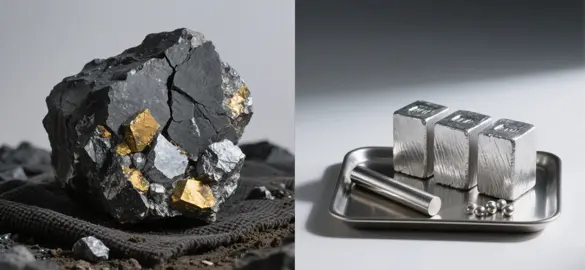
Role as a Reductant
- Improve Metallurgical Quality: As a reductant, biochar effectively facilitates the reduction of metal oxides in ores, such as iron, aluminum, copper, and zinc. This enhances product quality and purity while reducing impurities.
- Reduce Carbon Emissions: Compared to traditional coke, biochar releases less CO₂ during the reduction process and burns more cleanly. This significantly reduces carbon emissions in smelting and mitigates the impact of greenhouse gases.
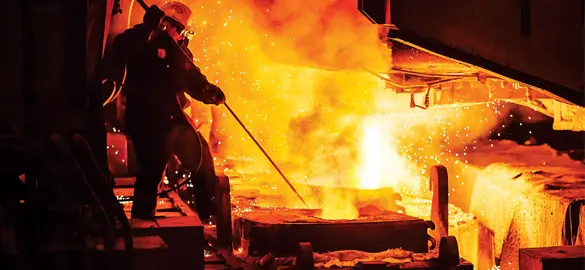
Role as a Renewable Energy
- Reduce Fossil Fuel Use: In the metallurgical industry, biochar can partially or fully replace coal and coke as a high-temperature fuel in smelting, heating, and furnace operations. This reduces reliance on non-renewable energy sources.
- Support Carbon Neutrality: Derived from sustainable biomass, biochar releases a controlled amount of carbon during use. It can serve as part of a carbon-neutral strategy, helping industries achieve emission reduction goals.
Biochar Applications in European Steelmaking: Full-Chain Decarbonization
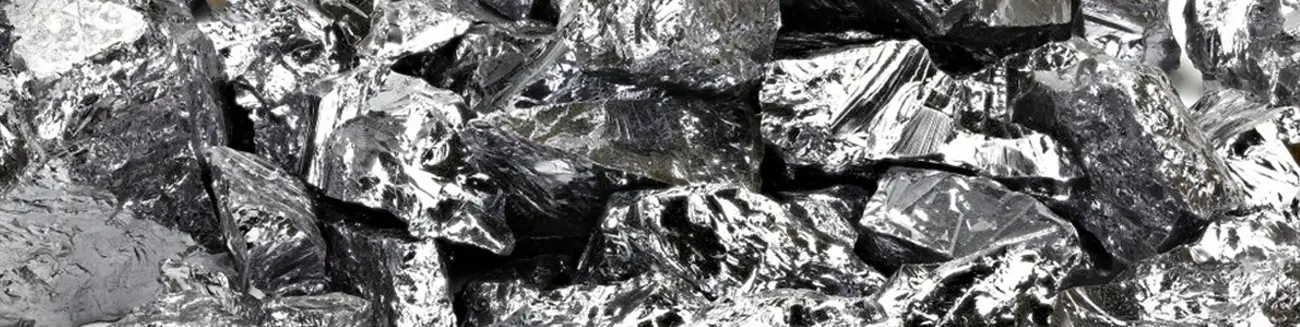
Silicon
Silicon plays a central role in photovoltaic cells, semiconductors, high-performance alloys, and silicones. In Europe, traditional silicon smelting relies on imported hard coal, which has relatively low fixed carbon content of around 55% and poor reactivity compared to biochar. Consequently,
- 1.6 tonnes of coal are typically needed to produce 1 tonne of silicon, whereas 1.1 tonnes of high-quality biochar suffice.
- Replacing coal with biochar can cut direct CO₂ emissions from 4.5 tCO₂/tSi to as little as 0.5 tCO₂/tSi.
Currently, European silicon production still relies on imported charcoal and coal, a model that is not sustainable. Developing localized, modern biochar production can secure supply, lower upstream emissions, and strengthen Europe’s position in the global low-carbon metallurgy market.

Ferroalloy
The European ferroalloy sector is central to the continent’s metallurgical value chains, supplying critical inputs such as ferrosilicon, silicomanganese, ferromanganese, and ferrochromium to the steel and foundry industries. These alloys serve distinct functions in steel refinement, including deoxidation, desulfurization, and the enhancement of specific material properties. All the alloy require carbon-based reductants in high-temperature EAF smelting processes. This makes the sector particularly relevant for the use of biochar to minimize fossil emissions.
| Ferroalloy (name) |
Data on Fossil Reference Material | Data on Biochar Substitute Material | Biochar Substitution Radio | ||||||
|---|---|---|---|---|---|---|---|---|---|
| Type | Price €/t | Consumption | Type | Substitution rate | Consumption | 2030 | 2040 | 2050 | |
| Ferrosilicon | Washed Coal | 350 | 1,2 | Lump | 0,71 | 0,85 | 50% | 100% | 100% |
| Silicomanganese | Coke | 340 | 0,47 | Briquette / lump | 1,11 | 0,52 | 30% | 90% | 100% |
| Ferromanganese | Coke | 340 | 0,462 | Briquette | 1,2 | 0,55 | 20% | 70% | 100% |
| Ferrochromium | Coke | 340 | 0,511 | Briquette | 1,2 | 0,61 | 30% | 80% | 100% |
Steel
Steel is a cornerstone of modern economies. Elemental carbon remains essential across all steel production routes. Biochar, as a renewable, reactive carbon carrier, supports decarbonization in both transitional and future process chains as described below. Demand for biochar in the European steel sector is projected to reach 620,000 tonnes in 2030, increasing to about 4.1 million tonnes by 2050 and stabilizing in subsequent years.
Route 1: Blast Furnace–Basic Oxygen Furnace (BF-BOF) – Transitional Use Cases
During the transitional phase of gradually phasing out the traditional BF-BOF route (until 2050), biochar can contribute to emissions reduction in three ways:
- Coke substitution: Bio-coke is still under development, with limited substitution potential, but it can provide valuable transition time for the industry.
- Coke breeze substitution: Sintering uses 50kg of coke breeze per tonne of steel, which can be directly replaced by biochar at a 1:1 ratio.
- Pulverized Coal Injection substitution: With minor plant modifications, biochar can be almost immediately applied in larger volumes, at a 1:1 substitution ratio.
Route 2: Electric Arc Furnace (EAF) based steel making: A Priority for Early Substitution
In the future mainstream EAF route, biochar plays a more critical role:
- Support scrap-based EAF operation: Such EAFs require 12–24 kg carbon per tonne for electric arc stability, energy efficiency and slag control. Biochar is particularly attractive due to low ash and high reactivity.
- Support hydrogen-based steel making: Hydrogen-based DRI must also be melted in an EAF, but has an increased carbon demand of 30–40 kg/t. In addition to the functions mentioned above biochar is needed to maximize iron yield and process efficiency.
Biochar Quality and Applications in Metallurgy
To meet the stringent operational demands of metallurgical processes, biochar must achieve high fixed carbon content (>75%) and exhibit consistent quality across multiple physical and chemical parameters. The generally low ash content and low levels of trace elements such as sulphur, iron, phosphorus, boron, etc. are advantageous. When it comes to particle size, density, and mechanical strength, biochar can be designed or agglomerated to fit the specific needs of diverse uses.
| Product Category | Description | Size | FC (%) | Use Cases |
|---|---|---|---|---|
| Biocarbon Lumps | High reactivity for Si / FeSi | 10–60 mm | 80–82% | Silicon/FeSi |
| Medium volatiles | 10–60 mm | 82–85% | Ferroalloys, EAF (semi-open) | |
| Closed furnaces | 10–60 mm | >85% | Ferroalloys, EAF (closed) | |
| Biochar Fines | For injection or agglomeration | 3–8 mm | 80–90% | EAF, BF, injection |
| Briquettes | Roller-pressed or stamped | Variable | 75–85% | General processes |
| Pellets | Extruded with binders | <20 mm | 75–85% | Engineered for process compatibility |
| Extruded Lumps | High-density engineered format | >20 mm | >85% | Closed furnace ferroalloys |
| E-coke | Biochar-anthracite blend | Variable | >85% | EAF/BF/BOF transition |
| H-coke | Coke with biochar share | Variable | >85% | Hybrid with traditional coke |
Outlook for Biochar Demand in Europe
Demand for biochar in Europe’s metallurgical industry is entering a phase of rapid growth. This growth will not happen automatically. To realize the full potential of biochar, Europe must act now to validate its uses, streamline regulatory pathways, and support investment in industrial-scale production. Overall, by 2040, biochar production capacity will need to reach 20.6 million tonnes to meet the metallurgical sector’s demand for renewable carbon, generating a net carbon effect equivalent to 400 million tonnes of CO₂ (i.e., the circular carbon benefit of biochar). The figure below summarizes these projections across all industrial applications, including silicon and ferroalloys, steel (both BF–BOF and EAF routes), as well as other metallurgical and chemical processes and responsible carbon use.

Conclusion
The application of biochar in the European metallurgical industry is not only a technological replacement but also a paradigm shift in the industry. It aims to institutionalize recycling and climate-friendly carbon emission mechanisms, making them the cornerstone of European industry policy. This has far-reaching and lasting significance for future sustainable development.