In recent years, global wildfire-affected areas have repeatedly reached new records in satellite monitoring data. The cause is not a single accidental spark, but the continuous accumulation of untreated combustible materials, forestry biomass. Biochar production offers a different approach: converting forest biomass into carbon-storing products through pyrolysis. This helps forest management agencies address biomass removal challenges while turning the process into a source of carbon credits and soil improvement benefits. Continue reading to explore how this technology provides a practical pathway for global wildfire management.
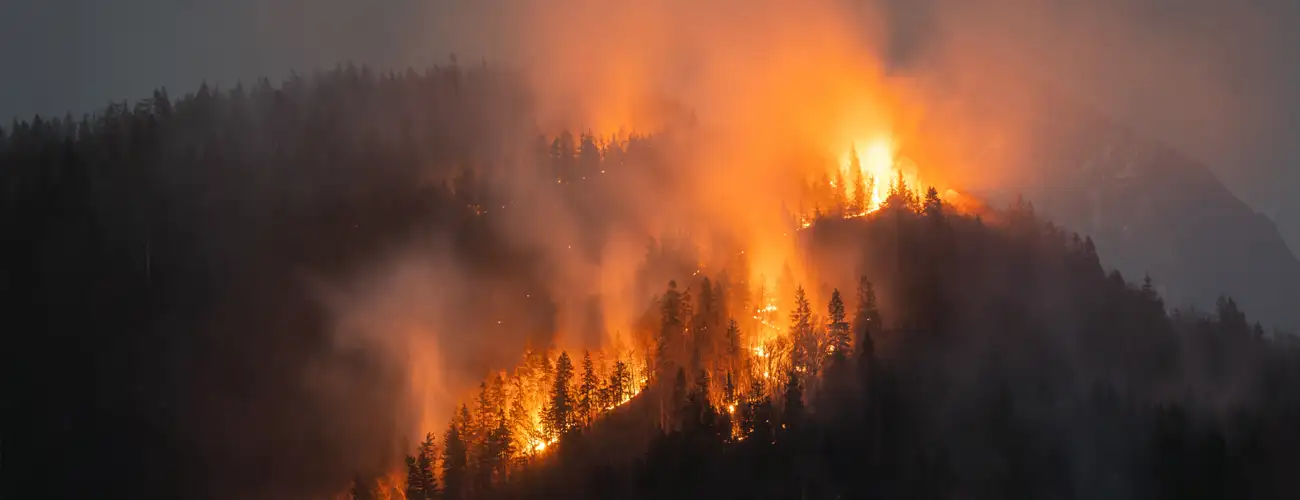
Forest Wildfire Warning: The Numbers You Need to Know
|
3.4billion tons/yr
|
Average annual carbon emissions from global wildfires, 2002–2024. Source: Global Fire Emissions Database (GFED5) |
|
|
3.3million ha
|
Area burned in the Amazon rainforest in 2024, larger than Belgium, releasing roughly 791 million tons of CO2. Source: EU Joint Research Centre (JRC) |
|
|
Natural forest
15.7M ha
|
Plantation
1.4M ha
|
Natural production forest and timber plantation area lost to wildfire worldwide, 2015–2022. Brazil, the US, and Australia were hit hardest. Source: Global risk of wildfire across timber production systems |
|
13.5million ha
|
Global forest area burned in 2024, the worst year on satellite record, up 13% from 2023’s 11.9 million hectares. Source: World Resources Institute / Global Forest Watch |
|
|
$106billion
|
Global economic losses caused by wildfires, 2014–2023. Source: UNDRR Global Assessment Report (GAR) 2025 |
|
What Causes Wildfires?
Two independent factors determine whether a wildfire starts and how large it becomes: an ignition source and fuel, which refers to the biomass accumulated in forests. Meanwhile, worsening climate conditions, including drought, extreme heat, and El Niño cycles, amplify both factors year after year.
Ignition Sources
Natural (less common but highly destructive)
- Dry thunderstorms: Lightning strikes during dry conditions. Rain evaporates before reaching the ground, so lightning ignites dry trees.
- Spontaneous combustion: During prolonged droughts and extreme heat, deep organic matter can generate enough heat through decomposition to ignite.
Human-caused (cause over 80% of wildfires worldwide)
- Careless use of fire: Campfires left burning, discarded cigarette butts, agricultural burning, and transparent waste that concentrates sunlight can all ignite fires.
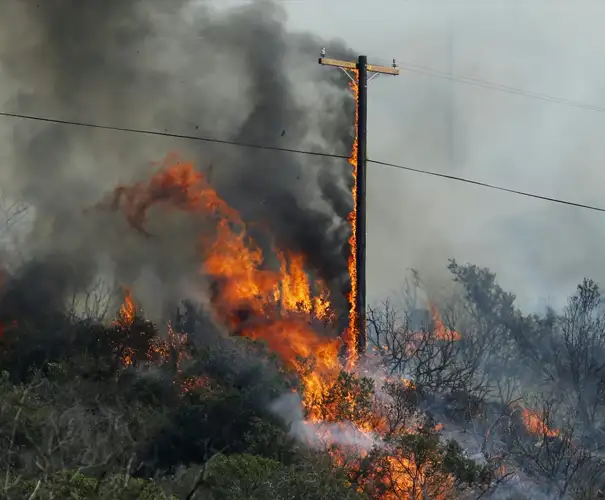
- Infrastructure failures: Strong winds can bring down power lines. Sparks from fallen lines can ignite dry vegetation. This has triggered several of California’s most destructive wildfires.
Fuel
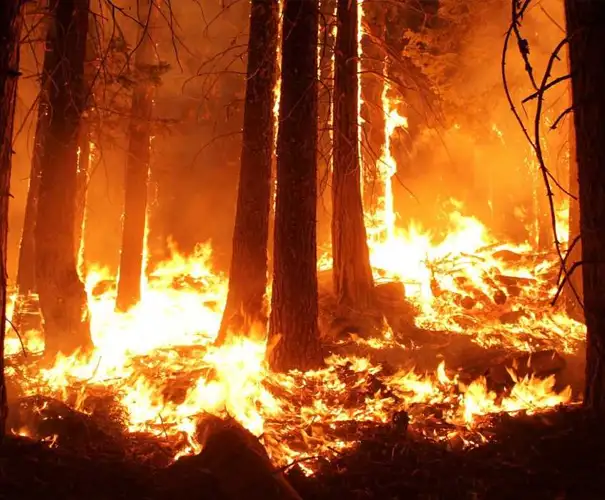
- Ladder fuel accumulation: In North America and the Mediterranean, decades of fire suppression have allowed small trees and shrubs to accumulate instead of being cleared by periodic surface fires. Foresters call this ladder fuel. It allows fires to spread into the canopy and become destructive crown fires.
- Poor land management: In South America and Southeast Asia, fuel accumulation comes from deforestation, slash-and-burn agriculture, and untreated logging residues. Together, these practices continuously create combustible biomass.
- Dead trees caused by pests: In western North America, bark beetle outbreaks affected about 85,000 square miles of forest between 2000 and 2017. They left behind standing dead trees that became biomass fuel. Boreal forests across Europe and Canada face similar fuel accumulation from insect infestations.
Takeaway: The severity of a wildfire depends far more on fuel accumulation than on the ignition source. An ignition source may start a fire. However, the amount, continuity, and density of combustible biomass determine whether that fire remains manageable or grows into an uncontrollable wildfire.
Why Traditional Forest Biomass Removal Delivers Limited Results
Thinning and prescribed burning are widely recognized as the two primary methods for reducing forest biomass.
- Thinning physically removes excess small trees and shrubs.
- Prescribed burning mimics the natural fire cycle and clears accumulated leaf litter, dead branches, and other surface fuels.
However, even though both methods are effective in principle, biomass continues to accumulate faster than it can be removed. In practice, three major challenges slow their implementation.
High Costs After Thinning
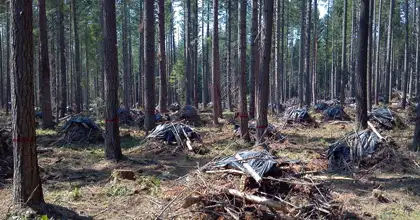
Thinning generates large amounts of branches and small-diameter wood with little commercial value. Transporting and disposing of this material often costs more than the wood is worth. As a result, forest agencies and private landowners often leave the residues on site instead of paying for removal.
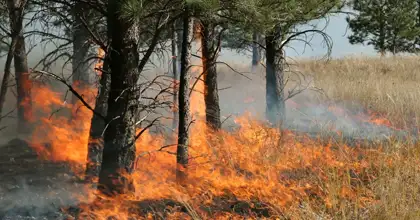
Precise Conditions for Burning
Prescribed burning can only take place under specific combinations of humidity, wind speed, and temperature. As a result, the safe burning window often lasts only a few weeks. If managers miss that window, they must wait until the next season. Meanwhile, biomass continues to accumulate.

Lengthy Approval Process
Both thinning and prescribed burning require environmental reviews. Authorities must assess air quality, smoke dispersion, and biodiversity impacts, etc. The process often takes months or even years. In addition, burn bans during drought years further reduce the time available for implementation.
How Biochar Production Addresses Forest Waste Management Challenges
Facing the growing pressure of biomass accumulation in forests, the effective solution is not to eliminate biomass, but to transform it. Traditional management methods often end with biomass being burned and released into the atmosphere. Pyrolysis plant takes a different approach. It heats biomass in an oxygen-limited environment and locks the carbon into structurally stable biochar. This conversion process brings several natural advantages:
- The process does not rely on continuous oxygen supply, so it avoids the uncontrolled spread risks associated with open flames.
- It produces far less smoke and particulate matter than open burning.
- The system can also recover pyrolysis gases for energy use, reducing external fuel consumption.
These characteristics allow biochar production to directly address the challenges of forest biomass management.
Turn Waste into Value
Branches and small-diameter wood from thinning have little commercial value. However, pyrolysis converts them into biochar for soil improvement or carbon credits. As a result, cleanup changes from a pure expense into a revenue-generating activity. This reduces the incentive to leave residues in the forest.
Enable Year-Round Processing
Unlike prescribed burning, biochar production does not depend on weather conditions. Operators can collect and store forest residues before transporting them to regional processing facilities. Once installed at a fixed site or industrial park, pyrolysis equipment can operate continuously year-round.
Shift Toward Policy Support
Prescribed burning often faces lengthy reviews due to air quality and smoke concerns. Meanwhile, agencies such as the U.S. Forest Service support diversified biomass management. They recognize biochar production as part of long-term wildfire mitigation. As a result, policy is shifting toward greater support.
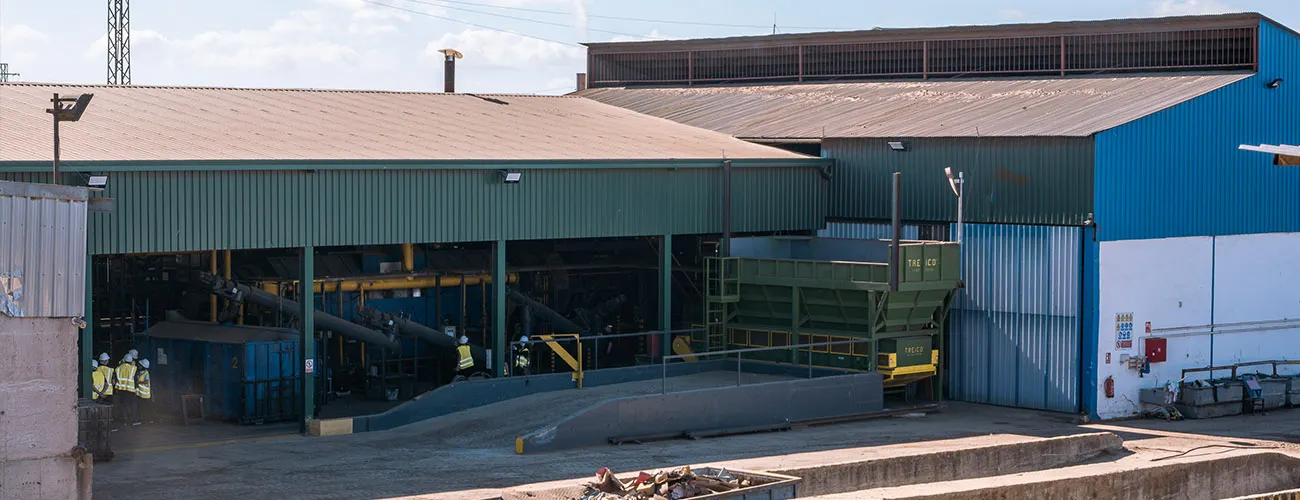
Equipment Selection: Fixed and Mobile Systems
Forest conditions and applications vary widely. Some areas support long-term operation of large-scale equipment, while others are remote and difficult to access. Routine thinning requires continuous management, whereas post-disaster biomass removal demands rapid deployment. Therefore, biochar equipment follows two different technical pathways, each addressing specific biomass management needs.
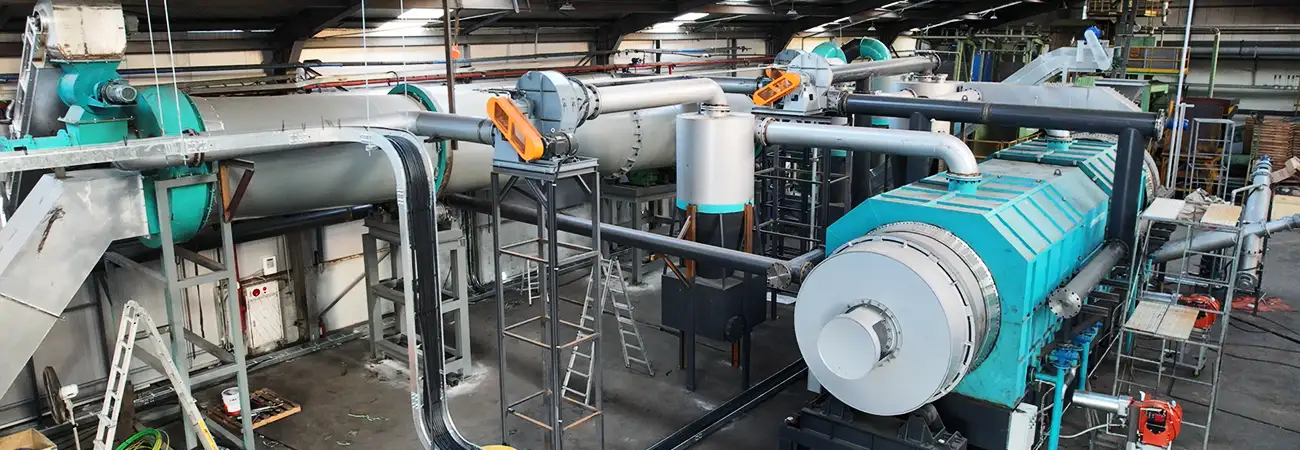
Fixed Industrial System
Operates at a fixed industrial site with supporting infrastructure and remains at the same location after commissioning. It is designed for large-scale commercial carbon removal projects, as well as agricultural & forestry biomass utilization projects.
Advantages
- High automation reduces labor costs per unit of output.
- Energy recovery enables near self-sufficient operation with minimal external fuel.
- Regulate temperature and pressure in real time, keeping biochar carbon content, H/C ratio, and pore structure stable.
Limitations
- As a fixed asset, it requires a stable nearby biomass supply. Otherwise, transportation costs increase.
- Construction involves site planning, EIA, and dMRV integration, requiring significant upfront time and investment.
- Systems require stable production schedules and lack the flexibility to handle scattered, remote, and complex forest conditions.
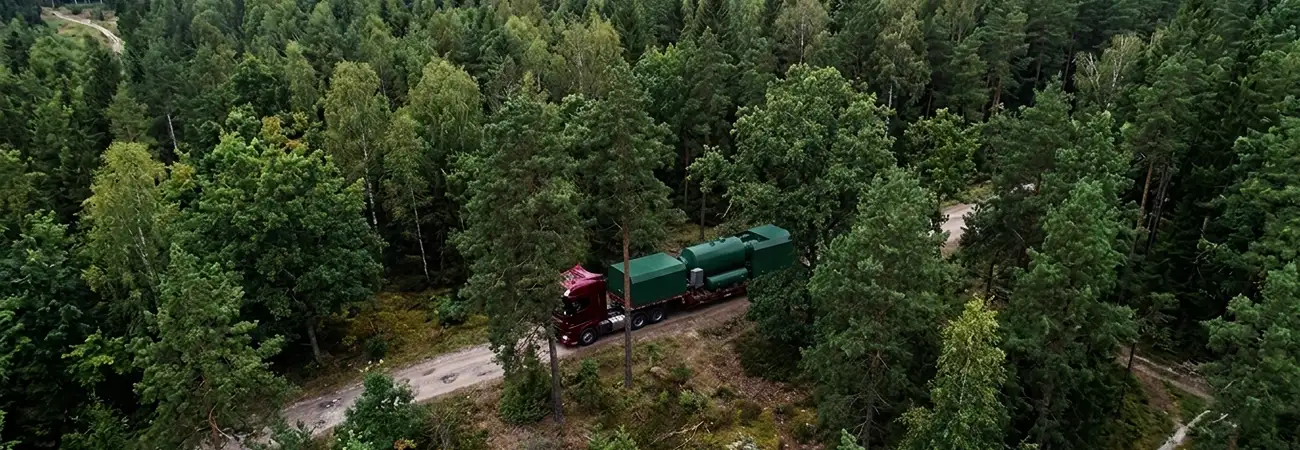
Mobile Working Unit
Can be designed as either modular units for rapid assembly and transport, or trailer-mounted systems for direct relocation between forest sites. It enables rapid deployment for forest biomass management, wildfire prevention, and emergency cleanup.
Advantages
- High mobility allows equipment to move directly to biomass sources, reducing transportation costs.
- The system can relocate according to cleanup progress, making it suitable for scattered and small-scale operations.
- Rapid deployment reduces the waiting time after forest disturbances, enabling faster biomass removal and site recovery.
Limitations
- Single mobile unit usually has lower capacity and cannot independently handle large-scale, high-density biomass.
- Frequent relocation creates additional transportation emissions, which must be included in net carbon removal calculations.
- Operation efficiency depends on site accessibility, weather conditions, and the availability of local support facilities.
Choosing the Right Approach: The choice between fixed and mobile biochar systems depends on biomass availability, site conditions, and operational goals. Fixed systems maximize efficiency and output for stable biomass supply, while mobile systems provide flexibility for dispersed and hard-to-access forest areas. Together, these two approaches create a more adaptable pathway for converting forest biomass into valuable biochar and carbon removal solutions.
Added Value of Converting Forest Biomass into Biochar
Carbon Credits
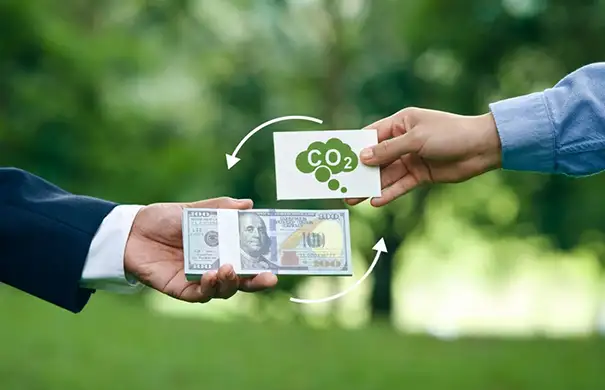
- Carbon revenue: Biochar carbon credits reached an average transaction price of $164 per ton in 2025, making biochar one of the few engineered carbon removal pathways with large-scale delivery capability. Forest residues often have no feedstock costs. Combined with the ecological value of forest management, these projects can achieve higher premiums.
- Cost offset: Thinning residues have limited commercial value, and transportation costs often exceed their value. Carbon credit revenue can offset cleanup expenses, turning thinning projects from a financial burden into cost-neutral or revenue-generating activities and reducing reliance on public funding.
Soil Restoration
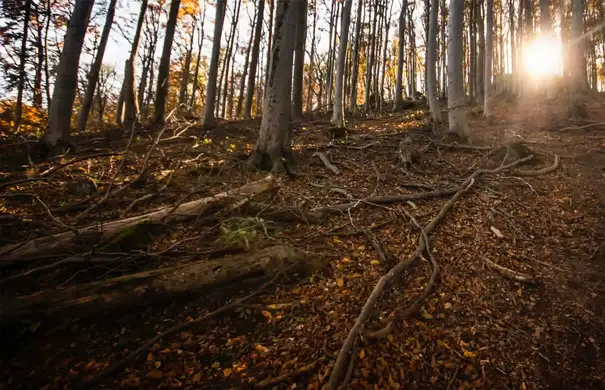
- Post-fire soil restoration: After wildfires, high temperatures can destroy soil organic matter and microbial activity. Natural recovery often takes years. Returning biochar to burned areas helps rebuild soil organic matter, accelerates vegetation recovery, and supports ecological restoration efforts after wildfires.
- Daily water retention: Biochar improves water-holding capacity in surface and root zones of forests, helping vegetation and surface litter retain moisture during dry seasons. Applying biochar to thinned forests or areas around firebreaks provides additional resilience during drought periods and supports long-term forest management.
A Sustainable Forest Management Cycle
Using forest waste biomass to produce biochar has become an important pathway for wildfire prevention. It transforms the biomass removal challenge faced by forest management agencies into a sustainable practice that restores value to forests. Instead of being burned as waste, processed branches and residues can return to forest soils or enter the carbon market, supporting long-term forest health. The technology is mature, and equipment solutions now include different pathways for various forest conditions and operational scenarios. For forest management agencies and landowners, the next step is to integrate this approach into routine forest management systems.