Plastic pollution is a pressing global challenge, with policymakers, business leaders, and communities working to develop solutions. However, a significant funding gap hinders the transition to a circular plastics economy. As an emerging results-based financing tool, plastic credits offer a new way to connect public and private sector funding with targeted efforts to combat plastic pollution. When applied responsibly, plastic crediting can enable organizations to financially support pollution reduction initiatives with quantified and verified results. For the plastic chemical recycling (pyrolysis) sector, this mechanism is poised to unlock a “second growth curve,” significantly bolstering project profitability and long-term viability.
What is a Plastic Credit?
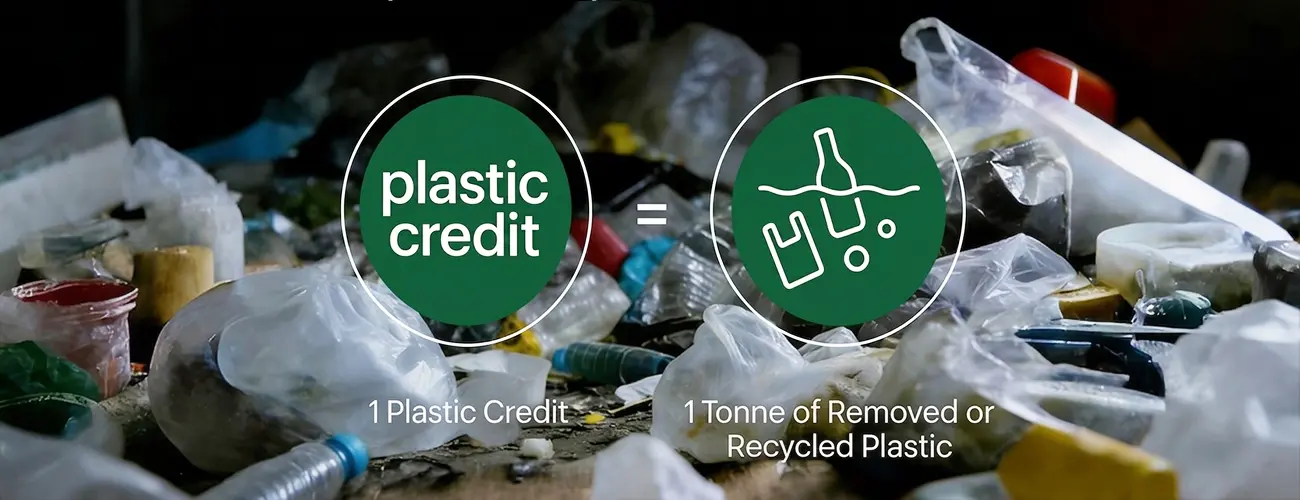
Plastic Credit is a results-based financial instrument with a logic similar to carbon credits. In a document published by the World Bank in September 2024, the following working definition is applied: “A plastic credit is a transferable unit representing a specific quantity of plastic that is avoided from use, collected and managed, or recycled , as a result of a project activity.” Generally, one Plastic Credit is issued each time an entity additionally recovers or processes one tonne of plastic waste from the natural environment or landfills.
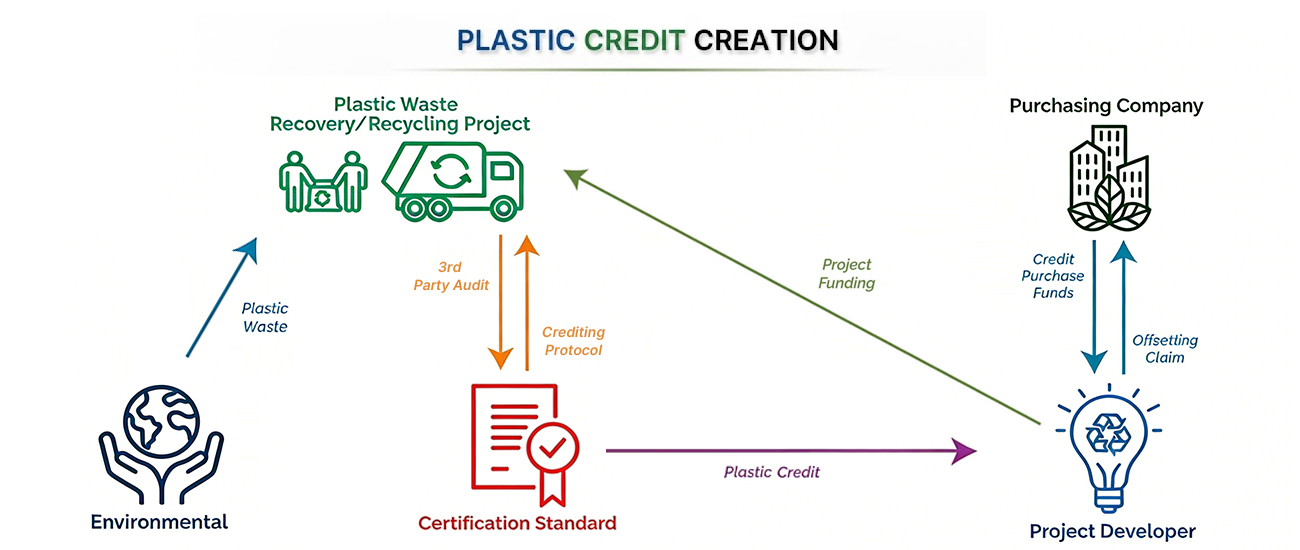
Core Operating Mechanism
Plastic credit operates as a voluntary market, driven by corporate sustainability goals and ESG commitments.
- Generation and Sale: Plastic Credits are typically generated and sold by organizations specializing in plastic waste collection and recycling, such as pyrolysis plants or waste management centers.
- Purchase and Offset: Manufacturing companies (e.g., FMCG brands) can buy these credits to offset their own plastic usage.
- Certification Compliance: The issuance of plastic credits is based on rigorous international standards (such as Verra’s Plastic Waste Reduction Standard) to guarantee the authenticity of every tonne reduced.
Core Categories
- Waste Collection Credits (WCCs): Issued based on the volume of plastic waste collected and appropriately managed above what would have happened in the absence of the Plastic Program project. By purchasing WCCs, organizations directly contribute to collecting plastic waste from nature and establishing systems to prevent further pollution.
- Waste Recycling Credits (WRCs): Issued based on the volume of plastic waste recycled above what would have happened in the absence of the Plastic Program project. By purchasing WRCs, organizations help scale recycling infrastructure and generate recycled plastic feedstock that can replace virgin plastic. Chemical recycling (Pyrolysis) plays a key role at this stage.
What Type of Activities Generate Plastic Credits?
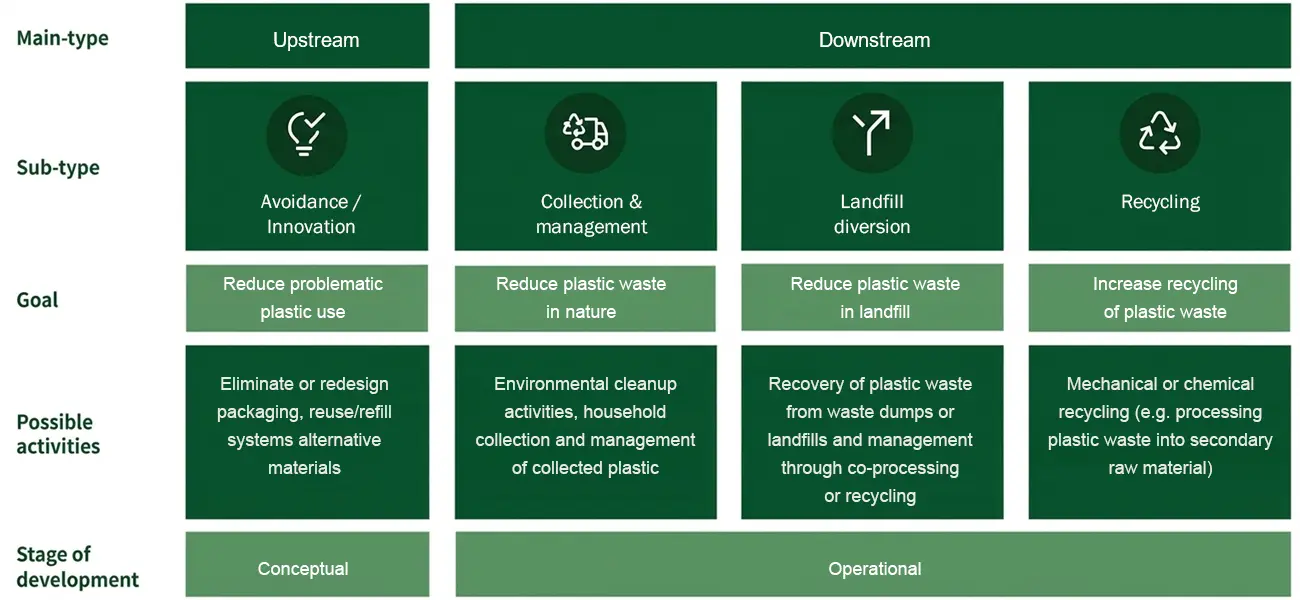
01 Avoidance / Innovation
- Goal: Reduce problematic plastic use
- Possible activities: Eliminate or redesign packaging, reuse/refill systems alternative materials
- Development stage: Conceptual
02 Collection & Management
- Goal: Reduce plastic waste in nature
- Possible activities: Environmental cleanup activities, household collection and management of collected plastic
- Development stage: Operational
03 Landfill Diversion
- Goal: Reduce plastic waste in landfill
- Possible activities: Recovery of plastic waste from waste dumps or landfills and management through co-processing or recycling
- Development stage: Operational
04 Recycling
- Goal: Increase recycling of plastic waste
- Possible activities: Mechanical or chemical recycling (e.g. processing plastic waste into secondary raw material)
- Development stage: Operational
Industry Drivers: Which Sectors Are Embracing Plastic Credits?
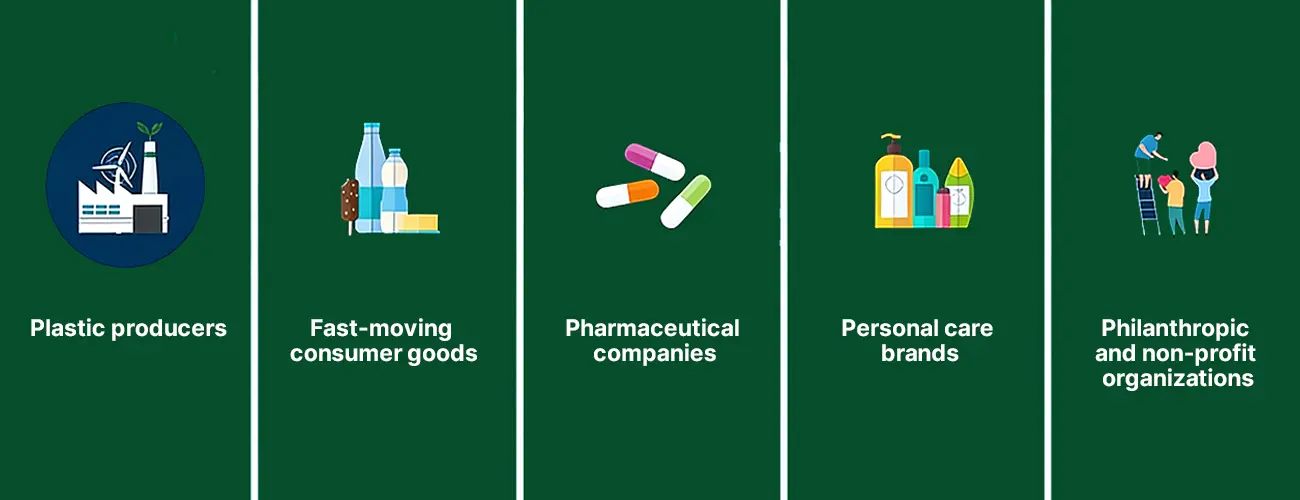
The primary buyers in the plastic credit market span several key industries that generate significant plastic waste through their daily operations and product packaging. The following sectors are currently the most active participants in adopting plastic credits:
- Plastic Producers: Positioned at the beginning of the value chain, plastic producers use credit purchases to fund downstream waste recovery projects, actively fulfilling their extended producer responsibility.
- Fast-Moving Consumer Goods (FMCG): The FMCG sector has a massive plastic packaging footprint. Through plastic credits, these companies can quantify and neutralize their plastic impact, significantly enhancing their brand image.
- Pharmaceutical Companies: The pharmaceutical industry has stringent requirements for product safety and packaging integrity, making it difficult to eliminate plastic entirely. Plastic credits provide these companies with an effective compensatory mechanism.
- Personal Care Brands: Personal care products often utilize diverse plastic packaging, including bottles, tubes, and caps. Purchasing credits is a vital way for these brands to demonstrate their commitment to sustainability.
- Philanthropic and Non-Profit Organizations: Beyond corporations, non-profits also purchase plastic credits to fund specific environmental cleanups and community empowerment projects, expanding their social impact.
What Are the Benefits of Plastic Credits?
For Brands and Producers
Move towards Plastic Neutrality
- Fulfill Environmental Responsibility: When technical or food-safety constraints prevent a company from completely eliminating plastic use, purchasing credits allows them to offset their plastic footprint by an equivalent amount, enabling a credible “Plastic Neutral” claim.
- Enhanc ESG Ratings: Transparent credit purchase records serve as quantifiable metrics in annual Sustainability (ESG) Reports, significantly boosting investor confidence.
For Recovery and Processing Entities
Unlock More Revenue Potencial
- Break away from Single-source Income: In the past, pyrolysis plants relied primarily on revenue from the sale of pyrolysis oil. Today, the sale of plastic credit has the potencial to become a second growth curve for plastic pyrolysis projects. Current prices can range from 140-670 USD per credit (equivalent to one ton of plastic waste)
- Shorten ROI cycle: Revenue from credit sales acts as a “market-based subsidy”. It significantly offsets equipment investment and operating costs, making high-efficiency, low-emission pyrolysis solutions economically more attractive.
For Environment and Local Area
Reduce Plastic Pollution
- Reduce Environmental Waste Stock: Plastic credits create financial motivation for waste plastic collecting or recycling projects, reducing the amount of plastic entering rivers, oceans, and local environments.
- Scale Formal Waste Infrastructure: Plastic credits drive the establishment of collection and sorting stations in remote areas that previously lacked formal waste management, helping reduce plastic pollution.
Conclusion
While plastic crediting presents a valuable mechanism to support plastic pollution reduction efforts, it should be viewed as part of a broader environmental strategy. To be effective, plastic crediting should complement other initiatives across the value chain. Plastic Credits are not merely a stopgap measure to bridge funding gaps; they serve as the foundational operating system that unlocks the “second growth curve” for chemical recycling. By integrating advanced pyrolysis processes with transparent credit certification, we are doing more than simply processing waste—we are generating a form of “green currency” capable of transcending geographical boundaries and connecting global supply chains.