Recently, Beston Group completed a rice husk–to–biochar pyrolysis solution for a Southeast Asian client using BST-50S biochar production equipment. Based on the client’s specific application requirements, the project was supported by a series of controlled tests. These tests were carried out at Beston Group’s laboratory and pilot-scale facilities, with iterative process optimizations applied throughout the project. The following test data were generated under defined operating conditions. They reflect practical production scenarios and verified testing procedures, and are provided for technical evaluation and reference.
Rice Husk Raw Material Information
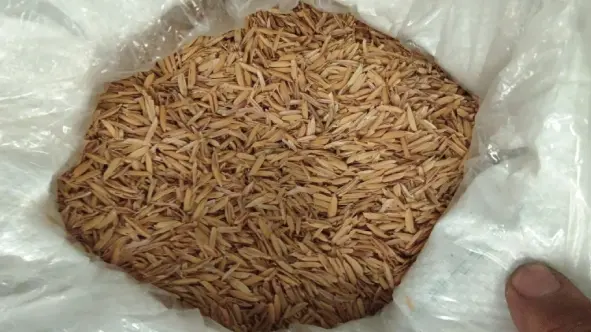
In this biochar production test, we used rice husk samples supplied by the client. The customer provided us with basic information about the raw materials. Data shows that this material is very suitable for continuous production of biochar machine:
To evaluate the pyrolysis behavior of customer-supplied rice husk under controlled conditions. Our laboratory team first conducted small-batch tests at different temperatures and reaction times.
Item
First test result
Second test result
Third test result
Test time
2025.5.21
2025.5.22
2025.5.27
Test record of carbonization of Rice husks
Reaction time
1h15min
1h43min
3h22min
Reaction temperature
0-628℃
0-634℃
0-694℃
Biochar
40.58%
42.06%
41.10%
Wood vinegar and tar
35.17%
33.75%
36.10%
Syngas
24.25%
24.19%
22.80%
Test results of rice husks biochar
Moisture
3.08%
4.13%
1.33%
Analysis moisture
0.31%
0.41%
0.13%
Ash
33.51%
33.35%
32.97%
Volatiles
12.63%
13.15%
12.32%
Fixed carbon
53.55%
53.09%
54.58%
Calorific value
4944-5114
4805-5035
5176-5237
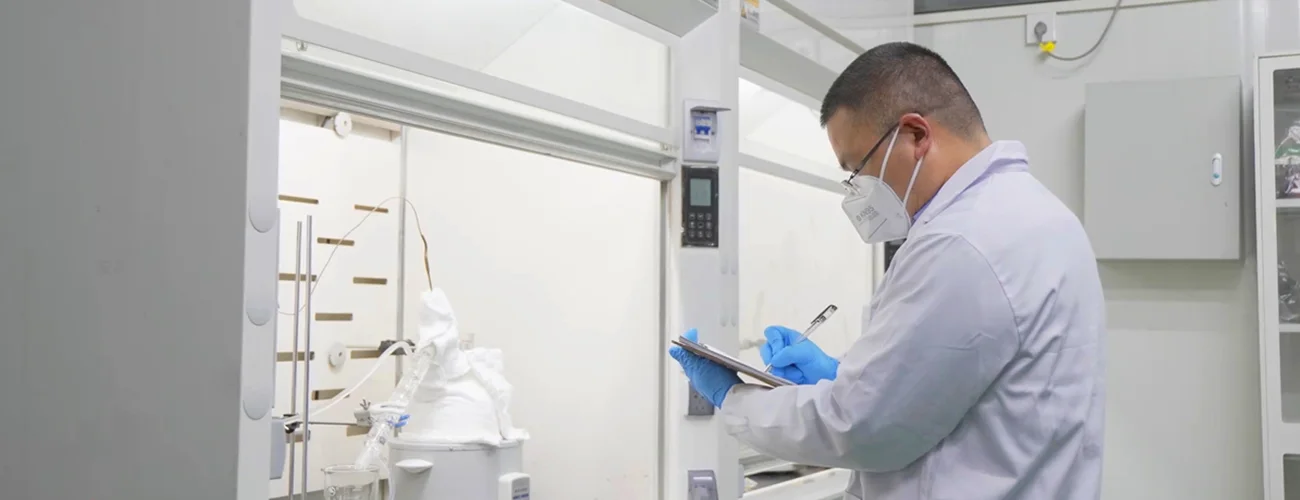
Engineers conduct pyrolysis tests on samples in Beston Group’s laboratory
Test of Procured Samples on Prototype on 2025-06-23
To establish baseline performance data, Beston Group conducted pilot-scale tests using domestically sourced rice husk at different operating temperatures.
Test time
2025.6.23
Test record of carbonization of Rice husks
Reaction time
1h
1h
1h
Reaction temperature
570°C
620°C
650°C
Biochar
Input capacity
115kg
138kg
161kg
Output capacity
40.25kg
44.14kg
48.3kg
Yield of biochar
35.00%
31.00%
30.00%
Test results of rice husks biochar
Moisture
2.30%
1.67%
1.68%
Analysis moisture
0.23%
0.17%
0.17%
Ash
47.43%
47.91%
48.24%
Volatiles
7.87%
7.70%
8.09%
Fixed carbon
44.47%
44.22%
43.50%
Calorific value
3968-4080
3942-4018
3927-4012
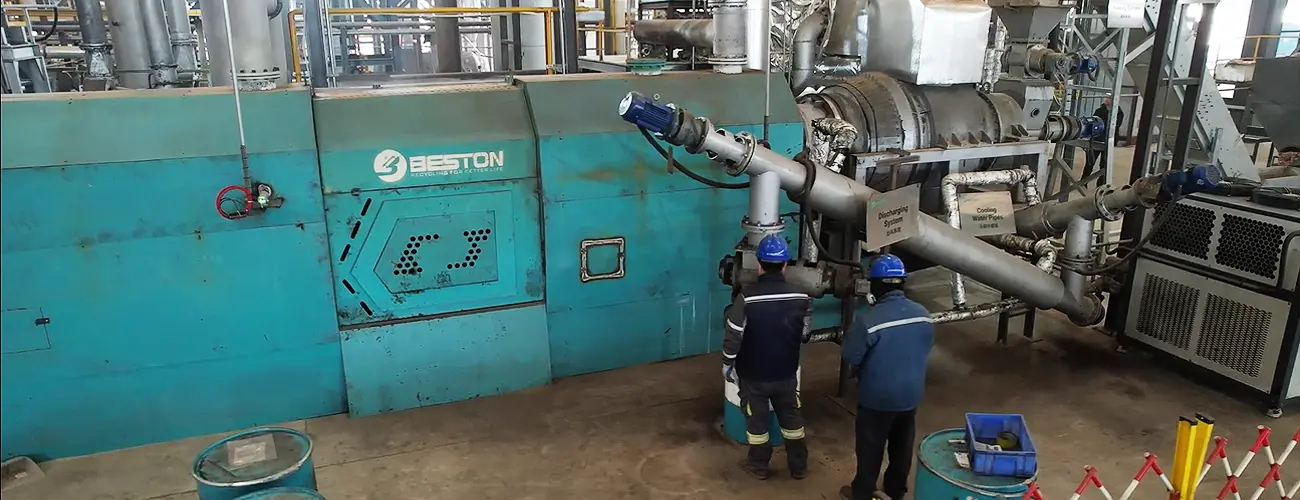
Beston technical team used a BST-06 prototype to test locally sourced rice husks at Beston Group’s pilot plant.
Rice Husk Biochar Testing Results and Analysis on 2025-08-06
To compare with the client’s rice husk sample, we first sent the biochar produced from domestically sourced rice husk samples for testing on August 6, 2025, and obtained the H/C molar ratio data.
Test of Customer Samples on Prototype on 2025-08-16
To verify equipment performance under practical operating conditions, Beston Group conducted pilot-scale tests using customer-supplied rice husk at different temperatures and residence times.
Test time
2025.8.16
Test record of carbonization of Rice husks
Operation Hz
15Hz
30Hz
15Hz
30Hz
Reaction time (Min)
23 min
14 min
23 min
14 min
Reaction temperature (°C)
400°C
400°C
500°C
500°C
Biochar
Input capacity
168kg
105kg
168kg
105kg
Output capacity
50kg
35.3kg
41.95kg
36.4kg
Yield of biochar
29.80%
33.60%
25.00%
34.70%
Test results of rice husks biochar
Moisture
6.90%
5.62%
5.79%
6.21%
Analysis moisture
0.69%
0.56%
0.58%
0.62%
Ash
33.07%
37.75%
35.45%
40.71%
Volatiles
16.20%
17.27%
11.11%
8.89%
Fixed carbon
50.03%
44.42%
52.86%
49.78%
Calorific value(Kcal/kg)
4412-4753
4043-4309
4577-4892
4115-4421
Rice Husk Biochar Testing Results and Analysis on 2025-11-07
To ensure the accuracy of the data, we sent the biochar samples produced under different operating conditions to a testing agency for analysis. The dry basis carbon content (Cd) and dry basis hydrogen content (Hd) were measured. The test results were provided by the ICAS monitoring agency, with the monitoring conducted on November 7, 2025. Based on the hydrogen-carbon ratio formula (H/C ratio = Total hydrogen / (Total carbon – Inorganic carbon) * 12), we further calculated the hydrogen-carbon molar ratio. >
Higher Biochar Yield in Laboratory Settings:
The biochar yield in laboratory tests is higher than that observed in prototype machine testing.
Correlation Between Temperature and Fixed Carbon:
For rice husks, an increase in reaction temperature does not necessarily result in a higher fixed carbon content.
Variability Based on Material Variety:
Different varieties of the same raw material yield biochar of varying quality.
H/C Molar Ratio Compliance:
After multiple tests, the final hydrogen-to-carbon (H/C) molar ratios are consistently below 0.7, meeting the requirements for carbon removal projects.
Beston BST-50/BST-06Quicker Have Been Vetted By Rainbow.
Learn More