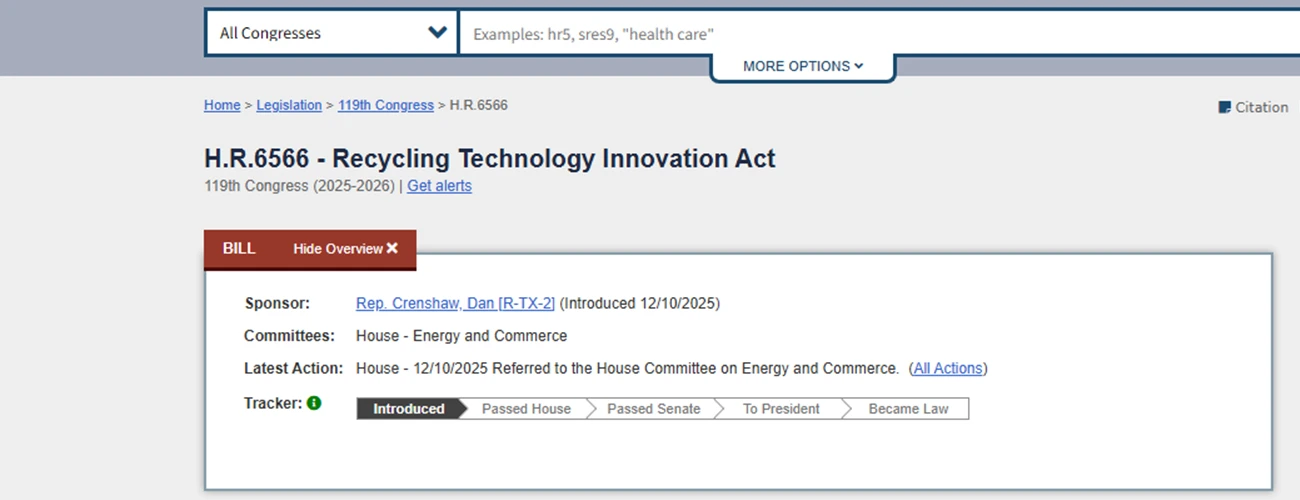
A recent Republican-backed bill in the U.S. Congress, the Recycling Technology Innovation Act, has drawn significant attention from the industry. The legislation proposes reclassifying chemical recycling as a manufacturing process rather than a traditional waste treatment procedure. If passed, this regulatory realignment will not only provide clear policy guidance for chemical recycling technologies but also likely accelerate the innovation and commercialization of the U.S. plastic circular economy industry, creating new development opportunities for industry players.

Overview of the Recycling Technology Innovation Act
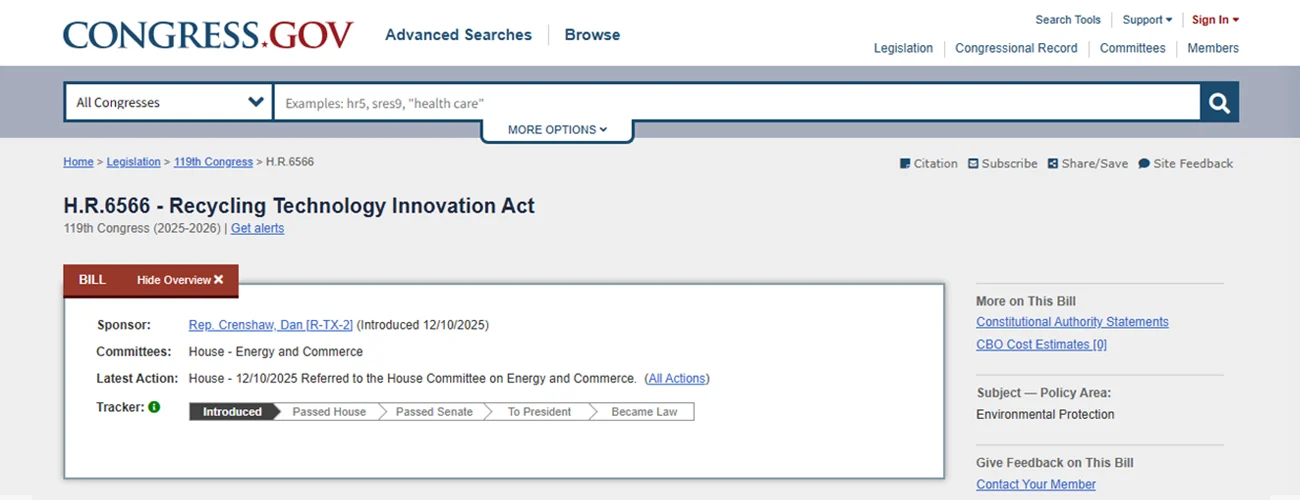
On December 10, 2025, Congressman Dan Crenshaw (R-TX), along with Congressman Gary Palmer (R-AL), introduced the Recycling Technology Innovation Act in the U.S. House of Representatives. The bill aims to reclassify chemical recycling as a manufacturing process rather than waste incineration. It has been referred to the House Committee on Energy and Commerce for consideration. This move is designed to eliminate regulatory uncertainties that have hindered investment in and the development of infrastructure for advanced plastic recycling technologies.
Background
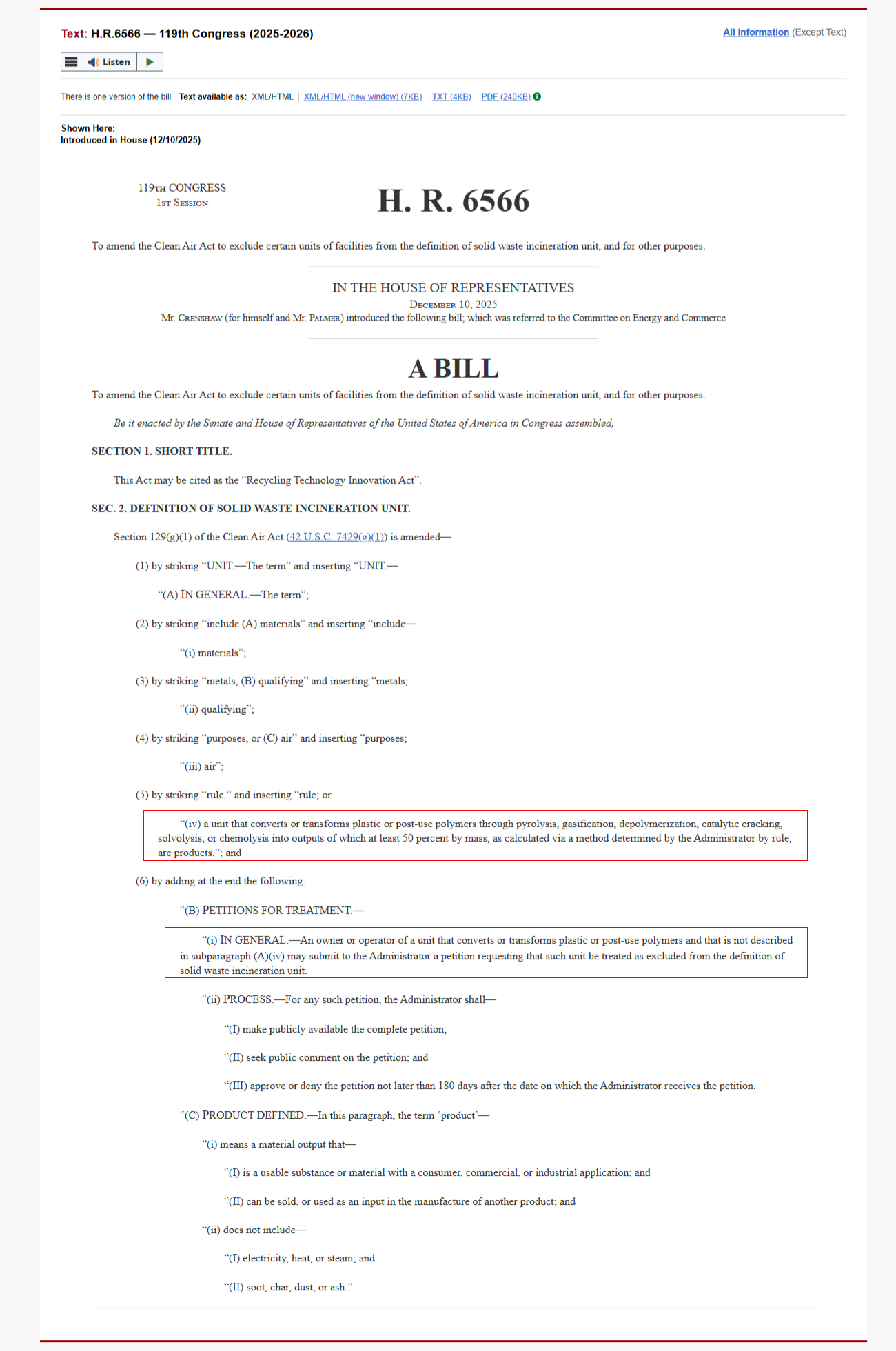
Chemical recycling (also known as advanced recycling) breaks down waste plastics into molecular-level components, which can then be used to produce new plastics or other chemical products. Compared with mechanical recycling, chemical recycling can handle a wider range of plastic types, such as films, flexible packaging, and multilayer packaging. Currently, chemical recycling primarily includes the following technological pathways:
- Pyrolysis: Heating waste plastics to high temperatures to decompose them into oil, gas, and carbon black, which can then be reprocessed into new plastics or fuels.
- Depolymerization: Breaking down polymers into monomers, such as depolymerizing PET into terephthalic acid (TPA) and ethylene glycol, which can be repolymerized to produce new plastics.
- Solvent-based Recycling: Using chemical solvents to separate and purify plastic mixtures, maintaining high-quality polymer chains.
Policy Interpretation
Crenshaw says vague and inconsistent interpretations of the Clean Air Act have left companies guessing about how advanced recycling will be regulated—a barrier to long-term planning and large-scale investment. He suggests the bill will solve the issue by regulating the technologies as manufacturing units rather than waste incinerators, aligning federal policy with the 25 states that already regulated chemical recycling as such. This change would mean:
- Regulatory Clarity: Classifying advanced recycling facilities under the manufacturing regulatory framework, thereby defining their legal status and regulatory position.
- Institutional Harmonization: Aligning federal regulations with state-level regulatory standards, reducing compliance costs arising from policy inconsistencies.
- Policy Signal Transmission: Incorporating chemical recycling facilities into the regulatory framework for production activities, sending clear signals to the market and providing a predictable legal and regulatory environment for long-term planning, investment decisions, and technological innovation.
This move is regarded by the industry as a policy boon for the chemical recycling sector, with the potential to attract increased investment and R&D spending.
Stakeholder Perspectives: Support and Controversy
Support: The proposal has received support from industry organizations. The Plastics Industry Association (PLASTICS) issued a statement in support of the legislation. The American Chemistry Council (ACC) also voiced its support for the proposal.
“The Recycling Technology Innovation Act delivers much-needed clarity by ensuring advanced recycling is regulated as manufacturing and aligning federal policy with what most states already recognize. This commonsense approach strengthens U.S. manufacturing, supports American jobs, and keeps valuable materials in our economy and out of the environment.”
“America wants to recycle more plastic, and this legislation is a smart, practical step that can help us do that,” “Clear policy can help us turn materials we currently throw away into new products, grow American manufacturing, and meet the demand for recycled plastic that brands and consumers want.”
Controversy: Yet some Democrats have voiced concerns that reclassifying chemical recycling as a manufacturing process could potentially allow facilities to avoid stronger environmental protections under laws like the Clean Air Act. And some environmental groups criticise that say the chemical recycling processes can create pollution and overpromise on recycling results. Proponents counter that modern facilities are equipped with advanced emission control technologies, enabling near-zero waste and delivering better outcomes than landfilling.
Potential Long-Term Positive Impacts
Reduce Regulatory Uncertainty & Boost Investment Confidence
By providing the necessary regulatory clarity, the Act could unlock tens of billions of dollars in potential investment and accelerate the deployment of commercial-scale advanced recycling facilities across the United States, particularly in petrochemical hubs such as Texas and the Gulf Coast.
Strengthen Domestic Manufacturing & Enhance Supply Chain Resilience
Amid tariffs and trade barriers, advances in domestic recycling help ensure material supply security. Converting discarded materials into new products supports U.S. manufacturing and meets the growing demand for recycled plastics from brands and consumers.
Drive Employment and Economic Growth
According to the American Chemistry Council, advanced recycling could create thousands of jobs across manufacturing and operations, boosting regional economies in the Southeast and Midwest. Planned investments by companies such as ExxonMobil and Dow Chemical could be further expanded with the regulatory certainty provided by the Act. Access to high-quality recycled resin would support the development of the automotive, electronics, and consumer goods sectors.
Mitigate Plastic Pollution
By encouraging the adoption of advanced chemical recycling, the Act supports a circular economy model. If properly managed, it could increase recycling rates and promote resource circularity. States with existing chemical recycling facilities stand to benefit the most, potentially expanding the capacity to process approximately 40 million tons of plastic waste generated annually in the U.S., much of which is currently landfilled or exported.
Current Status and Future Outlook
As of January 2026, the bill remains under consideration in Congress. If enacted and signed into law, it would represent a significant federal precedent for supporting innovation in recycling technologies in the United States. This aligns with global trends toward resource circularity and green manufacturing. As the bill progresses toward 2026, plastics industry policymakers should monitor its progress in Congress, as it could influence capital allocation for recycling infrastructure.