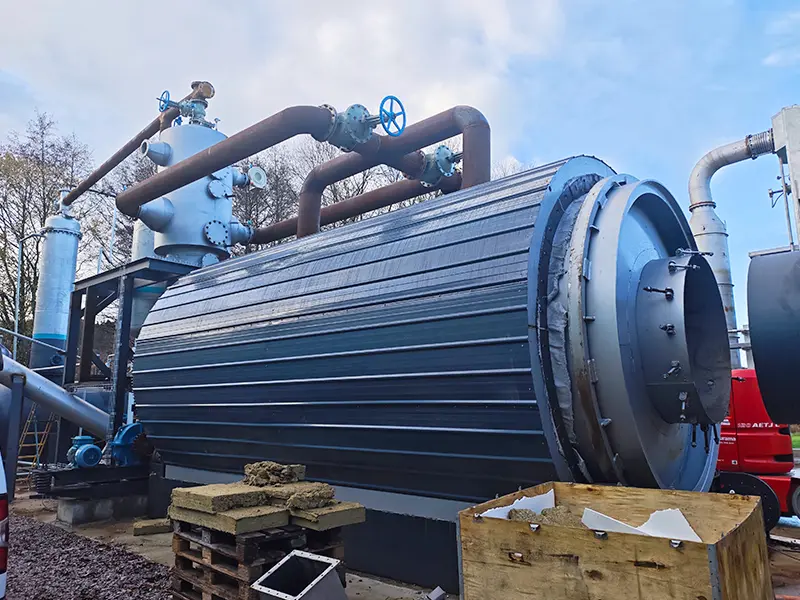
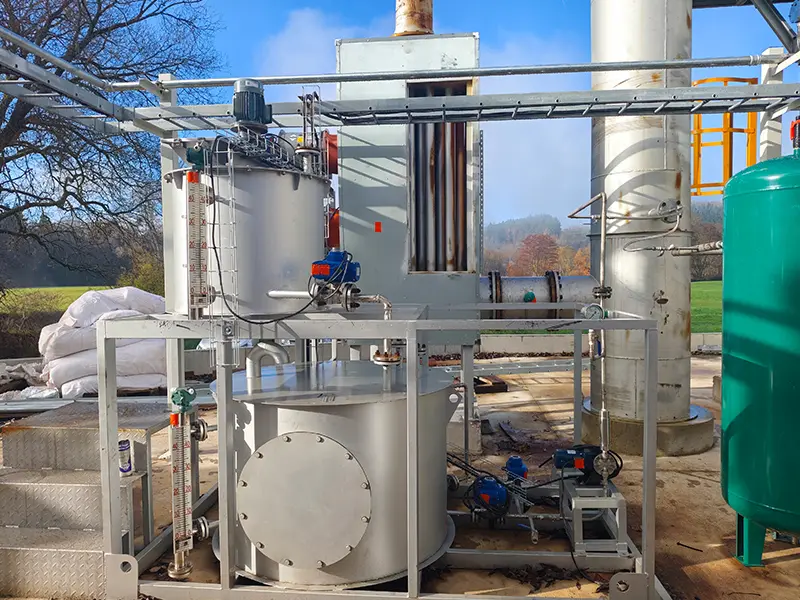
On December 4, 2025, Beston Group completed the installation of a BLJ-16 plastic pyrolysis plant in Europe. This project successfully resolves the client’s pressing issue of accumulated plastic waste while unlocking new economic value. Below are the detailed project insights:
Bridging Sustainability and Efficiency: Eco-Hygiene Waste Recycling
- Project background: The client is a forward-thinking manufacturing enterprise producing eco-friendly diapers and hygiene products, seeking an on-site solution to recycle the substantial plastic waste from their production lines.
- The goal: To offset high electricity costs from continuous factory operations, the client aimed to convert plastic waste into pyrolysis oil. This oil will serve as generator fuel, achieving self-sufficient power and cost reduction.
Solution & Technical Configuration: BLJ-16 Dual-System
After analyzing the material composition and factory capacity, Beston Group customized an advanced configuration to maximize energy conversion and environmental compliance:
Project Information
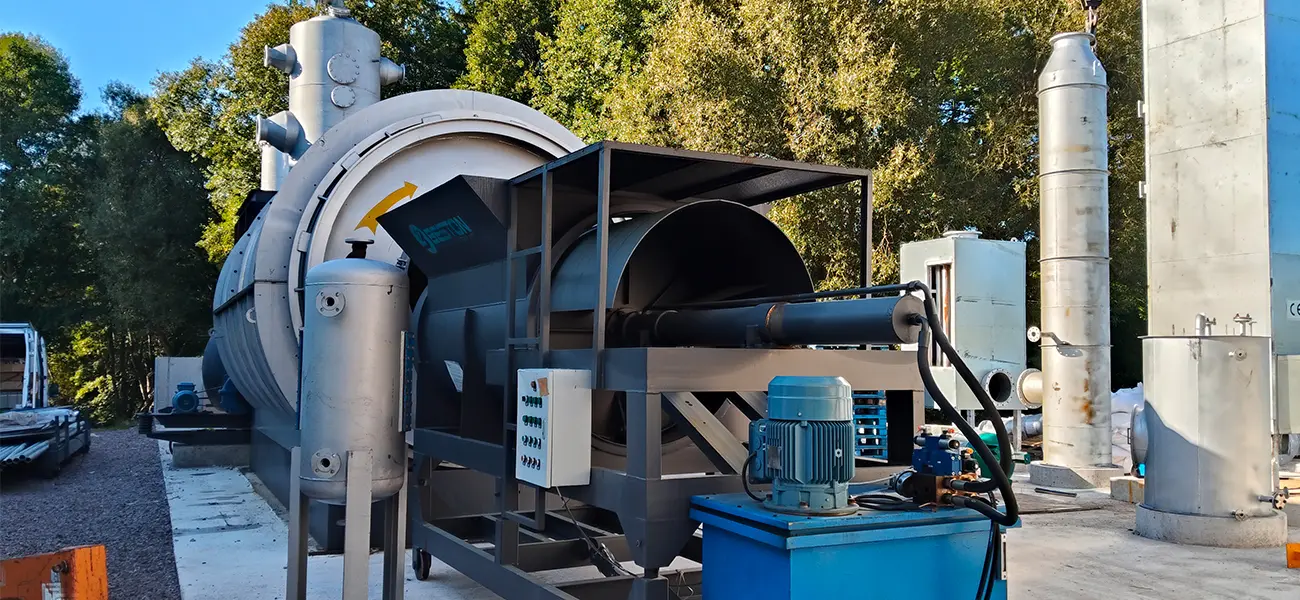
- Model: BLJ-16 plastic pyrolysis plant
- Feeding System: Hydraulic feeding system
- Environmental Protection: High-specification tail gas dedusting system (engineered to strictly treat emissions, ensuring compliance with local environmental standards).
Project Timeline & Current Status
- Installation Start Date: September 6, 2025
- Installation Completion Date: December 4, 2025
- Current Progress: As of December 2025, mechanical installation of the BLJ-16 dual-system is complete, and the project is currently awaiting final commissioning.
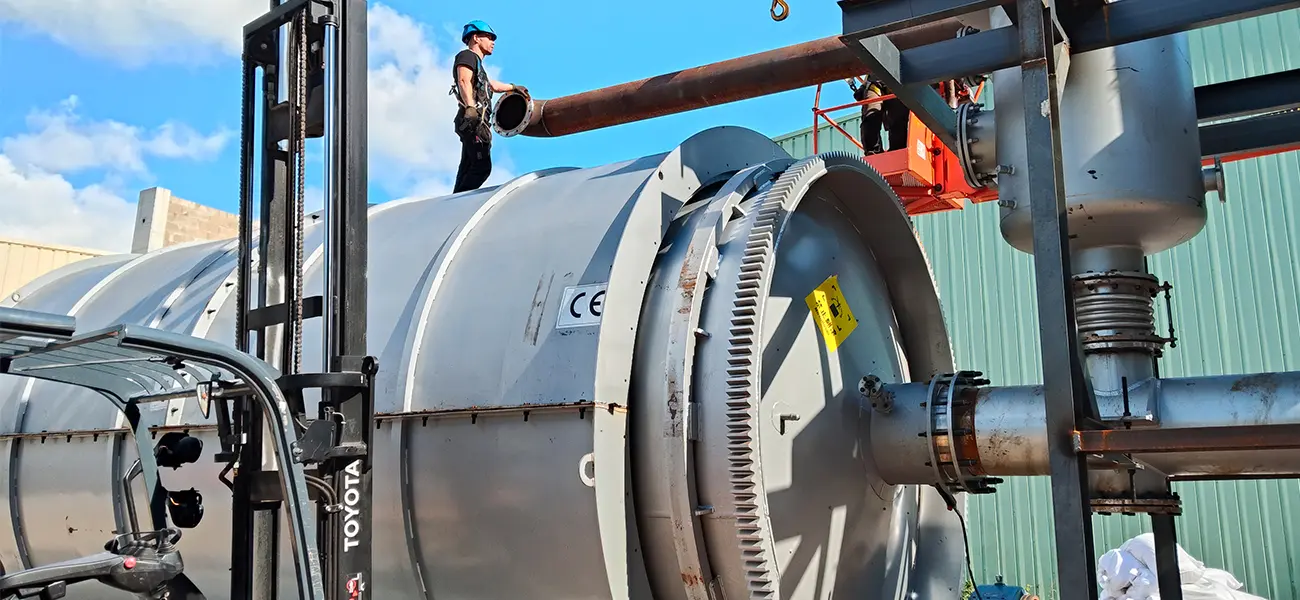
Step-by-Step Implementation: From Site Preparation to Completion
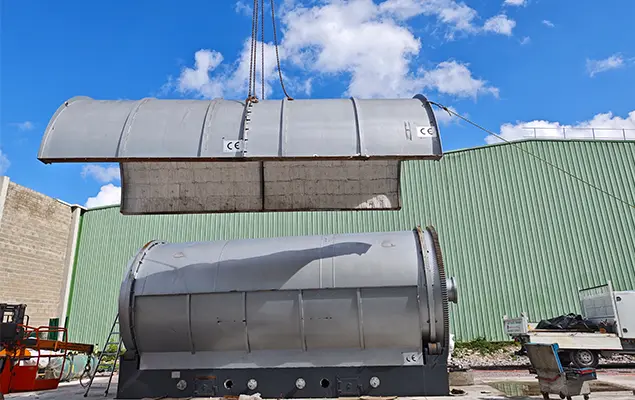
I. Site Preparation & Heavy Lifting (09.06 – 09.15)
Upon arriving in Europe, Beston Group technical team organized the inventory and began heavy lifting. They successfully positioned all large components, including the reactor base, rollers, refractory insulation, wet ESP, chimney, and drive assembly.
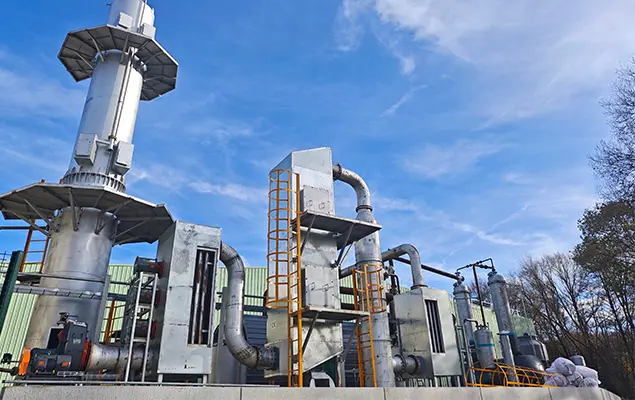
II. Platform Assembly & Piping Connection (09.16 – 10.29)
- Piping network: Lifted the catalytic tower and steam drum, secured the sloped oil-gas piping, and completed the welding process lines for non-condensable gas, water seal, furnace, and flaring chamber.
- Advanced dedusting: Successfully finalized the installation of the SCR denitrification reactor and heat exchanger.
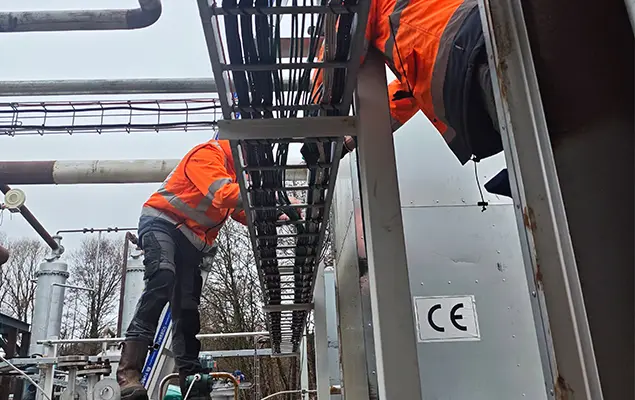
III. Electrical Installation & Local Standards Adaptation (10.30 – 11.24)
In response to site power alterations, the team assisted an external expert in guiding the distribution room setup. The team fully completed cable tray routing and load-side cable connections, and cut the factory wall to install a dedicated safety observation window.
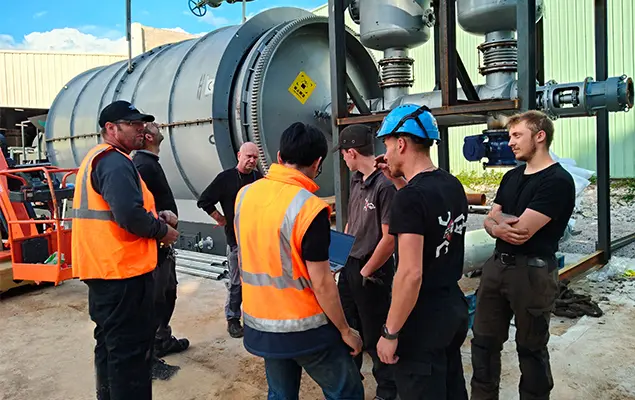
IV. Technical Handover & Ready for Commissioning (11.25 – 12.04)
- Remote debugging: Re-labeled wires and remotely flashed the PLC program via an IoT module, achieving one-click automated control for all electric valves.
- Training & Handover: Conducted system training. By December 4, mechanical completion and electrical no-load tests were finished, and the project officially entered the awaiting-commissioning stage.
Future Outlook: A Awaiting-Commissioning Milestone
The project is currently awaiting final commissioning. Once completed and officially put into production, this system will deliver significant environmental and economic value for the client:
- 100% waste disposal: All industrial plastic scraps from the factory will be cleanly processed inside the sealed reactor, achieving zero residual waste.
- Waste to fuel returns: The generated pyrolysis oil will replace traditional diesel to power factory generators. This closed-loop model will drastically lower electricity costs and power low-carbon manufacturing.