Plastic is one of the most influential inventions of the 20th century, bringing immense convenience to modern life. However, it has gradually become a global environmental challenge. With rising production levels, shorter usage cycles, and low recycling rates, the carbon footprint of the plastics industry has become an increasingly serious issue. As we seek more sustainable solutions, pyrolysis technology is gaining growing attention. This article will explore the carbon footprint of plastics and analyze how pyrolysis can effectively mitigate this burden, offering strong support to carbon neutrality.

The Plastic Supply Chain: A Major Source of Global Carbon Emissions
The plastic production industry is a significant source of global carbon emissions. It is estimated that activities related to the lifecycle of plastics emit approximately 1.3 billion tons of CO₂ equivalent annually, accounting for about 3.4% of global greenhouse gas emissions. As demand for plastic continues to grow, its carbon emissions are expected to rise as well. The carbon footprint of plastics covers its entire lifecycle, from production to disposal. Below is a breakdown of the carbon emissions at each stage and their impacts:

1. Raw Material Extraction (35-45% Carbon Footprint)
Currently, about 99% of plastics are derived from fossil resources (oil, natural gas) to produce monomers such as ethylene and propylene. The carbon footprint primarily arises from:
- Oil and natural gas extraction and refining: This process releases significant amounts of CO₂ and methane (CH₄).
- Synthesis of ethylene, propylene, and other monomers: These are typically produced through complex chemical reactions, consuming vast amounts of energy and releasing CO₂.

2. Plastic Production (20% Carbon Footprint)
This stage includes the polymerization of plastic and subsequent processing:
- Polymerization of ethylene and propylene to form high molecular weight polymers (e.g., PE, PP, PVC, PET).
- Processing through methods like injection molding, blow molding, and extrusion to create finished products.
These processes require substantial amounts of heat and electricity. If the energy is derived from fossil fuels (such as coal or natural gas), the resulting carbon emissions are significant.

3. Transportation (5-8% Carbon Footprint)
This stage involves multi-phase transportation from raw materials to the final product:
- Raw materials (oil/natural gas) → Refinery → Chemical plant → Plastic production facility
- Finished plastic → Manufacturing plant → Retailer → End users
Each link in the supply chain involves transportation (e.g., diesel trucks, shipping, rail), contributing to ongoing greenhouse gas emissions.

4. Usage and consumption (Very Low)
Plastic use itself generates minimal direct carbon emissions, but usage patterns have a significant impact on overall plastic consumption. For example, the frequent use and disposal of single-use plastic packaging necessitate continuous production of new plastics. From a lifecycle perspective, this results in a substantial cumulative carbon footprint.

5. Disposal (20%–30% of Total Carbon Footprint)
The disposal of plastic waste directly and indirectly impacts carbon emissions:
- Incineration: About 10% of plastic waste is incinerated, directly releasing large amounts of CO₂. If energy recovery isn’t implemented, the carbon footprint of incineration is even higher.
- Landfilling: Around 50% of plastic waste ends up in landfills. While plastic takes a long time to decompose, landfilling itself does not immediately release greenhouse gases, but it prevents resource recycling. This means more new plastic will need to be produced in the future, indirectly increasing carbon emissions.
- Recycling: The global plastic recycling rate is less than 10%, meaning most plastic waste still ends up incinerated or landfilled. This not only wastes resources but also drives up the demand for new plastic production, resulting in repetitive carbon emissions.
- Unmanaged Waste: Approximately 32% of plastic waste is not under proper management, often being handled through open-air incineration or illegal dumping. These activities release greenhouse gases, and due to difficulties in tracking, the actual carbon emissions may be severely underestimated.
Pyrolysis: Supporting ISCC-Certified Pyrolysis Oil Production
Pyrolysis is an advanced thermochemical treatment technology that involves heating plastic waste in an oxygen-deficient or oxygen-free environment, causing it to break down into smaller molecular compounds. Among the various outputs, pyrolysis oil is the most critical product of the plastic pyrolysis process. For example, plastics such as polyethylene (PE), polypropylene (PP), and polystyrene (PS) can achieve oil yields as high as 80% to 90%. Pyrolysis oil can be used not only as a fuel but also as a chemical feedstock, re-entering the plastic production chain to manufacture new plastics or other downstream chemical products.
Taking Beston Group as an example, the pyrolysis oil produced by its plastic pyrolysis equipment meets the standards of the International Sustainability and Carbon Certification (ISCC). This indicates that the pyrolysis oil has traceable feedstock sources, standardized processing procedures, quantifiable carbon emission data, and complies with sustainability requirements related to resource circularity and greenhouse gas reduction.
As pyrolysis technology becomes increasingly integrated into the global green industry framework, it is emerging as a key enabler of low-carbon transformation in the plastics industry and a vital driver of the circular economy.
Carbon Emission Reduction Mechanisms of Plastic Pyrolysis
Every stage of the plastic value chain is associated with significant carbon emissions, primarily due to the heavy reliance on fossil resources and low recycling rates. Pyrolysis, by enabling the recovery of resources from waste plastics, offers a promising pathway to effectively reduce carbon emissions in the plastics industry through the following mechanisms:
1. Reduce Carbon Emissions from Virgin Plastic Production
Plastic pyrolysis decomposes waste plastics into pyrolysis oil, enabling material reintegration into the production cycle. This oil can be used as a chemical feedstock in the manufacture of new plastics. This reduces emissions from oil extraction and refining. Petroleum and natural gas refining is carbon-intensive, involving emissions from equipment operation, electricity use, and methane leakage. Each ton of pyrolysis oil can displace an equivalent amount of virgin fossil-based feedstock, cutting emissions associated with petroleum extraction and processing.
Studies show that when pyrolysis products are used to produce new plastics, each ton of waste plastic processed can reduce greenhouse gas emissions by 1.5 to 3 tons of CO₂e, depending on process efficiency and energy sources.

2. Reduce Greenhouse Gas Emissions from Incineration
Incineration of plastic waste is particularly carbon-intensive. Pyrolysis offers a significant reduction in greenhouse gas emissions—typically 30% to 50% lower than incineration—due to several key factors:
Oxygen-free reaction environment
Pyrolysis occurs in an anoxic or low-oxygen environment, avoiding the direct CO₂ emissions that result from combustion.
Lower reaction temperatures:
This design features one main drive wheel and two auxiliary wheels.
Pyrolysis typically operates at 400–600°C, substantially lower than incineration (often above 800°C), resulting in lower overall energy use and emissions.
Stricter emissions control
Combustible gases not used as feedstock can be fully combusted in controlled environments, preventing the uncontrolled release of potent greenhouse gases such as methane (which has a global warming potential ~25 times that of CO₂).
Carbon retained in products
The carbon in pyrolysis oil remains chemically bound and is not immediately emitted as CO₂. It can be reused as a feedstock, delaying its eventual release and improving carbon retention in the system.

3. Reduce Additional Carbon Footprint via Energy Self-Sufficiency
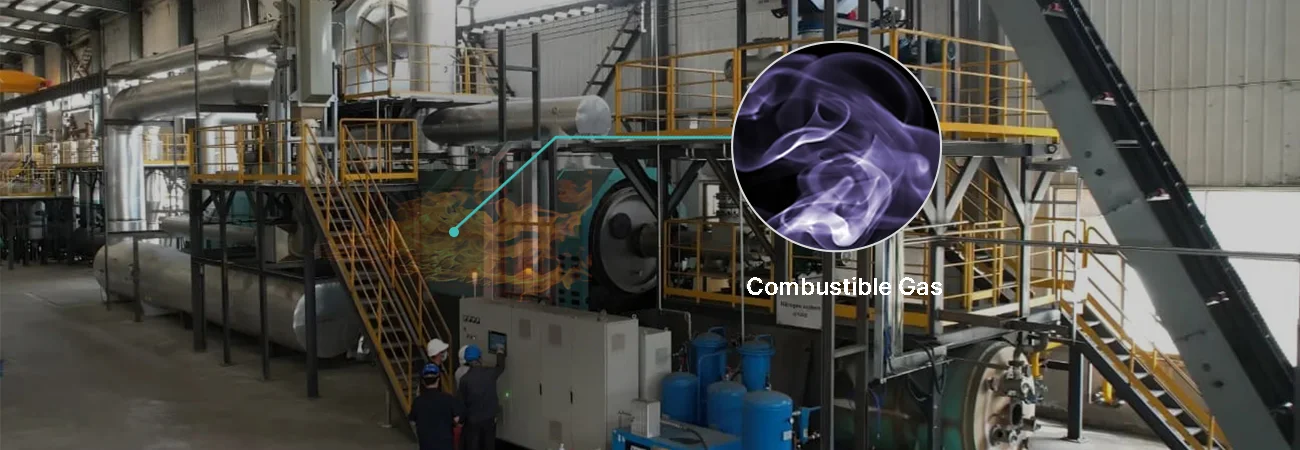
The pyrolysis process generates large volumes of combustible gases (e.g., H₂, CH₄, CO), which can be used to heat the pyrolysis reactor itself. This internal energy recovery significantly reduces the need for external fossil fuel input and thereby lowers the overall carbon footprint of the process.
Advancing Toward a Low-Carbon Future
The entire life cycle of plastics is accompanied by carbon emissions, and its mitigation potential plays a critical role in the global response to climate change. As a low-carbon and sustainable treatment solution, pyrolysis technology offers a new pathway for decarbonizing the plastic value chain. It is a direction that warrants collective support and ongoing exploration.