While pyrolysis technology is a proven, eco-friendly solution for municipal sewage sludge, applying this technology to industrial sludge presents severe operational risks. Industrial wastewater residues carry complex chemical contaminants and heavy metals that cause rapid equipment damage, frequent system downtime, and non-compliant end products. Understanding these chemical boundaries is essential for plant operators to protect their equipment investment and choose the right treatment pathway.
Sources and Formation of Industrial Sludge
Industrial sludge is a toxic, semi-solid residue generated during industrial wastewater treatment, chemical processing, and manufacturing operations. Unlike domestic wastewater, these industrial streams carry heavy concentrations of synthetic chemicals and hazardous pollutants derived directly from raw materials and production processes. The primary industrial sources include:
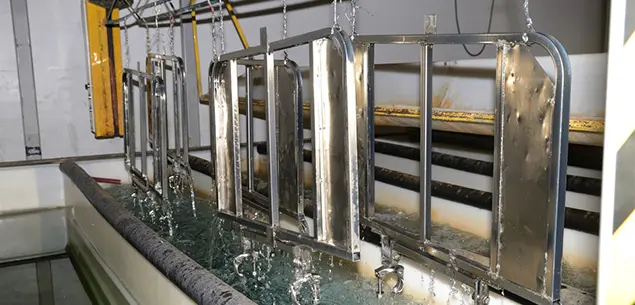
Electroplating and Surface Finishing Sludge
- Process origin & definition: Semi-solid waste generated from metal surface cleaning, electrodeposition, acid etching, and rinsing operations in metal finishing facilities.
- Hazardous substances & contaminants: Heavily concentrated with non-degradable heavy metals—including cadmium, hexavalent chromium (Cr⁶⁺), nickel, copper, and zinc—alongside toxic cyanide complexes and strong acid/alkali residues.
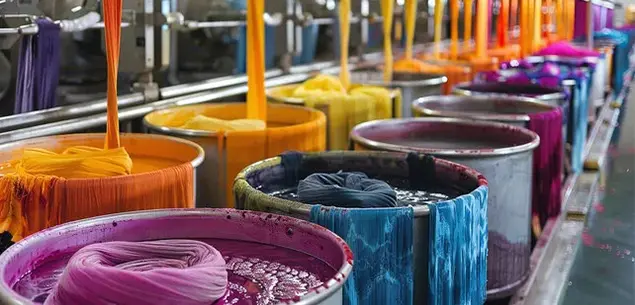
Textile Dyeing and Printing Sludge
- Process origin & definition: Industrial residue collected during the wastewater treatment of textile processes, specifically fabric scouring, desizing, bleaching, and color-fixing.
- Hazardous substances & contaminants: High concentrations of refractory synthetic organic dyes, aromatic amines, heavy-metal color fixatives, extreme alkalinity, and elevated total dissolved solids (TDS/salts).
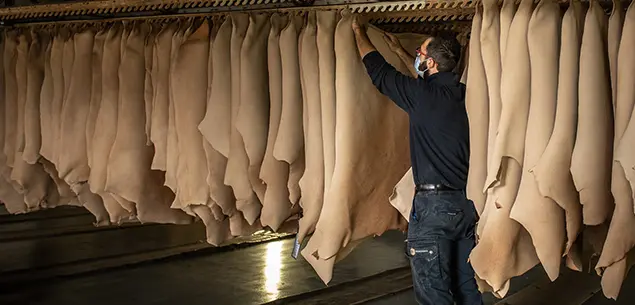
Tannery and Leather Processing Sludge
- Process origin & definition: Sludge derived from raw hide processing, specifically the unhairing, liming, chrome tanning, and retanning stages in leather manufacturing.
- Hazardous substances & contaminants: Loaded with trivalent chromium (Cr³⁺), highly toxic sulfides, organic nitrogen, fats, and complex proteinaceous solids that risk oxidizing into carcinogenic hexavalent chromium.

Chemical and Pesticide Manufacturing Sludge
- Process origin & definition: Concentrated hazardous residue precipitated from chemical synthesis reactors, solvent extraction loops, and distillation bottoms during active ingredient production.
- Hazardous substances & contaminants: Contains complex halogenated hydrocarbons, toxic organic solvents (benzene, toluene), pesticide active residues, and corrosive sulfur or chlorine compounds.
Key Operational and Environmental Risks of Industrial Sludge Pyrolysis
Although pyrolysis excels at converting clean organic matter into biochar and syngas, the unique chemical composition of industrial sludge poses four critical engineering barriers:
Heavy Metal Accumulation and Leaching Risk
Pyrolysis operates in an oxygen-free environment. While it vaporizes volatile organics, non-volatile heavy metals (like hexavalent chromium, lead, and cadmium) become highly concentrated in the resulting biochar. If these metals remain in unstable states, the biochar fails Toxicity Characteristic Leaching Procedure (TCLP) tests, transforming the solid output into a regulated hazardous waste rather than a reusable resource.
Corrosive Gases and Dioxin Precursors
Industrial sludges frequently contain high levels of chlorine, fluorine, and sulfur. Thermal cracking of halogenated compounds produces hydrogen chloride (HCl) gas and dioxin precursors, while sulfur generates hydrogen sulfide (H₂S). These gases cause severe high-temperature equipment corrosion and require complex, cost-prohibitive flue gas scrubbing systems.
Low Volatile Matter and Energy Imbalance
Pyrolysis relies on the combustion of recovered syngas to maintain thermal self-sufficiency. Inorganic chemical and metallurgical sludges often feature ash content exceeding 60%-70%. With insufficient volatile organic matter to generate syngas, the system must continuously consume external fuel, destroying project economics.
Coking and Reactor Agglomeration
High concentrations of heavy polymers, synthetic resins, or petroleum fractions in industrial sludge tend to melt and cake inside the pyrolysis reactor. This leads to heavy coking on reactor walls, severe degradation of heat transfer efficiency, and mechanical blockages in discharge screws.
The Ideal Feedstock: Municipal Sewage Sludge
Unlike industrial waste laden with toxic chemical residues, municipal sewage sludge originates from domestic wastewater treatment plants. Its organic-rich chemical composition and predictable feedstock consistency make it exceptionally well-suited for continuous thermal piroliza.
| Caracteristică | Nămol industrial | Nămol de canalizare municipal |
|---|---|---|
| Conținut organic | Highly variable; often low or inert | High volatile organic solids (>60% dry basis) |
| Metale grele | High concentrations / Hazardous | Trace levels within environmental safety limits |
| Profil de toxicitate | Complex synthetic toxins / Halogens | Primarily biological pathogen risk (easily sterilized by high heat) |
| Syngas Potential | Unstable / High corrosive gas risk | High thermal value for energy self-sufficiency |
| Biochar Value | Secondary hazardous waste | Safe soil amendment or construction filler |
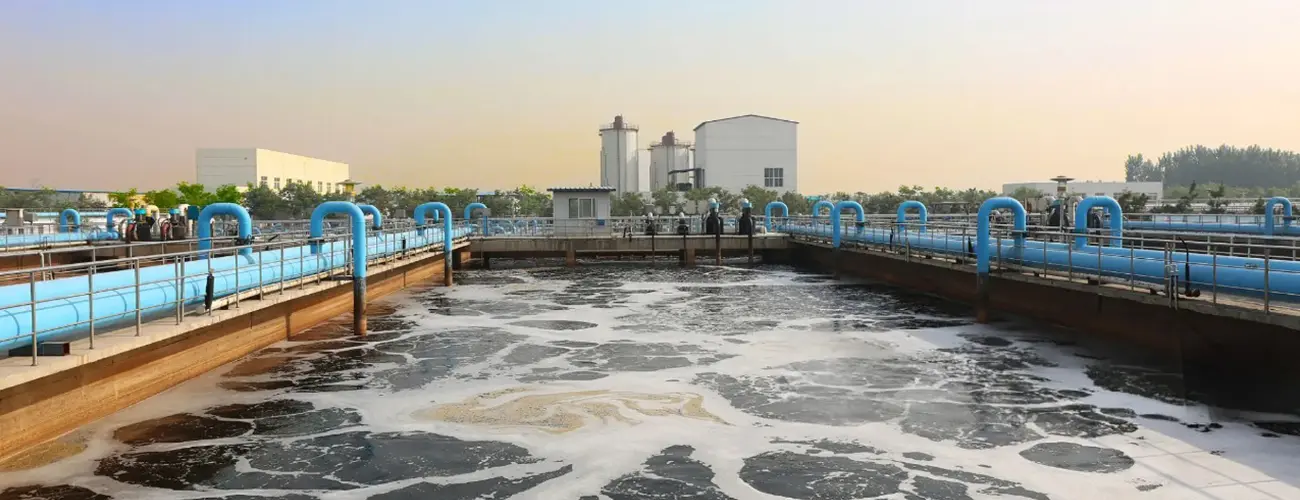
Integrated Municipal Sewage Sludge Solution by Beston Group
To solve the high moisture and pollutant challenges of municipal wastewater solids, Beston Group delivers a fully integrated, energy-efficient stație de tratare a nămolului de epurare:
Deshidratare la presiune ultra-înaltă → Uscare cu bandă la temperatură joasă → Piroliză → Reciclare gaz de sinteză → Utilizarea resurselor de biocărbune
Up to 90 Volume Reduction
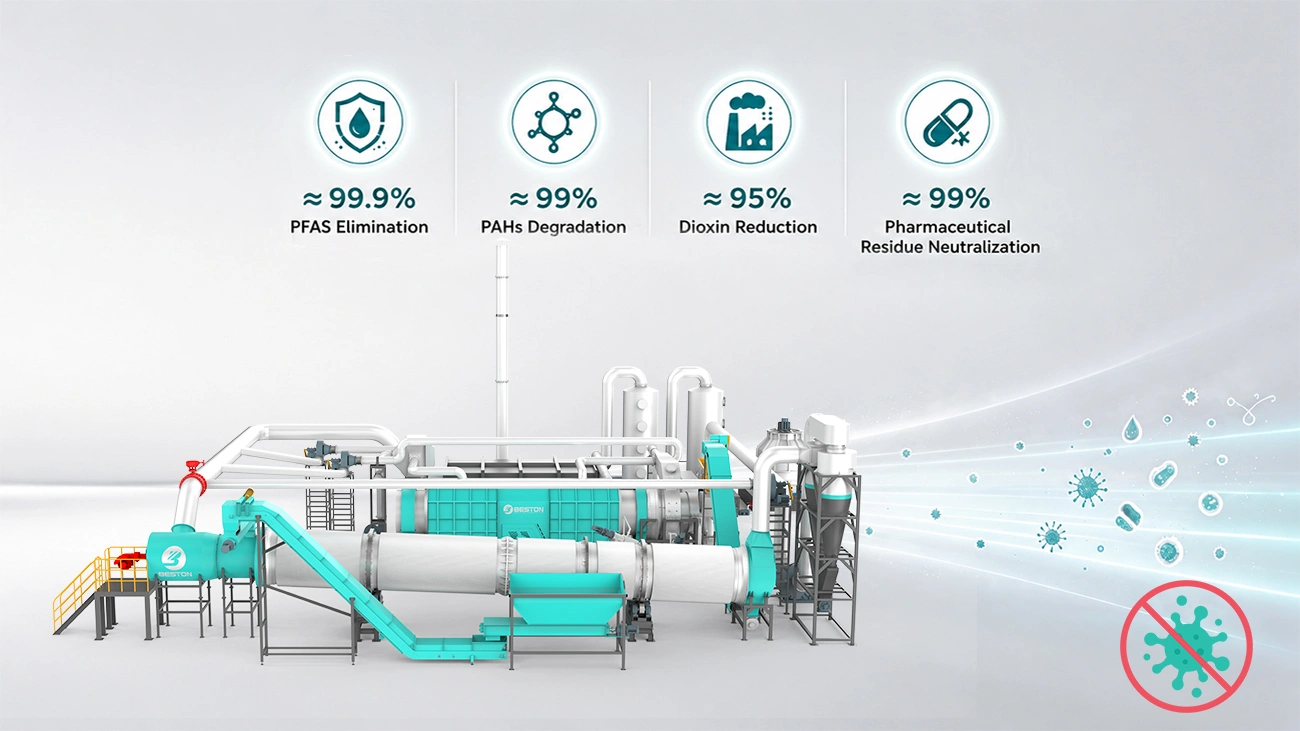
The multi-stage process converts wet, bulky sludge into compact, stable biochar. Achieving up to 90% waste volume collapse, this solution minimizes storage footprint and drastically reduces downstream transport loads and disposal requirements.
95%-99% Pollutant Destruction
High-temperature thermal degradation safely breaks complex molecular bonds, completely eliminating persistent organic pollutants (POPs), including PFAS (“forever chemicals”), microplastics, PAHs, and dioxin precursors.
Closed-Loop Energy Recovery
Non-condensable syngas generated during carbonization is redirected into the combustion chamber to fuel the pyrolysis reactor and pre-drying loops, maximizing energy self-sufficiency and cutting operational fuel costs.
Environmental Emission Standards
Equipped with advanced multi-stage dedusting, acid gas scrubbing, and thermal oxidizers, the system purifies flue gas streams to guarantee clean stack emissions that comfortably pass strict EU and US EPA environmental standards.
Concluzie
Pyrolysis is not a universal solution for all sludge types. Industrial sludges present severe heavy metal, corrosion, and energy balance limitations, making direct pyrolysis unsuitable. Conversely, municipal sewage sludge provides the consistent organic profile needed for safe, profitable carbonization. Beston Group provides customized municipal sludge pyrolysis systems that achieve complete volume reduction, harmlessness, and sustainable resource recovery. Contact us today for more information or customized solutions!